


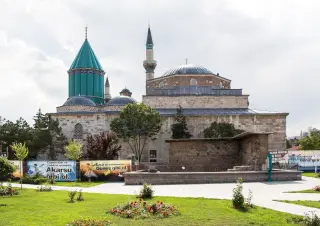


Historian's route
1 tickets€29
Source: Prof. Dr. İlber Ortaylı (1947–2026)
İlber Ortaylı's Istanbul walk, in two days
1 ticketed stopsOpen the route
A walk down from Pera's street of embassies and churches into the narrow lanes of Genoese Galata: Galatasaray High School, Santa Maria Draperis, the Venetian and Swedish palaces, the Mevlevi lodge on Galip Dede Caddesi, the Galata Tower, the Arap Mosque, once a Gothic church, Sinan's waterside mosque at Azapkapı and the old hans of Perşembe Pazarı. We compiled it from the twentieth walk in Hilary Sumner-Boyd and John Freely's book Strolling Through Istanbul (1972); we added the timings, breaks and practical notes.
This route was compiled by AnatoliaPass editors from the published recommendations of the person named; the timings, breaks and practical notes are ours. It does not mean that the person recommends or endorses AnatoliaPass.
Hilary Sumner-Boyd was born in New York in 1913 and educated there and in England; he spent most of his life in Istanbul, teaching at Robert College, and died in the city on 2 September 1976. John Freely was born in Brooklyn in 1926; a physicist, he came to Istanbul in 1960 to teach at Robert College and over his lifetime wrote dozens of books on Istanbul, the Ottomans and the history of science; he died in 2017. Strolling Through Istanbul, which the two wrote together, was published in Istanbul by Redhouse Press in 1972 and is still in print today in revised editions.
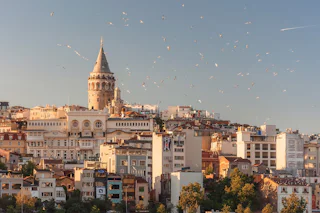
The book opens the chapter with the origins of Galata and Pera. Pera means 'beyond, across' in Greek; used for the far shore of the Golden Horn, the name in time became the name of the neighbourhood on the ridge. Galata below was a walled Genoese colony from the 13th century until 1453, and its tower was the highest point of those walls.
In Ottoman times the Cadde-i Kebir, the road Europeans called the Grande Rue de Péra, was the street lined with the embassies of the European powers and the Latin churches. Most of the buildings, such as the Venetian and Swedish palaces, became consulates after Ankara became the capital, but they still stand in the same gardens. Sumner-Boyd and Freely describe these stops, which their chapter heading calls 'European embassies and churches', one after another as they walk down the street.
After Tünel the walk goes down the steep Galip Dede Caddesi: the Mevlevi lodge, the tower, then through Genoese Galata to the shore of the Golden Horn. The book ends the chapter with the Azapkapı Mosque, the Galata Bedesten and the Rüstem Pasha Han; Perşembe Pazarı, still full of hardware shops today, carries on the commercial life that Galata has had since Genoese times.
Start: ≈ 12 min from Taksim along İstiklal, or the Galatasaray stop on the nostalgic tram · stay 15 min
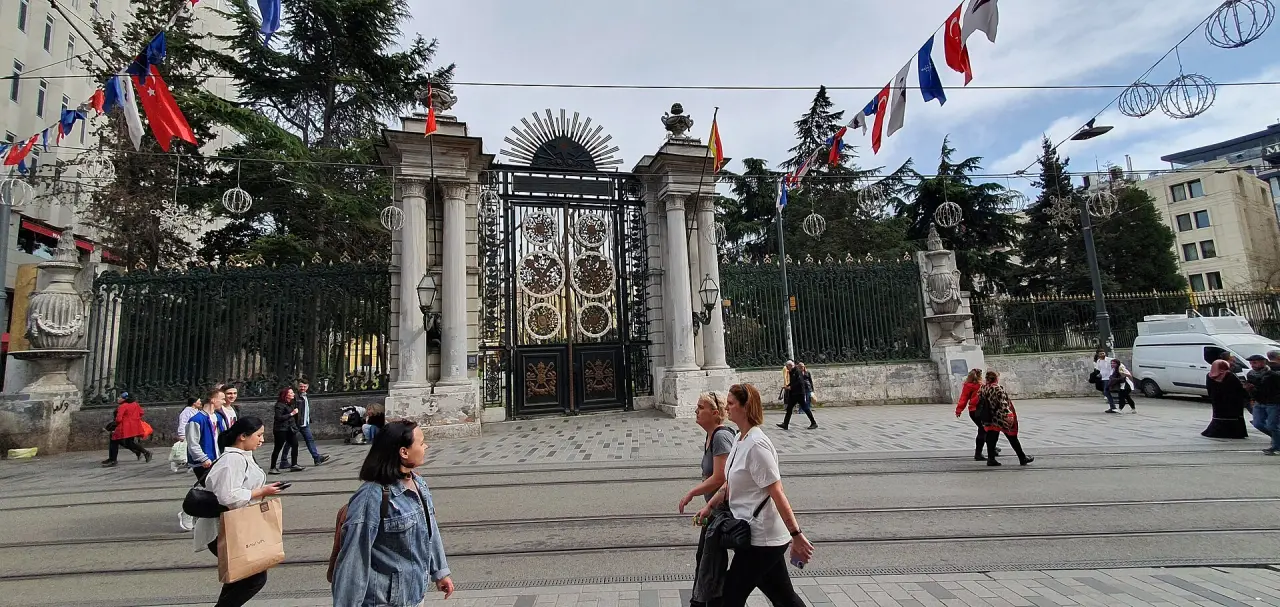
The square takes its name from Galatasaray High School, whose roots go back to a palace school founded under Bayezid II. The school was reorganised in 1868 as the Mekteb-i Sultani, teaching in French; the present buildings date from 1908. The book points out that the square is named after this school; from here the walk continues towards Tünel between embassies and churches.
≈ 3 min, towards Tünel; the church is below street level, down a flight of steps · stay 15 min
The church of the Franciscan friars; founded in Galata in 1584, it moved several times because of fires, and the present building dates from the early 20th century. As the book also notes, you go down a flight of steps from street level to reach the church. It belongs to one of Istanbul's oldest Latin Catholic congregations still holding services.
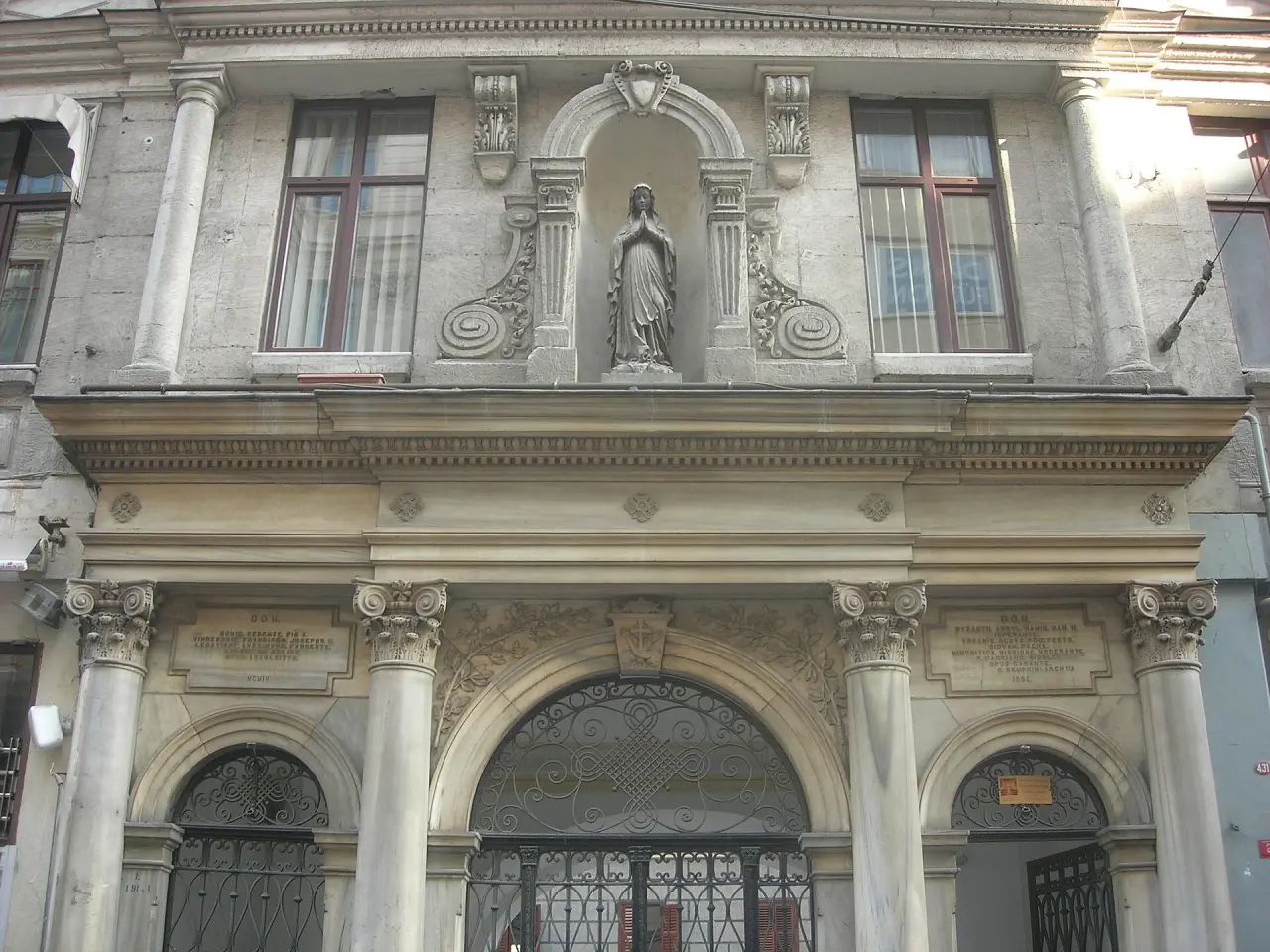
Don't walk around inside during Mass; check visiting hours before you go.
≈ 5 min, turn off İstiklal towards Tomtom · stay 10 min
The mansion that was, in turn, the embassy of the Republic of Venice, France, Austria and Italy from the early 16th century until 1923; today it is the Italian Consulate General. The building was altered several times by fires and repairs, and its present form dates largely from the 1910s. One of Pera's oldest diplomatic addresses.

This is a consulate building and cannot be entered; see the garden and façade from outside. Check the security arrangements at the gate before you go.
Back to İstiklal, towards Tünel, ≈ 5 min · stay 10 min
The seat of Sweden's diplomatic mission since 1757; today the Consulate General. The first, wooden building was damaged by fires, and the present building was rebuilt in 1869–1871. It is considered the oldest Swedish diplomatic building still in use anywhere in the world.
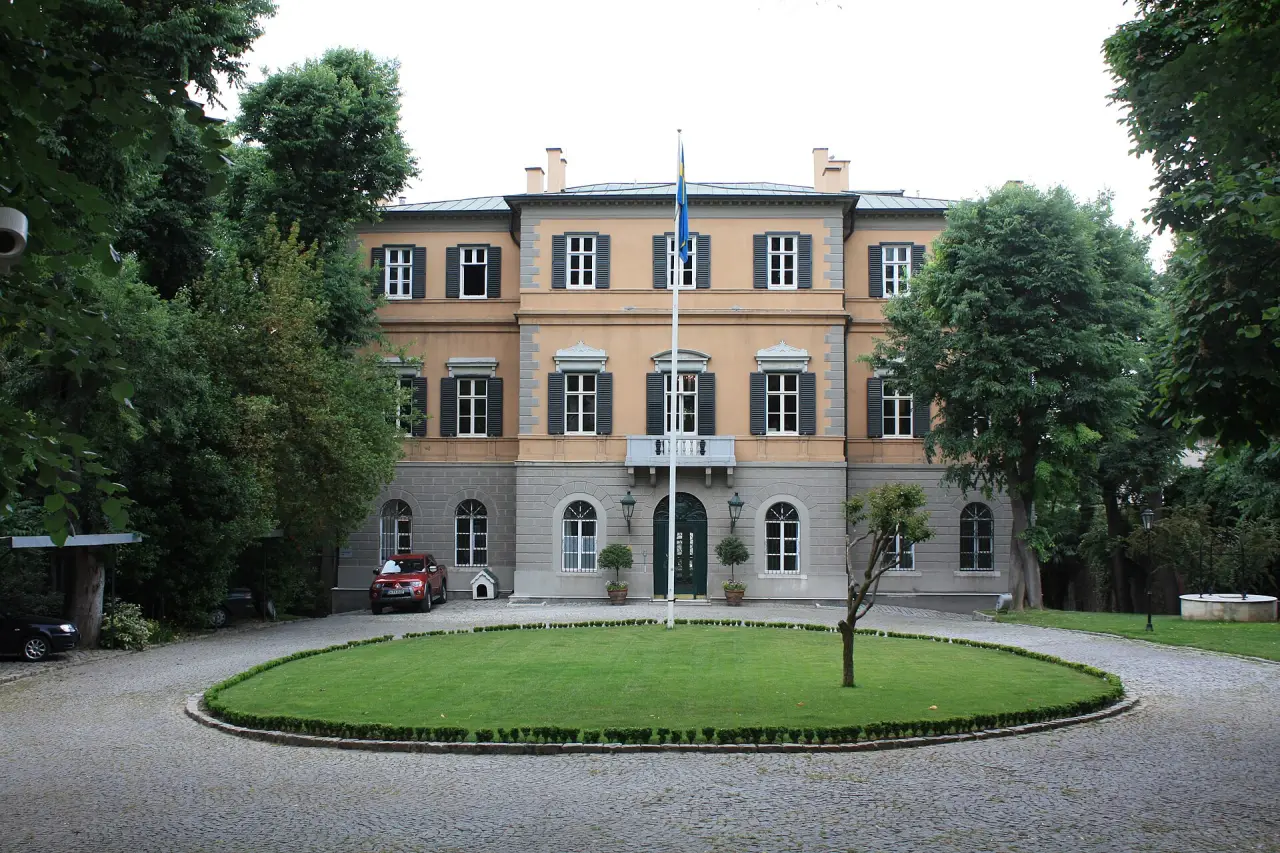
This is a consulate building and cannot be entered; see the garden from outside. Check whether an open day is being held before you go.
From Tünel square down to Galip Dede Caddesi, ≈ 3 min · stay 45 min
After Tünel the book takes the walk down the steep Galip Dede Caddesi. The Galata Mevlevi Lodge at the top of the street was founded in 1491 and is Istanbul's first Mevlevi lodge; with its semahane, its cemetery known as the hamuşan and its sheikhs' tombs, it is now a museum. Sheikh Galib, who gave the street its name, was sheikh of this lodge and one of the last great poets of Ottoman divan poetry; music shops line the street.
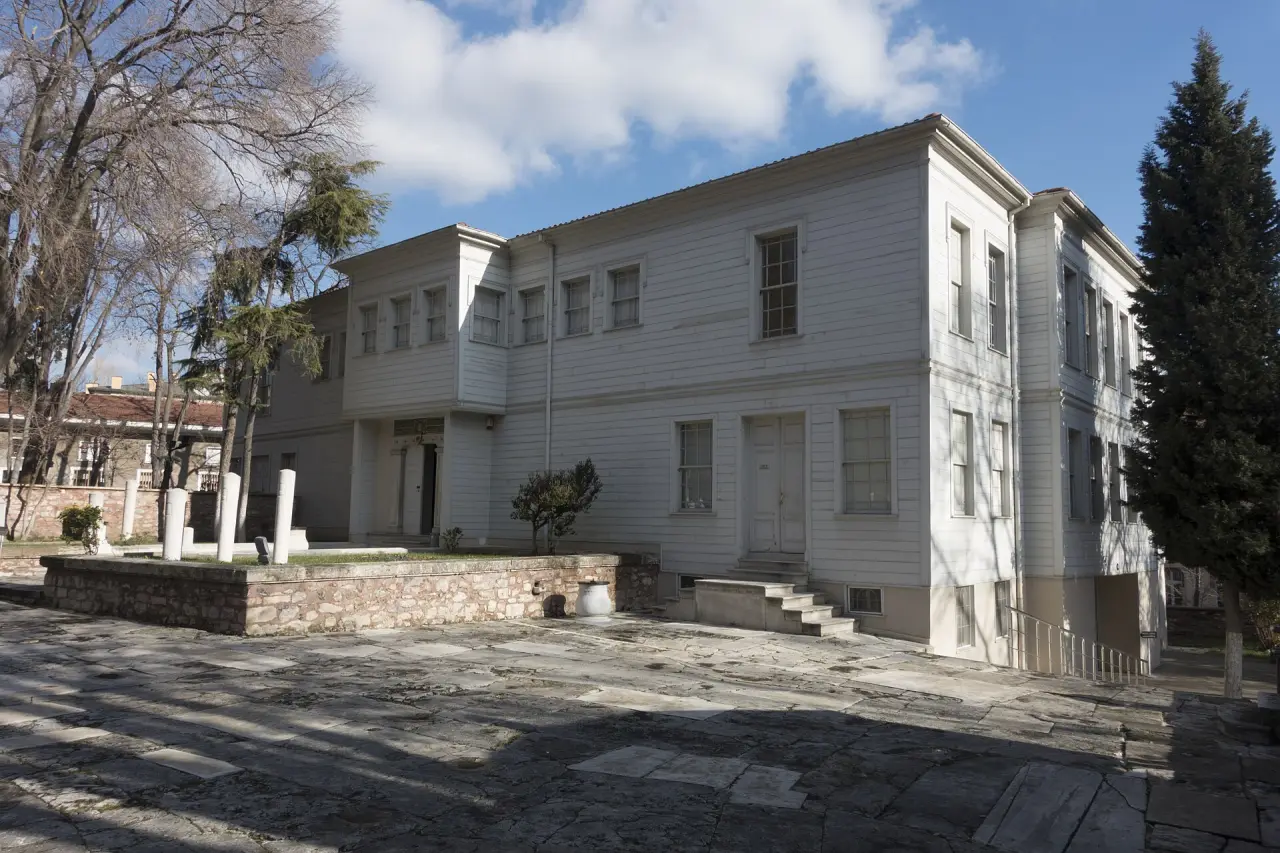
Check the museum's closing day, the sema days and the entry fee before you go.
Down along Galip Dede ≈ 4 min · stay 45 min
The tower the Genoese built in 1348 at the highest point of the Galata walls; the book describes it as the summit of the Genoese walls. You can trace the line of the walls in the surrounding streets, with fragments of wall here and there. From its viewing balcony you see the mouth of the Golden Horn, the historic peninsula and the Bosphorus all at once.

The queue can be long; check the entry fee and opening hours before you go.
From the tower west, downhill towards Perşembe Pazarı, ≈ 7 min · stay 25 min
The church of San Paolo and San Domenico, built by Dominican friars in 1325; the only medieval Gothic religious building to survive in Istanbul. It was converted into a mosque after the conquest; it was given the name Arap Mosque because it was handed over to Andalusian Muslims fleeing Spain after 1492. Its old square bell tower is used as a minaret today.

Visits pause during prayer times; check the times before you go.
≈ 6 min, west to the foot of the Atatürk Bridge · stay 25 min
The mosque Sinan built on the shore of the Golden Horn in 1578 for the grand vizier Sokollu Mehmed Pasha; there was no bridge then, and the mosque rose at the water's edge. Set on a high substructure, the mosque has undergone a thorough restoration in recent years.
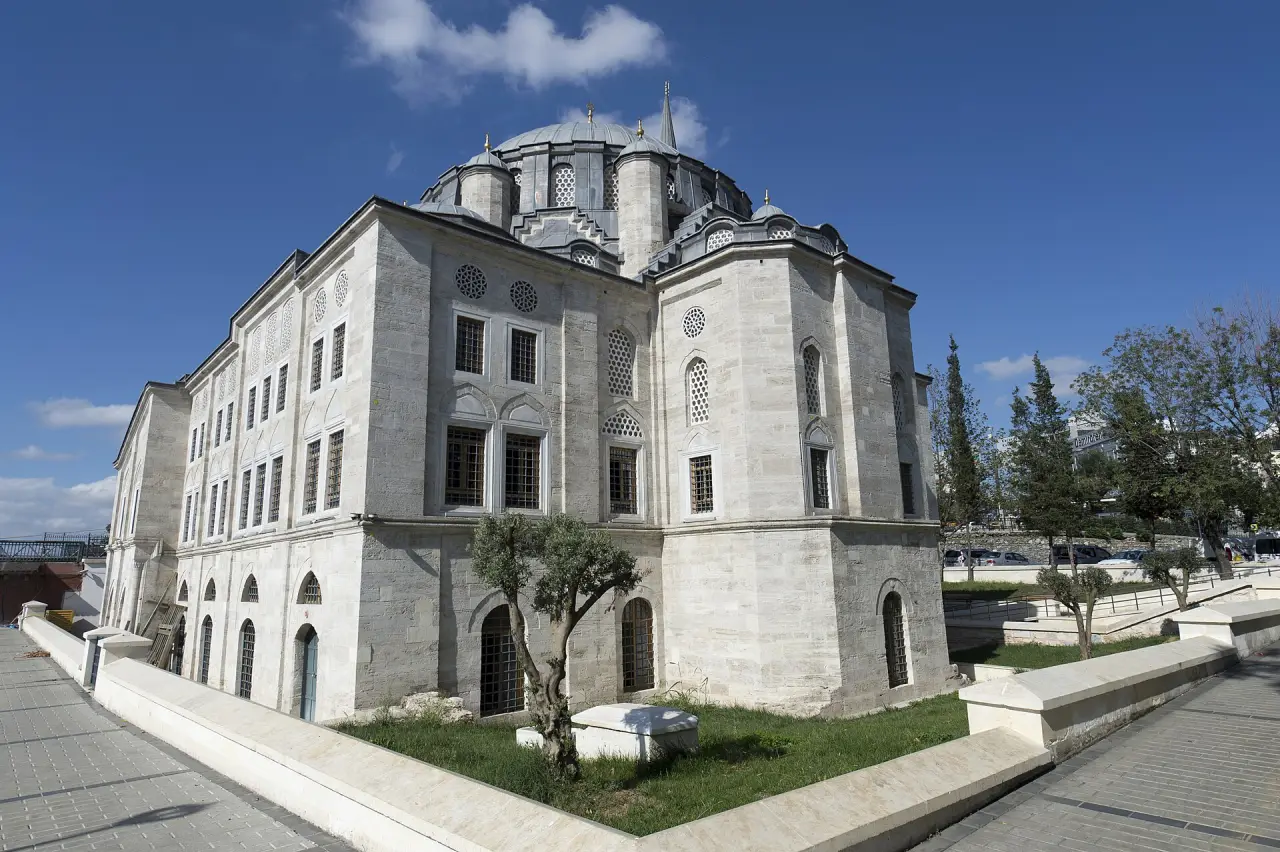
Visits pause during prayer times; check the times before you go.
≈ 7 min, east to Perşembe Pazarı · stay 30 min
Two old commercial buildings among the hardware shops of Perşembe Pazarı: the Galata Bedesten, built after the conquest, and the han Sinan built for the grand vizier Rüstem Pasha, also known as the Kurşunlu Han. The book ends the walk with these two buildings; both are full of workshops and businesses today. Karaköy pier is ≈ 7 min from here.
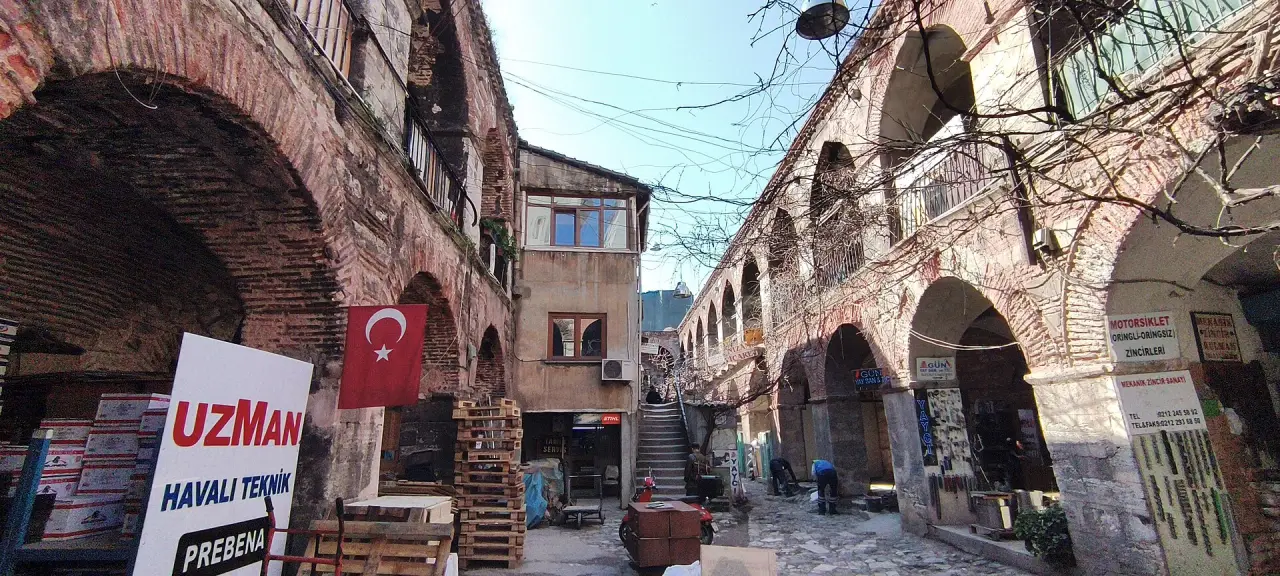
The han and the bedesten are places of work; most shops are closed on Sundays. Check weekday hours before you go.
≈ 2 h 15 min · fast ferry + bus · Day trip
Why here: The first Ottoman capital. The Green Mosque, the Grand Mosque and Koza Han make an easy day trip; we suggest it if you are staying in Istanbul for more than four days. Not part of this route.
Travellers who check in on this route can rate it. No one else can.
Be one of the first travellers to walk this route. If you have a question or a tip, share it with the community.
After walking the route you can rate it using the check-in in the app. Reviews go live after a short check.
Source: Prof. Dr. İlber Ortaylı (1947–2026)
Source: Prof. Dr. İlber Ortaylı (1947–2026)
Your basket stays saved on this device, so you can pick up where you left off once sales open. Until then, routes, the map and audio guides are free.