



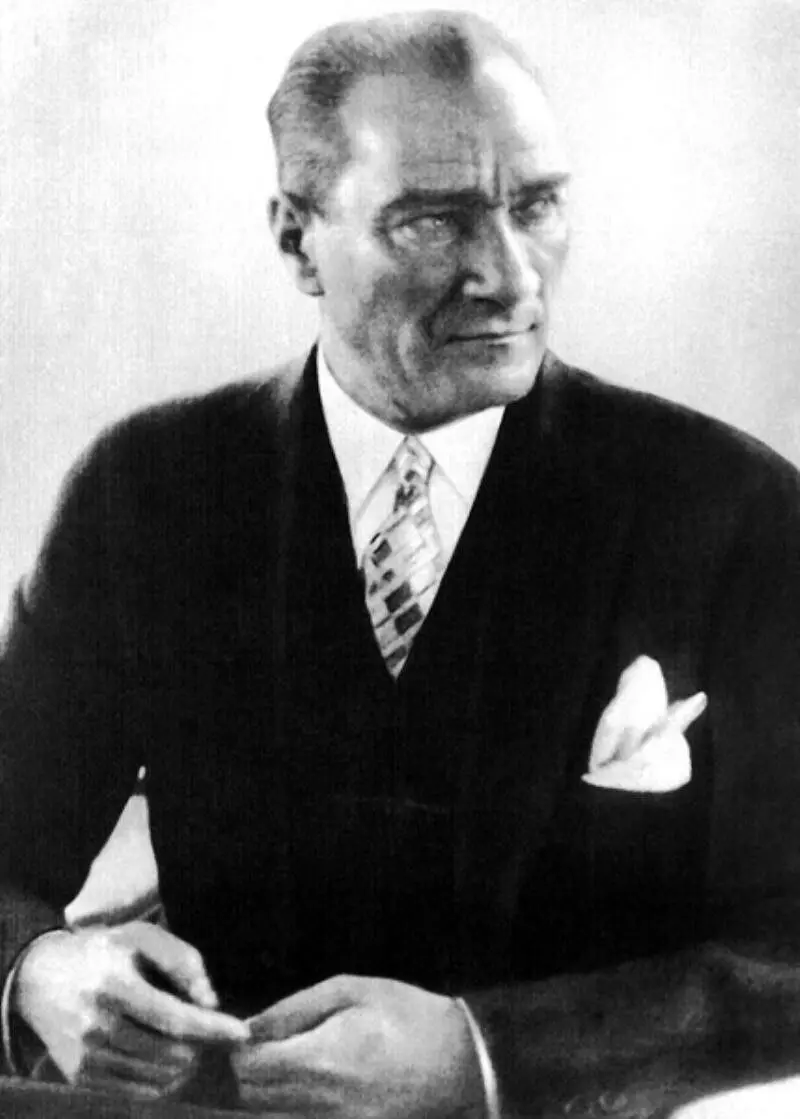
A soldier born in Thessaloniki; the commander who led armies at Çanakkale, in the National Struggle (War of Independence) and at Sakarya; the founder and first President of the Republic of Türkiye. On this page we tell the story of his life part by part, with dates, and bring together Anıtkabir and the places you can visit in his footsteps.
For those who want to read before going to Anıtkabir, or to know the story before seeing the road from Samsun to Erzurum or the room at Dolmabahçe.
Childhood and education
Mustafa was born in 1881 in the Ottoman city of Thessaloniki (Selanik). His father, Ali Rıza Efendi, had worked as a customs official and timber merchant; his mother was Zübeyde Hanım. He lost his father at a young age, in 1888.
He began his schooling at a neighbourhood school, then moved to the Şemsi Efendi School. He chose a military career himself: in 1893 he entered the Military Middle School in Thessaloniki. It is said that the name "Kemal" was given to him by his mathematics teacher at this school.
He entered the Military High School in Manastır (Bitola) in 1896 and graduated in 1898. On 13 March 1899 he entered the War College (Mekteb-i Harbiye) in Istanbul and graduated as an infantry lieutenant on 10 February 1902. He then entered the Staff College, which he completed on 11 January 1905 as a staff captain, and was posted to the Fifth Army in Damascus. The school building in Harbiye is now the Military Museum in Istanbul.
Military years
From Damascus to Tripolitania
After serving in Damascus in 1905–1907, he transferred to the Third Army in Thessaloniki. When Italy attacked Tripolitania (Libya) in the autumn of 1911, he left Istanbul on 15 October 1911 posing as a journalist; he fought around Tobruk and Derna and became Commander of Derna on 6 March 1912. In 1913–1915 he served as military attaché in Sofia.
Çanakkale, 1915
On 20 January 1915 he was appointed commander of the 19th Division. When Allied forces landed at Arıburnu on 25 April 1915, he and his troops held the Conkbayırı ridges. He was promoted to colonel on 1 June. On the night of 8 August 1915 he was given command of the Anafartalar Group; the fighting at Anafartalar and Conkbayırı on 9–10 August made his name known throughout the army. We describe the martyrs' cemeteries and memorials at Gallipoli on the Gallipoli Peninsula route.
From the East to Syria
In 1916 he was sent to the Eastern Front and on 1 April 1916 became a pasha with the rank of mirliva (brigadier general); in August 1916 Muş and Bitlis were retaken from the Russians. In 1917 he became commander of the Seventh Army, and on 31 October 1918 he took command of the Yıldırım Army Group. After the Armistice of Mudros he returned to Istanbul on 13 November 1918; the same day the Allied fleet anchored off the city.
The National Struggle
Samsun, Havza, Amasya
Appointed Inspector of the Ninth Army, Mustafa Kemal left Istanbul aboard the steamer Bandırma on 16 May 1919 and landed at Samsun on the morning of 19 May. In a circular issued from Havza on 28 May, he called for rallies to be held against the occupations. The Amasya Circular, drafted in Amasya and issued on the night of 21/22 June 1919, set out the aim and method of the struggle: "The independence of the nation will be saved by the nation's own determination and resolve."
The Erzurum and Sivas congresses
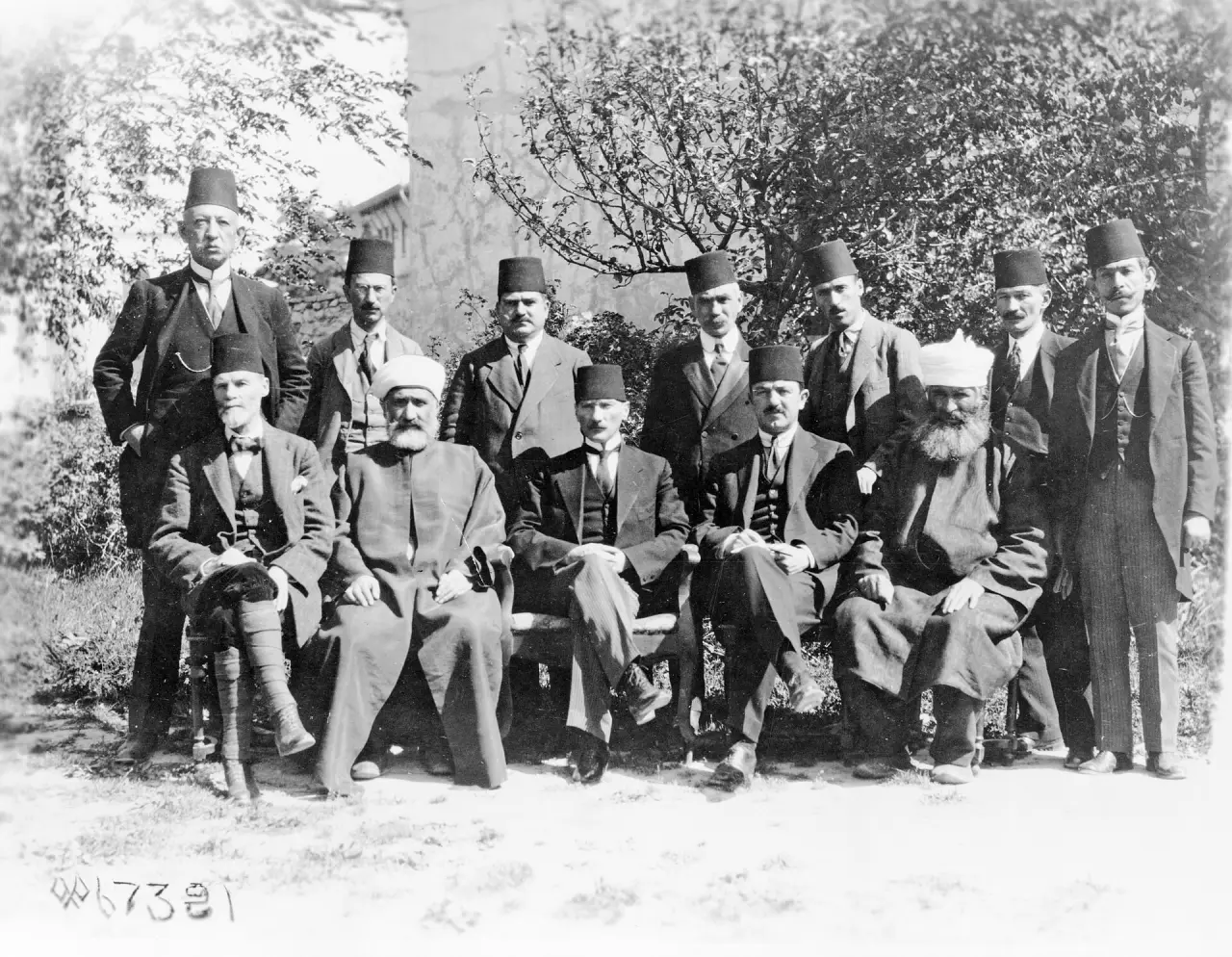
He reached Erzurum on 3 July and resigned from the army on the night of 8–9 July. He chaired the Erzurum Congress, which met from 23 July to 7 August 1919, and the Sivas Congress of 4–11 September 1919; in Sivas the resistance societies united as the Association for the Defence of the Rights of Anatolia and Rumelia, and the Representative Committee (Heyet-i Temsiliye), which he chaired, began to lead the struggle. We travel this road in four days on the National Struggle route.
Ankara and the Grand National Assembly
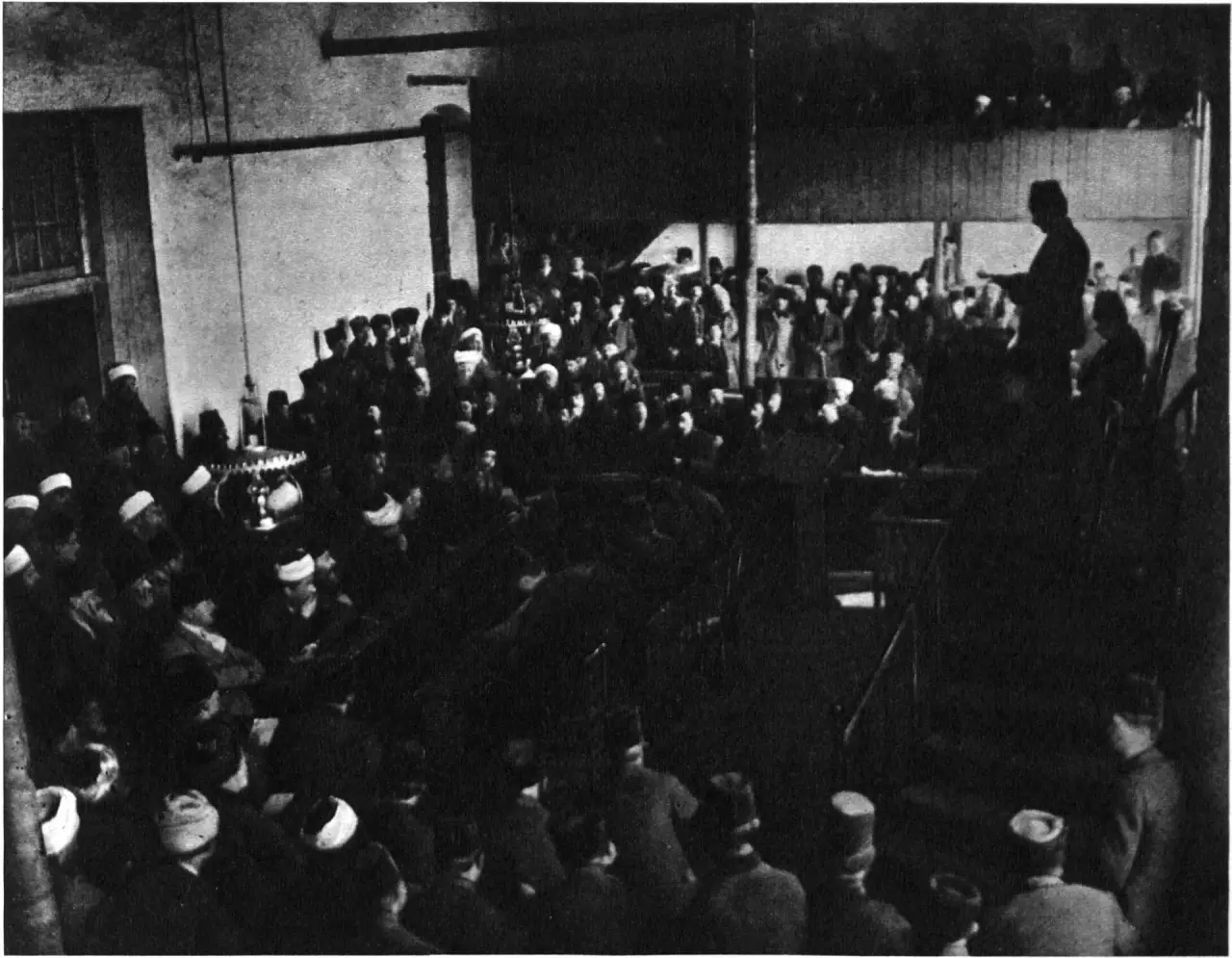
The Representative Committee arrived in Ankara on 27 December 1919. The last Ottoman Chamber of Deputies (Meclis-i Mebusan) adopted the National Pact (Misak-ı Millî) on 28 January 1920; when Istanbul was formally occupied on 16 March 1920, a new assembly convened in Ankara. The Grand National Assembly opened on 23 April 1920, and the next day Mustafa Kemal was elected Speaker of the Assembly.
From Sakarya to İzmir
On 5 August 1921 the Assembly made him Commander-in-Chief. He directed the Battle of Sakarya, which lasted 22 days and 22 nights from 23 August to 13 September 1921, from a farmhouse at Alagöz near Polatlı. After the victory, on 19 September 1921, the Assembly conferred on him the rank of marshal and the title of Gazi.
On the morning of 26 August 1922 the Great Offensive, which he directed from Kocatepe, began; it culminated in the Battle of the Commander-in-Chief on 30 August, and on 9 September 1922 Turkish cavalry entered İzmir. The Armistice of Mudanya was signed on 11 October 1922. The war ended with the Treaty of Lausanne, signed on 24 July 1923.
The Republic and the reforms
The sultanate was abolished on 1 November 1922. Under a law passed on 13 October 1923, Ankara became the seat of government; on 29 October 1923 the Republic was proclaimed and Mustafa Kemal was elected its first President. He held this office until his death.
State and law
On 3 March 1924 the caliphate was abolished and education was unified under the Law on the Unification of Education (Tevhid-i Tedrisat). The Turkish Civil Code, adopted on 17 February 1926, came into force on 4 October 1926; marriage, divorce and inheritance were made subject to the same law for women and men. The principle of secularism was written into the Constitution on 5 February 1937.
Everyday life
The Hat Law was passed on 25 November 1925, and dervish lodges and convents (tekke and zaviye) were closed on 30 November 1925. Under a law adopted on 26 December 1925, the international calendar and time came into use from 1 January 1926; in 1931 measures such as the metre and the kilogram were adopted. The Surname Law was passed on 21 June 1934; on 24 November 1934 the Assembly gave him the surname "Atatürk".
Alphabet, language and history
On 1 November 1928 the law adopting the new Turkish alphabet based on Latin letters (the alphabet reform) was passed; Nation's Schools (Millet Mektepleri) were opened, and on 24 November 1928 Mustafa Kemal was honoured as Head Teacher (Başöğretmen). The foundations of the Turkish Historical Society were laid in 1931 and those of the Turkish Language Association on 12 July 1932. He delivered the Nutuk (the Great Speech) at the party congress of 15–20 October 1927.
Women's right to vote and stand for election
Women gained the right to vote and stand for election in municipal elections in 1930 and in villages in 1933, and, through the constitutional amendment of 5 December 1934, the right to vote and stand in parliamentary elections; the first women deputies entered the Assembly after the 1935 elections.
Foreign policy
In the period remembered for the principle "Peace at home, peace in the world", the Straits returned to Turkish control under the Montreux Convention, signed on 20 July 1936.
Timeline
- 1881Born in Thessaloniki.
- 1893Enters the Military Middle School in Thessaloniki.
- 1899Enters the War College in Istanbul on 13 March.
- 1902Graduates from the War College as a lieutenant on 10 February.
- 1905Graduates from the Staff College as a staff captain on 11 January; posted to Damascus.
- 1911–1912Fights at Tobruk and Derna in Tripolitania.
- 1915Commander of the 19th Division and the Anafartalar Group at Çanakkale; colonel on 1 June.
- 1916Becomes a pasha on 1 April; Muş and Bitlis retaken in August.
- 1918Returns to occupied Istanbul on 13 November.
- 1919Lands at Samsun on 19 May; the Havza and Amasya circulars, the Erzurum and Sivas congresses; arrives in Ankara on 27 December.
- 1920The Grand National Assembly opens on 23 April; elected Speaker of the Assembly the next day.
- 1921Commander-in-Chief on 5 August; Battle of Sakarya (23 August–13 September); marshal and Gazi on 19 September.
- 1922Great Offensive on 26 August; İzmir on 9 September; Mudanya on 11 October; abolition of the sultanate on 1 November.
- 1923Treaty of Lausanne on 24 July; Ankara becomes the seat of government on 13 October; the Republic and the first presidency on 29 October.
- 1924Abolition of the caliphate and unification of education on 3 March.
- 1925The Hat Law; closure of the dervish lodges and convents; founding of the Forest Farm.
- 1926The Turkish Civil Code; the international calendar and time.
- 1927The Nutuk, 15–20 October.
- 1928The new Turkish alphabet on 1 November.
- 1934The Surname Law; the surname "Atatürk" on 24 November; women gain the right to vote and stand for parliament on 5 December.
- 1936The Montreux Convention on the Straits on 20 July.
- 1938Dies at Dolmabahçe Palace at 09:05 on 10 November; laid in his temporary tomb at the Ethnography Museum in Ankara on 21 November.
- 1953His body is moved to Anıtkabir on 10 November.
His last days and death
His health declined from 1937 onwards; at the beginning of 1938 he was diagnosed with cirrhosis of the liver. His treatment continued in Istanbul, at Dolmabahçe Palace. He fell into a coma for the first time on 17 October 1938 and was unable to attend the Republic Day celebrations on 29 October.
Mustafa Kemal Atatürk died at 09:05 on the morning of 10 November 1938, aged 57, in his room in the Harem section of Dolmabahçe Palace. The clock in the room still shows 09:05 today. The next day the Grand National Assembly elected İsmet İnönü President.
From 16 November his body lay in state for three days in the palace's ceremonial hall, open to the public. On 19 November it was taken from Sarayburnu by torpedo boat to the battlecruiser Yavuz, carried to İzmit and from there by train to Ankara. After the state funeral on 21 November 1938 it was placed in a temporary tomb at the Ankara Ethnography Museum, where it remained for 15 years until Anıtkabir was completed. This section at the museum entrance is still preserved out of respect for his memory.
We describe the room at Dolmabahçe, the museum room at the Pera Palas and Atatürk's other traces in Istanbul on the Atatürk's Istanbul route.
The story of Anıtkabir
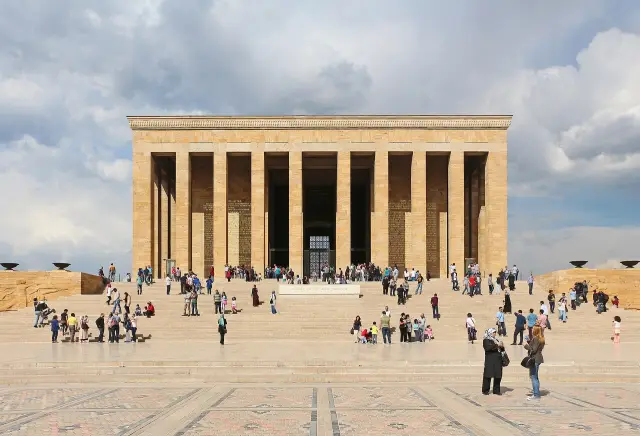
Anıtkabir, Atatürk's mausoleum and eternal resting place, stands in the middle of Ankara on the hill formerly called Rasattepe. More than a mausoleum, it is one of Türkiye's most visited places: official ceremonies are held here, and schools, families and visiting heads of state from abroad all come here.
Choice of site and design competition
A commission set up immediately after his death examined many sites, including Çankaya, Ankara Castle, the Ethnography Museum and the Forest Farm; in the end Rasattepe was chosen. The design competition opened on 1 March 1941, in the middle of the Second World War, drew 49 entries from Türkiye, Germany, Italy, Austria, Switzerland, France and Czechoslovakia. From the three designs the international jury found worthy of an award, the government chose in 1942 the design by Prof. Emin Onat and Assoc. Prof. Orhan Arda of the Istanbul Faculty of Architecture.
Construction and 10 November 1953
The foundation stone was laid on 9 October 1944. Construction proceeded in four phases: earthworks and the retaining walls of the Road of Lions; the Mausoleum and auxiliary buildings; the stone cladding and the sarcophagus; and finally the landscaping. Anıtkabir was completed in 1953. On 10 November 1953 Atatürk's body was taken from the Ethnography Museum, carried to Anıtkabir with a great state ceremony and laid to rest in the burial chamber here.
Road of Lions
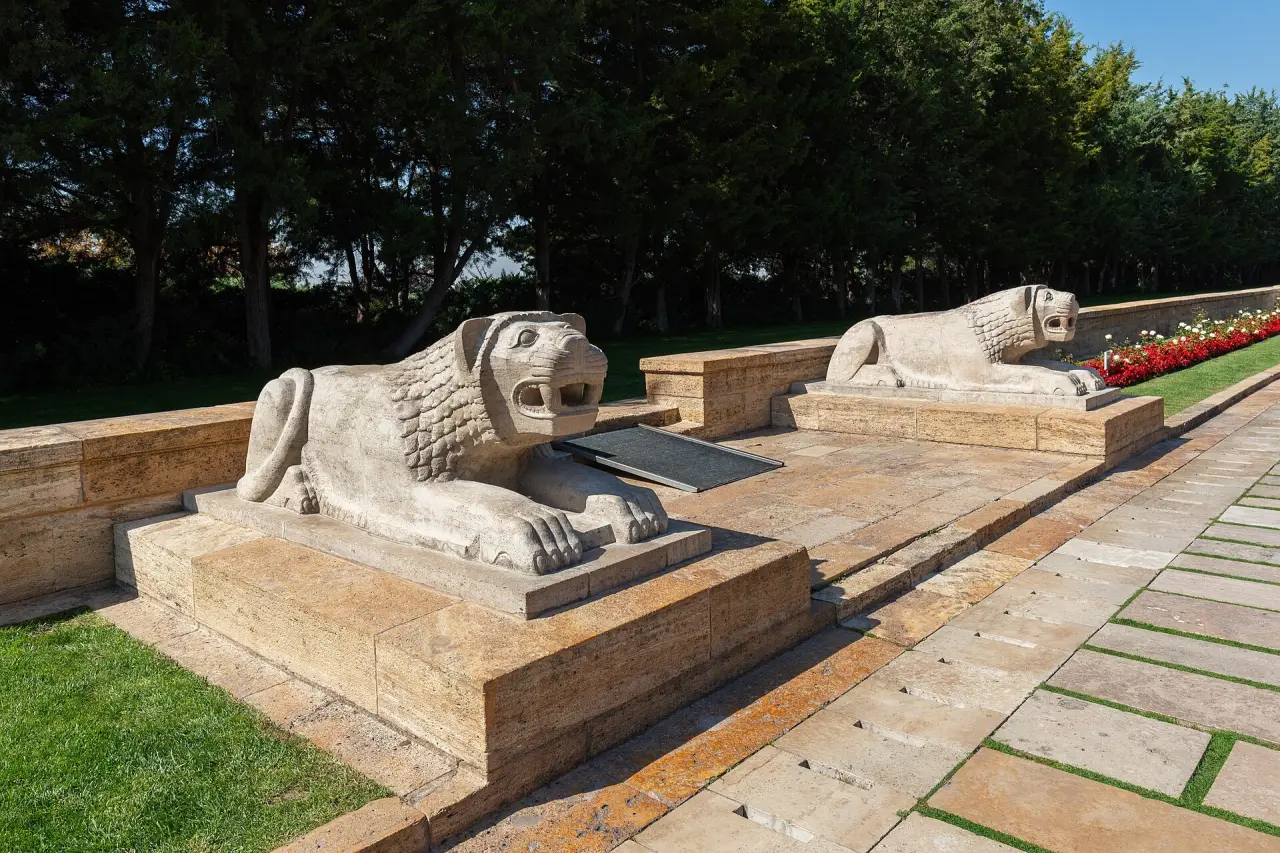
The visit begins with the Road of Lions, reached by a flight of 26 steps. Designed to prepare the visitor to come into Atatürk's presence, the road is 262 metres long and 12.8 metres wide. On both sides stand 24 lion statues, arranged in pairs and made in the artistic style of the Hittites, who founded a great state in Anatolia.
Ceremonial Plaza and towers
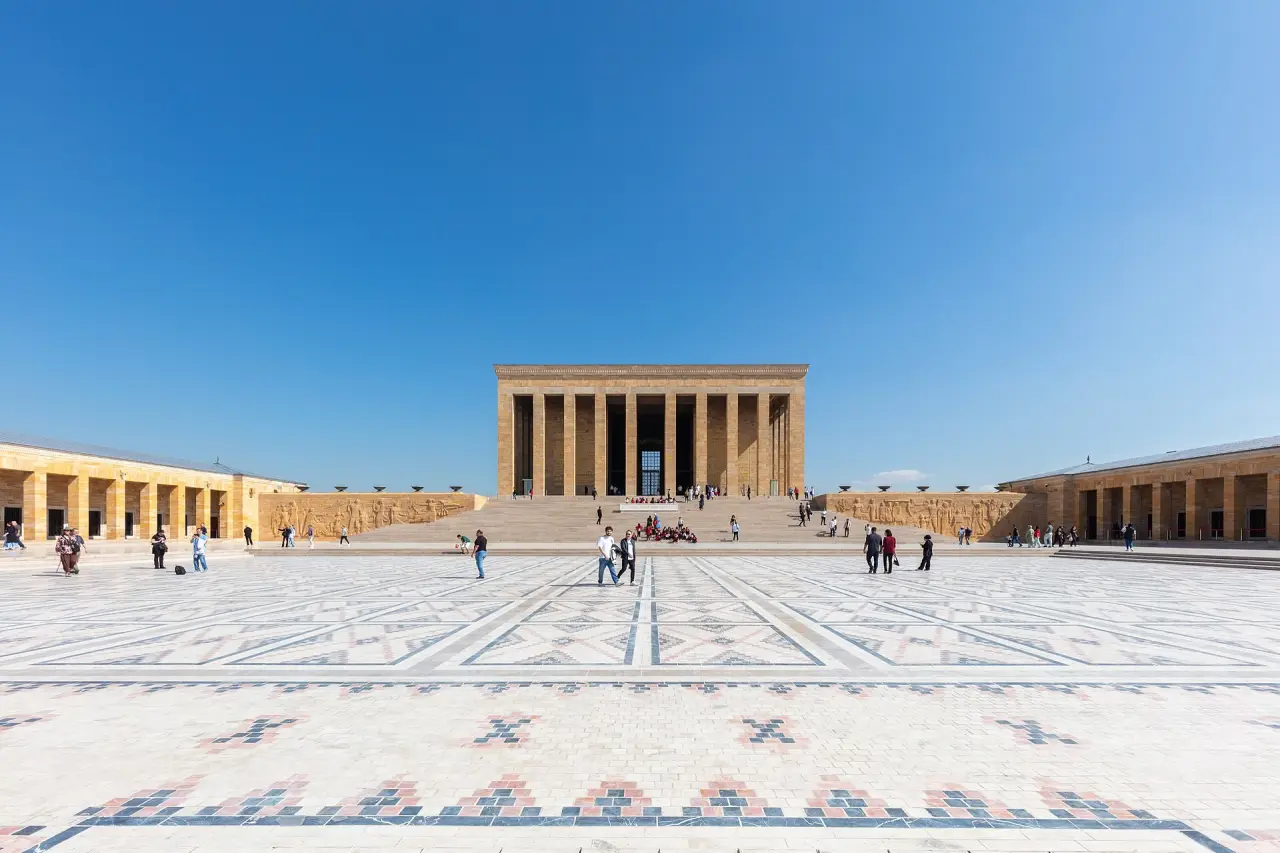
The Road of Lions opens onto the 129 × 84-metre Ceremonial Plaza, enclosed on three sides by side buildings and colonnades. Holding 15,000 people, the plaza is paved with 373 carpet motifs in black, red, yellow and white travertine. The ten towers of Anıtkabir carry the ideas of the War of Independence and the Republic: Independence, Freedom, Mehmetçik, Defence of Rights, Victory, Peace, 23 April, National Pact, Revolution and Republic.
Mausoleum and Hall of Honour
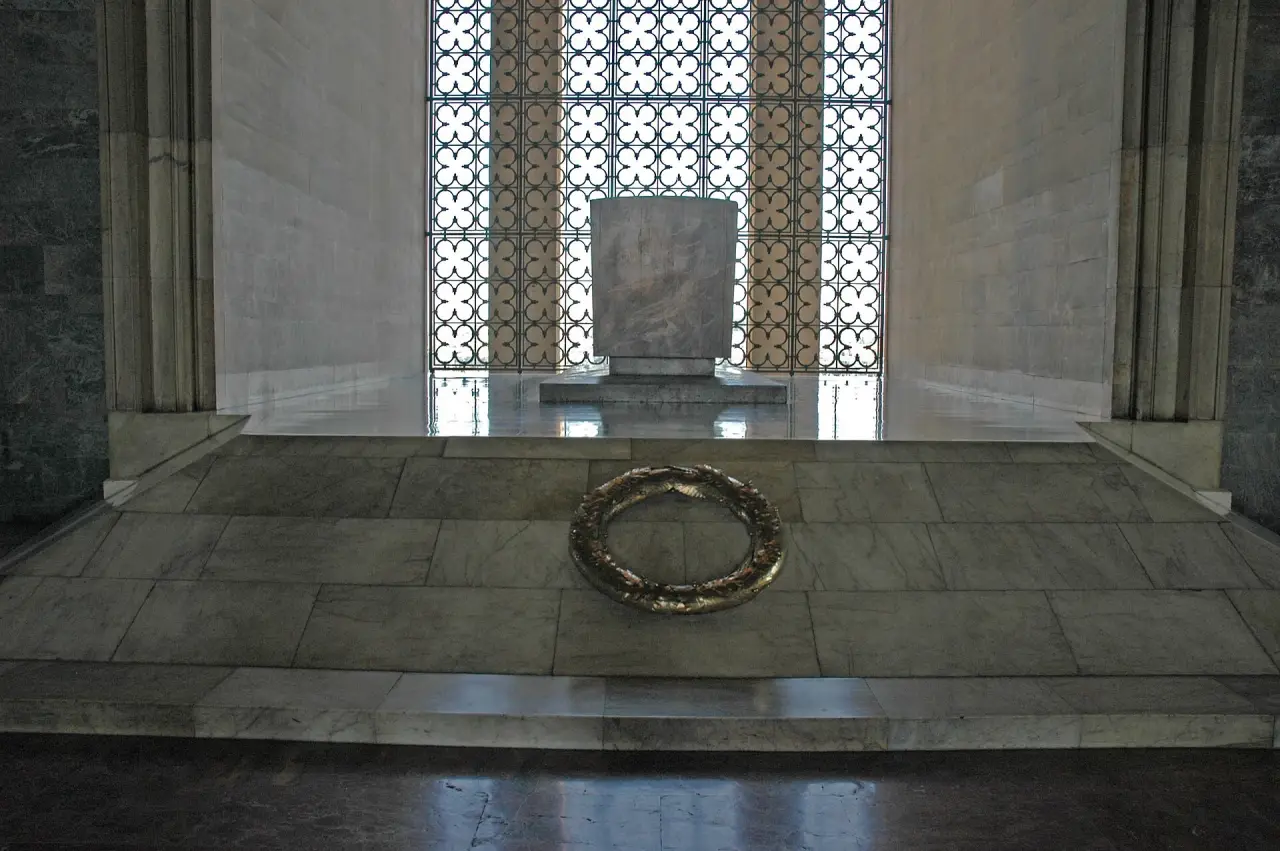
From the plaza a flight of 42 steps leads up to the Mausoleum. At the far end of the Hall of Honour, entered through bronze doors and lined with square columns, the symbolic sarcophagus stands in front of the great window. Atatürk's tomb lies directly beneath this sarcophagus, in an octagonal burial chamber inspired by Seljuk and Ottoman tomb architecture; around the grave are brass urns holding soil brought from every province of Türkiye, from Azerbaijan and from Cyprus.
Atatürk and War of Independence Museum
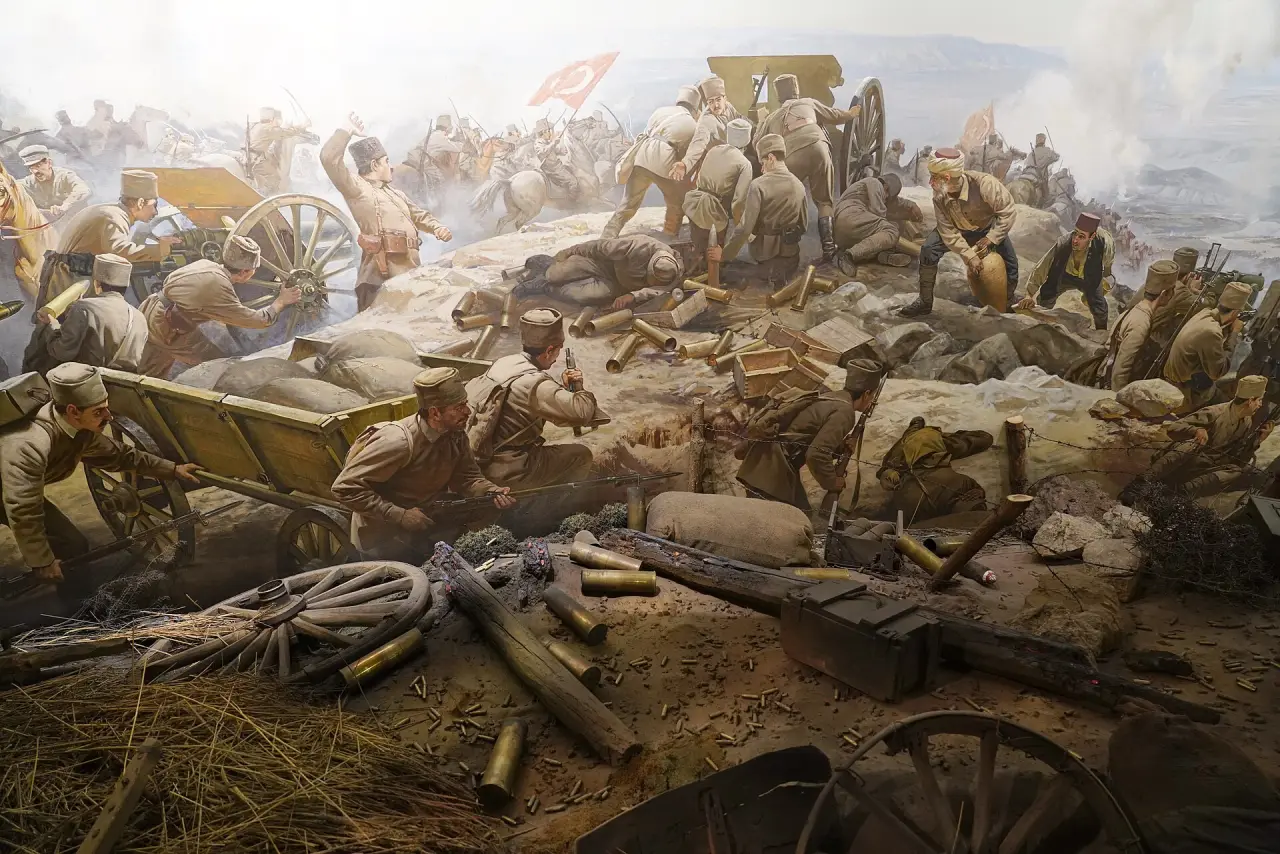
The museum of about 3,000 square metres beneath the Hall of Honour is entered through the door of the National Pact Tower, on the right as you face the Mausoleum from the Ceremonial Plaza. Its first section opened on 21 June 1960; it displays Atatürk's personal belongings; panoramas and oil paintings depicting Çanakkale, Sakarya and the Great Offensive; vaulted galleries on the War of Independence and the reforms; and the books in which Atatürk underlined passages and made notes as he read.
İsmet İnönü's tomb and the Peace Park
İsmet İnönü, the second President, who died in 1973, also lies at Anıtkabir, on the Ceremonial Plaza opposite the Mausoleum. The Peace Park surrounding the monument complex was planted with saplings sent from Türkiye and abroad.
Visitor information
| Period | Opens | Closes |
|---|---|---|
| 1 February – 14 May | 09.00 | 16.30 |
| 15 May – 31 October | 09.00 | 17.00 |
| 1 November – 31 January | 09.00 | 16.00 |
- Admission is free. There is a security check at the entrance; bring only what you need.
- A paid audio guide is available in six languages; groups can book a free guided tour through the Anıtkabir Command.
- Allow at least two hours for the whole visit (Road of Lions, Ceremonial Plaza, Mausoleum and museum); enter the museum before closing time.
- On public holidays, at official ceremonies and on 10 November, arrangements may change and queues grow long. Check hours on the Anıtkabir Command website before you go.
Travelling in his footsteps
The routes in the "In Atatürk's footsteps" collection were prepared by the AnatoliaPass editors. Each route includes etiquette guidelines, a story to read part by part, and practical information with "check before you go" notes.
AnatoliaPass editors
Anıtkabir and Ankara, where the Republic was founded
StoryHow Ankara became the capital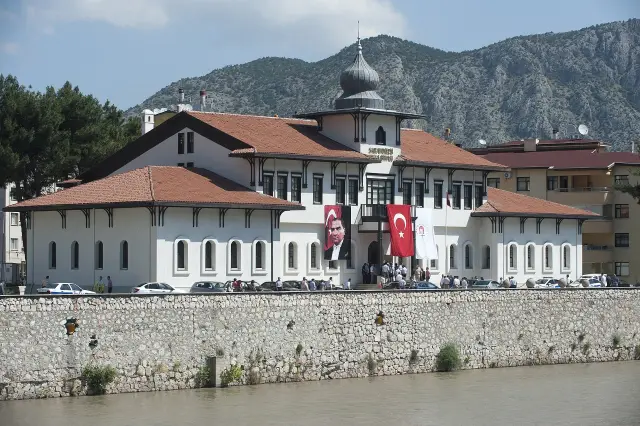
AnatoliaPass editors
The road of the National Struggle, from Samsun to Erzurum
StoryFrom Samsun to Sivas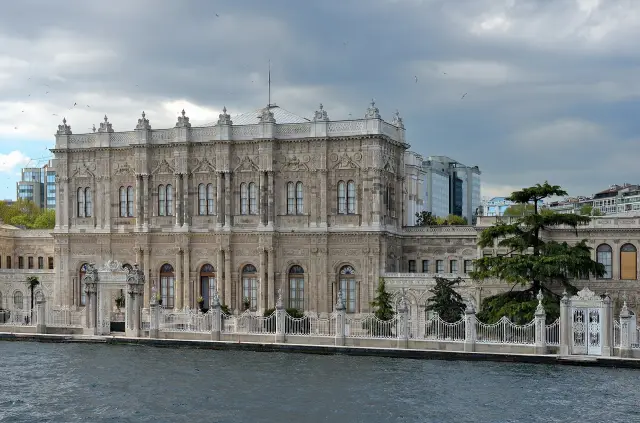
AnatoliaPass editors
Atatürk's Istanbul, from Dolmabahçe to Harbiye
StoryA lifetime in Istanbul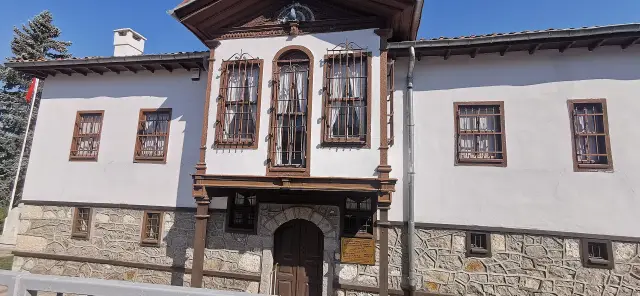
AnatoliaPass editors
The Battle of Sakarya, from Alagöz to Duatepe
Story22 days at SakaryaIn the Remembrance and mourning collection
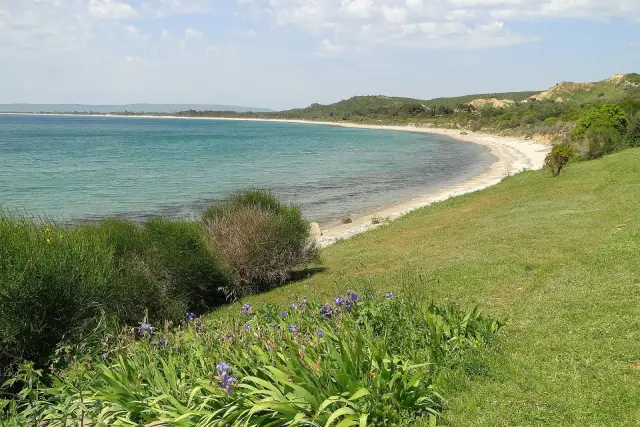
The Gallipoli Peninsula at Çanakkale, home to Conkbayırı and Arıburnu, and Kocatepe, from where the Great Offensive was directed, are covered by routes in the "Remembrance and mourning" collection.
AnatoliaPass editors
Gallipoli Peninsula: martyrs' cemeteries and Anzac Cove
StoryMourning on the peninsula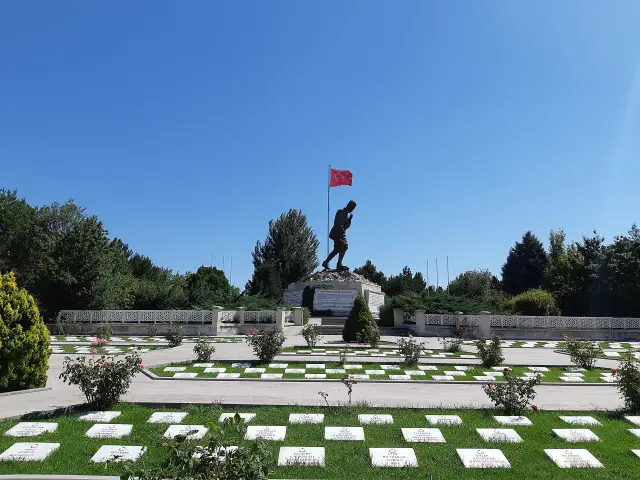
AnatoliaPass editors
From Kocatepe to Dumlupınar: the martyrs' cemeteries of the Great Offensive
StoryFrom the offensive to the cemeteryRemembering him
10 November, 09:05
Every year on 10 November, at 09:05, the hour of his death, sirens sound across Türkiye and people stand for a minute's silence; traffic stops and pedestrians halt where they are. A state ceremony is held at Anıtkabir, after which the queue of visitors stretches far back beyond the Road of Lions. The area in front of Dolmabahçe Palace is also crowded that morning.
At Anıtkabir
Visit Anıtkabir not as a sightseeing stop but as a mausoleum: keep your voice low from the Road of Lions to the Hall of Honour, don't run, and dress in keeping with the dignity of the place. In the Hall of Honour, don't take photos posing or joking in front of the sarcophagus, and follow the staff's directions. Don't talk to or touch the soldiers on guard; if there is a changing of the guard or a wreath-laying ceremony, stop and wait. Institutions and organisations apply to the Anıtkabir Command in advance to lay a wreath.
Perhaps the best way to remember him is to visit the places where his life unfolded, knowing their story: the road from Samsun to Erzurum, the first Assembly building in Ulus, the hills of Sakarya and Anıtkabir.
This page was compiled by the AnatoliaPass editors by comparing publications of the Anıtkabir Command, the Ministry of National Education's Atatürk chronology and encyclopaedic sources. We have left out details on which the sources differ; visiting hours may change, so check official sources before you go.