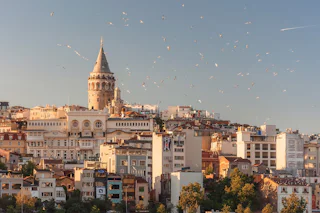

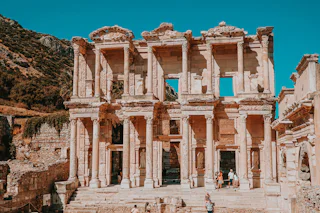
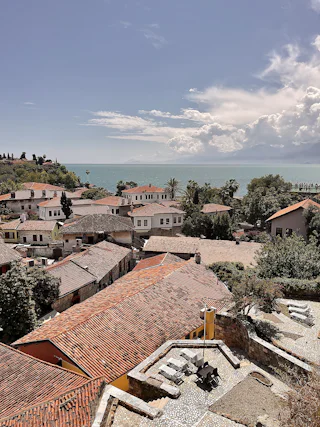


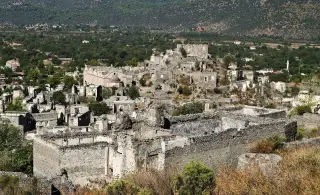
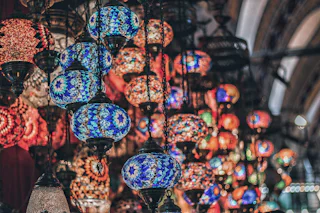

He was a historian who encouraged people to understand Istanbul by walking it neighbourhood by neighbourhood, seeing Byzantine churches and Ottoman mosque complexes side by side. Two routes on AnatoliaPass were compiled from his recommendations; we prepared this page so that those who walk the routes bearing his name can get to know him too.
Life
İlber Ortaylı was born on 21 May 1947 in Bregenz, Austria, into a Crimean Tatar family displaced after the Second World War. He came to Türkiye with his family when he was two.
He received his primary and secondary education at the Austrian High School in Istanbul and graduated from Ankara Atatürk High School in 1965. In 1970 he completed the Faculty of Languages, History and Geography at Ankara University; he studied at the University of Vienna and did his master's degree at the University of Chicago under Halil İnalcık. He wrote his doctoral thesis on local administration after the Tanzimat. Şerif Mardin and Mümtaz Soysal were also among his teachers.
In 1982 he resigned from the university in protest at the restrictions placed on academic freedom after the 1980 coup. He taught in Vienna, Berlin, Paris, Princeton, Moscow, Rome and Oxford. In 1989 he returned to Türkiye and became a professor at Ankara University's Faculty of Political Science; he then taught at Galatasaray and Bilkent universities.
In 2005 he was appointed director of the Topkapı Palace Museum and held the post for about seven years, until he retired on reaching the age limit in 2012. Through his books, lectures and television programmes he brought history to a wide audience.
He died in Istanbul on 13 March 2026, aged 78. On 16 March, after a memorial ceremony at Galatasaray University, he was laid to rest following a funeral prayer at the Fatih Mosque and buried in the mosque's graveyard.
Timeline
- 1947Born on 21 May in Bregenz (Austria).
- 1949Came to Türkiye with his family.
- 1965Graduated from Ankara Atatürk High School.
- 1970Completed the Faculty of Languages, History and Geography at Ankara University; then studied in Vienna and Chicago.
- 1982Resigned from the university in protest at post-coup academic restrictions; taught abroad.
- 1989Returned to Türkiye and became a professor at Ankara University's Faculty of Political Science.
- 2001Aydın Doğan Award.
- 2005–2012Director of the Topkapı Palace Museum.
- 2007Awarded the Pushkin Medal by Russia.
- 2017Presidential Grand Award for Culture and Arts.
- 2026Died in Istanbul on 13 March; buried in the graveyard of the Fatih Mosque on 16 March.
His contribution to Turkish historiography
Rereading the Ottomans' last century
At the heart of his academic work were the Ottoman 19th century, the Tanzimat period and the state's system of local administration. İmparatorluğun En Uzun Yüzyılı (The Empire's Longest Century) presents the empire's final century not as a story of collapse but as a period of intense change in which institutions, law and cities were rebuilt; it is still one of the first books people read as an introduction to the field.
Reading the archives in many languages
Teaching at many universities, from Vienna to Moscow, allowed him to read Ottoman history not only through its own sources but also through European and Russian archives. His study of German influence in the Ottoman Empire is one example.
Making history everyone's subject
Stepping out from behind the lectern, he told history to a wide audience through television programmes, lectures and books. Among the best known are “İlber Ortaylı ile Tarih Dersleri” (History Lessons with İlber Ortaylı) on NTV, his documentaries on TRT and “Zaman Kaybolmaz” (Time Is Never Lost) on Bloomberg HT. Many people say they owe their interest in Ottoman and Turkish history to the way he told it.
Running the museum
The seven years in which he directed the Topkapı Palace Museum were a period when a historian directly shaped the palace's collections and how they were presented to visitors.
Seeing it in person
In his travel writing and interviews, he recommended exploring Istanbul on foot, neighbourhood by neighbourhood, and Anatolia by going into its bazaars and caravanserais. These recommendations are the starting point for his routes on AnatoliaPass.
Selected works
From more than fifty books, those you can read before or during your travels:
- İmparatorluğun En Uzun Yüzyılı (The Empire's Longest Century)The Ottoman 19th century and modernisation
- Osmanlı’yı Yeniden Keşfetmek (Rediscovering the Ottomans)The everyday life, institutions and people of the empire
- Türklerin Tarihi (The History of the Turks)The history of the Turks, from Central Asia to Anatolia and Europe
- Osmanlı İmparatorluğu’nda Alman Nüfuzu (German Influence in the Ottoman Empire)A study of foreign relations drawing on European archives
- Tanzimat’tan Sonra Mahallî İdareler (Local Administration after the Tanzimat)A history of local administration, based on his doctoral research
- Bir Ömür Nasıl Yaşanır? (How Should a Life Be Lived?)On reading, travelling and living
Routes in his footsteps
These routes were compiled by AnatoliaPass editors from İlber Ortaylı's published recommendations; the timings, breaks and practical notes are our own.

Source: Prof. Dr. İlber Ortaylı (1947–2026)
İlber Ortaylı's Istanbul walk, in two days
Source: Prof. Dr. İlber Ortaylı (1947–2026)
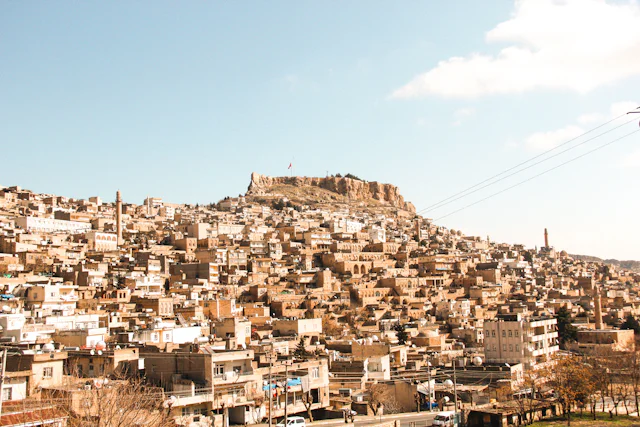
İlber Ortaylı's South-East route, from Antep to Mardin
Remembering him
İlber Ortaylı rests in the graveyard of the Fatih Mosque, on Istanbul's historic peninsula. When you visit, respect prayer times and the mosque's rules and keep quiet; before you go, check whether the graveyard is open to visitors, as it may be closed for restoration. The Fatih Mosque is one of the stops on the route İlber Ortaylı's Istanbul walk, in two days.
Perhaps the best way to remember him is to explore a city as he recommended: on foot, and with a book.
This page was compiled by AnatoliaPass editors from publicly available sources. It does not mean that İlber Ortaylı or his family recommended or endorsed AnatoliaPass.