




Historian's route
1 tickets€29
Source: Prof. Dr. İlber Ortaylı (1947–2026)
İlber Ortaylı's Istanbul walk, in two days
1 ticketed stopsOpen the route
A Beyoğlu day from Taksim Square to Tünel: the Republic Monument, the new AKM and Gezi Park, the Taksim Maksemi (water distribution building) that gave the square its name, Hagia Triada Church, the nostalgic tram, lunch at Hacı Abdullah, then the avenue's passages: Atlas, Çiçek, Avrupa (Europe) and Hazzopulo. After the Fish Market (Balık Pazarı) and Nevizade, St Anthony of Padua Church and the Tünel, running since 1875.
Taksim means ‘division’ or ‘distribution’ in Arabic. In the reign of Mahmud I, in 1731–32, the water channel brought from the forests to the north was gathered in an octagonal stone building on this ridge and distributed to the fountains of Beyoğlu and Galata. The building, the ‘maksem’, also gave the square its name. Today the same building houses the Istanbul Metropolitan Municipality's Republic Museum.
The Republic Monument in the middle of the square is the work of the Italian sculptor Pietro Canonica; it was unveiled on 8 August 1928. One side depicts the War of Independence, the other the founding of the Republic. To the north of the square stood the Artillery Barracks, built in 1806; its courtyard was used as a stadium in the 1920s, the barracks were demolished in 1940 and Gezi Park opened on the site in 1943. Since then, Taksim has been the square where holidays, celebrations and crowds come together.
In Ottoman times, the road known as Cadde-i Kebir, the ‘Grand Avenue’, was the street lined with Pera's embassies, churches, hotels and shops; after the founding of the Republic it took the name İstiklal (‘Independence’). The great Beyoğlu fire of 1870 burned much of the street. Within a few years, the passages running beneath the masonry buildings put up in its place had become the avenue's new face: Hazzopulo opened in 1871, the Avrupa Passage in 1874 and the Cité de Péra in 1876.
It is said that after 1917, Russian women who had fled the revolution sold flowers in the arcade of the Cité de Péra; in the 1940s the passage came to be called Çiçek Pasajı (‘Flower Passage’), and by the end of the 1950s it had been given over entirely to meyhanes (taverns). At the other end of the avenue, an underground funicular proposed by the French engineer Eugène-Henri Gavand to shorten the climb between Karaköy and Beyoğlu opened on 17 January 1875. The Tünel is described as the world's second-oldest underground line after London's first metro line, and it still runs today.
Start: Taksim station on the M2 metro, or the F1 funicular from Kabataş · stay 20 min
Made by the Italian sculptor Pietro Canonica, with its base and surroundings designed by Giulio Mongeri, the 11-metre monument was unveiled on 8 August 1928; it was paid for by public donations. One side shows Mustafa Kemal before his soldiers and the War of Independence; the other shows Mustafa Kemal in civilian dress with his comrades-in-arms and the people, and the founding of the Republic. Taksim Mosque, opened in 2021, rises at the edge of the square.
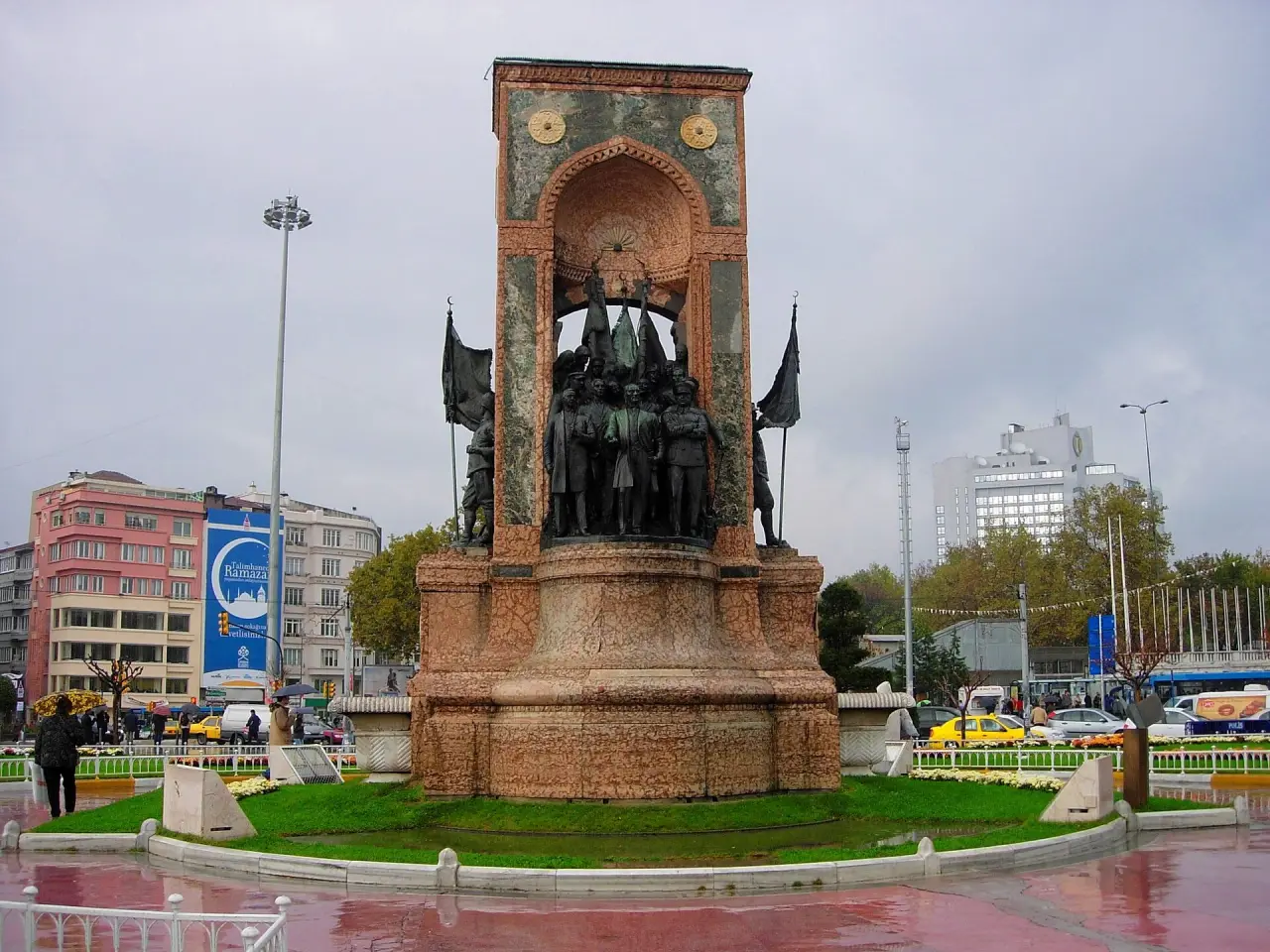
Ceremonies are held in the square on public holidays and days of remembrance; some crossings may be closed.
The eastern edge of the square, ≈ 3 min · stay 15 min
The first building, designed by Hayati Tabanlıoğlu, opened in 1969 as the Istanbul Palace of Culture and, after a fire in 1970, reopened in 1978 as the Atatürk Cultural Centre. The old building was demolished in 2018; the new AKM, designed by his son Murat Tabanlıoğlu, opened in its place on 29 October 2021. Inside are a 2,040-seat opera hall, a theatre, a cinema and exhibition spaces.
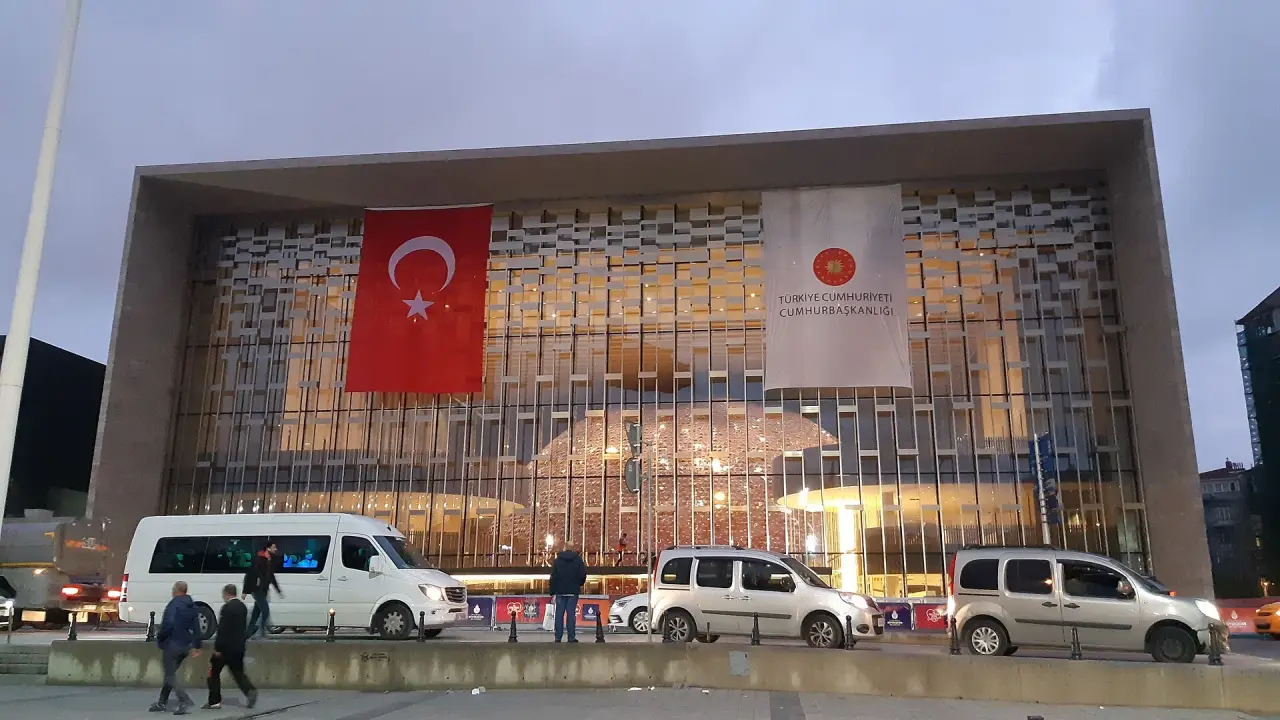
Check the performance and exhibition programme before you go.
North past the front of the AKM, ≈ 3 min · stay 20 min
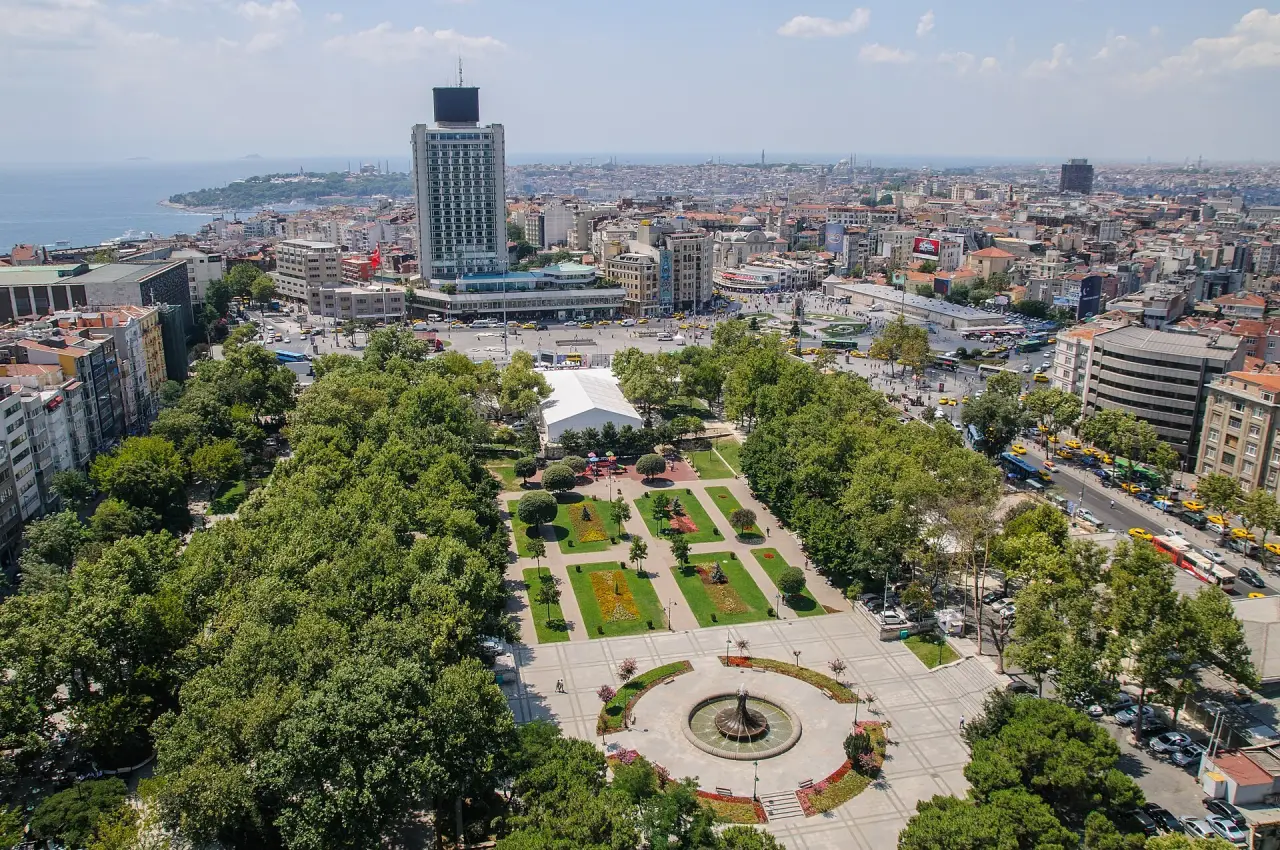
Part of the town planner Henri Prost's plan for Istanbul, the park opened in 1943; it is one of the first large parks built in Istanbul in the Republican era and was long known as İnönü Gezisi (İnönü Promenade). It stands on the site of the Halil Paşa Artillery Barracks, built in 1806, whose courtyard was used as Taksim Stadium in the 1920s. Today it is a city park where people sit under the plane trees, and it is quiet in the mornings.
The south-west corner of the square, at the top of İstiklal, ≈ 5 min · stay 45 min
An octagonal water distribution building put up in 1731–32, in the reign of Mahmud I. Water brought from the north, from around Bahçeköy, was gathered here and divided among the fountains of Beyoğlu and Galata; this is also where the square gets its name. Restored by the Istanbul Metropolitan Municipality (İBB), the building is now the Republic Museum, displaying items such as Atatürk's field marshal's uniform and personal belongings.
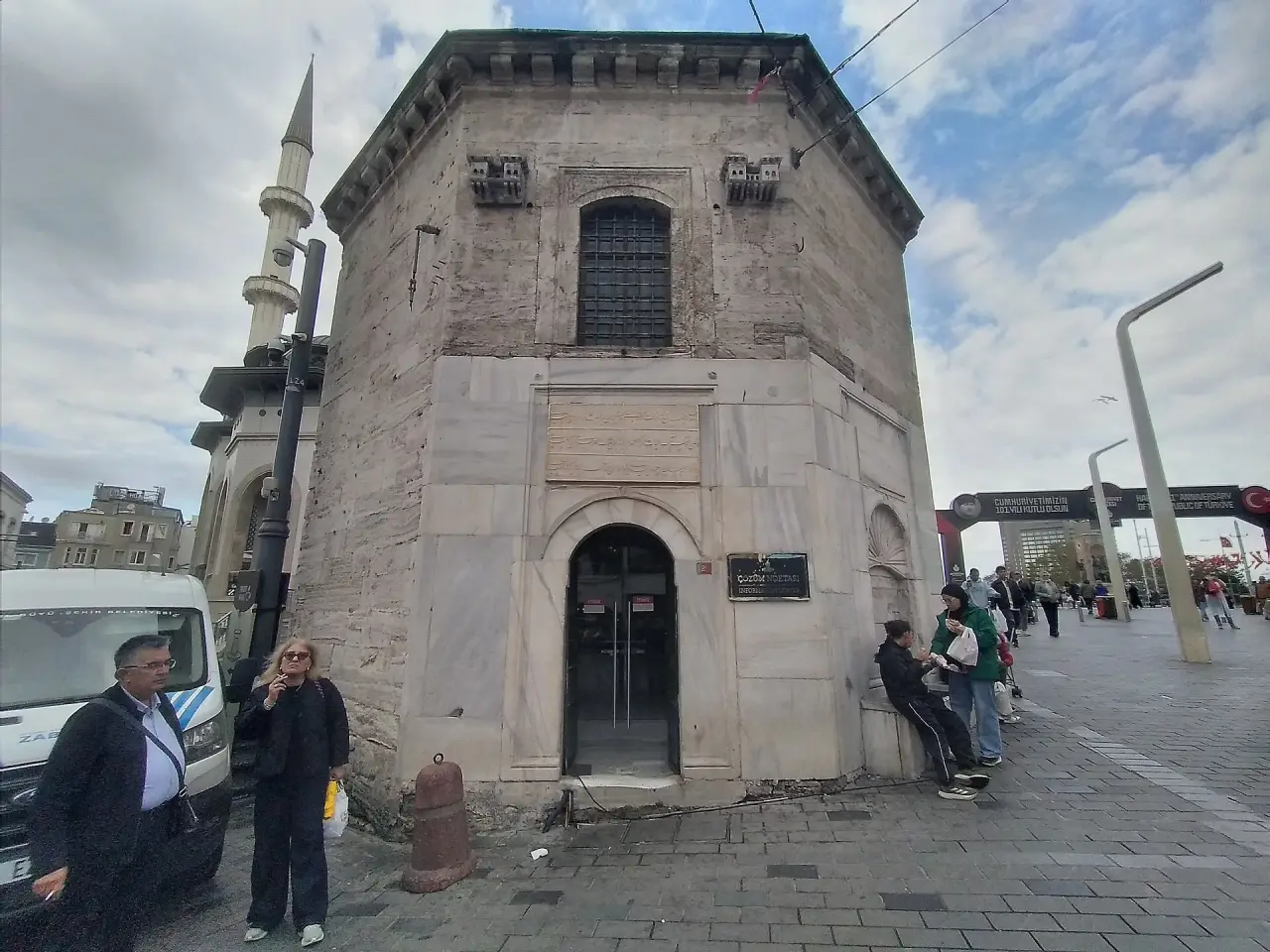
According to the İBB website, closed on Mondays, other days 10:00–18:00, admission charged; check the hours and price before you go.
Behind the maksem to Meşelik Sokağı, ≈ 2 min · stay 15 min
A Greek Orthodox church built between 1876 and 1880; with its two bell towers and large dome, it rises just behind the square. It was damaged in the events of 6–7 September 1955 and reopened after repairs in 2003. Istanbul's Greek Orthodox (Rum) community still worships here today.
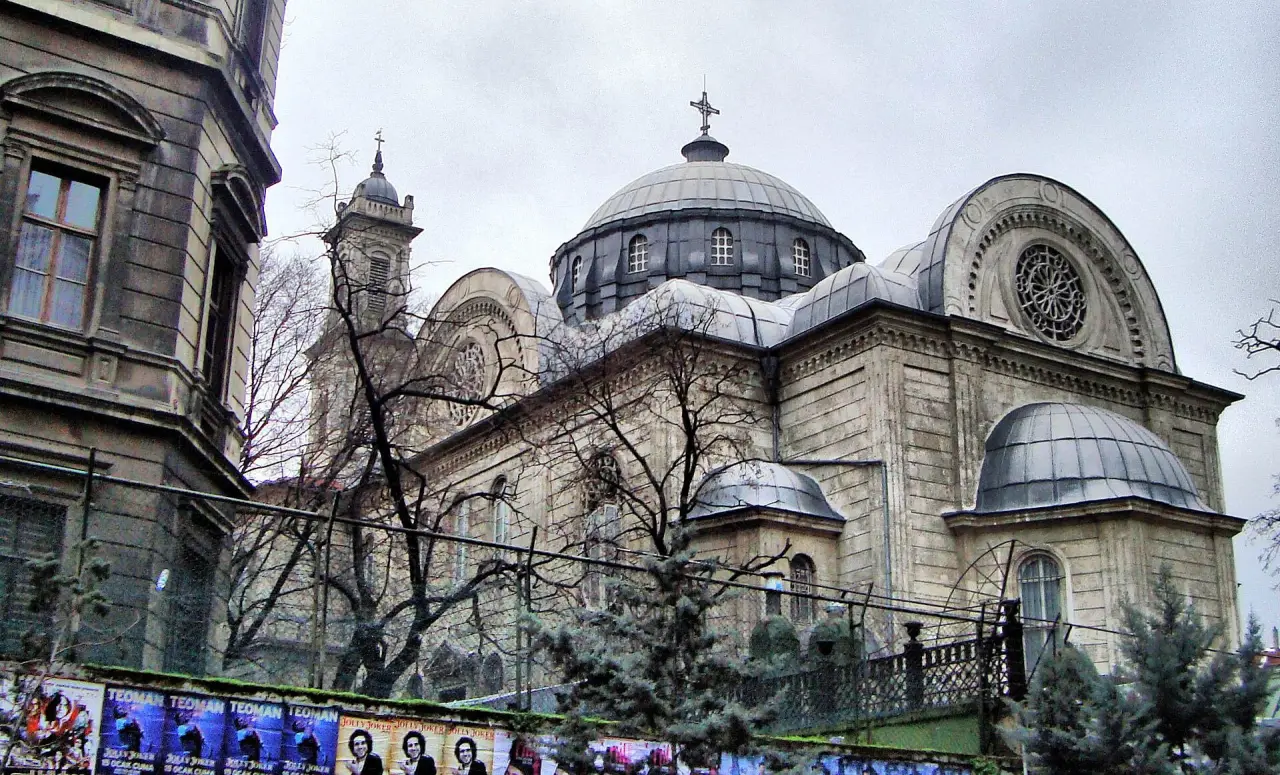
The door may not always be open; during a service, watch quietly and don't take photos.
Back to the square and into İstiklal; ≈ 5 min to the Hüseyin Ağa Mosque stop · stay 15 min
The 1.6-kilometre single-track nostalgic tram between Taksim and Tünel began running on 29 December 1990, after the avenue was pedestrianised; it stops at Taksim, Hüseyin Ağa Mosque, Galatasaray High School, Odakule and Tünel. Along the way, look at the façades of the apartment buildings from the late 19th and early 20th centuries; above the shop signs, on the upper floors, the old face of Pera lives on.
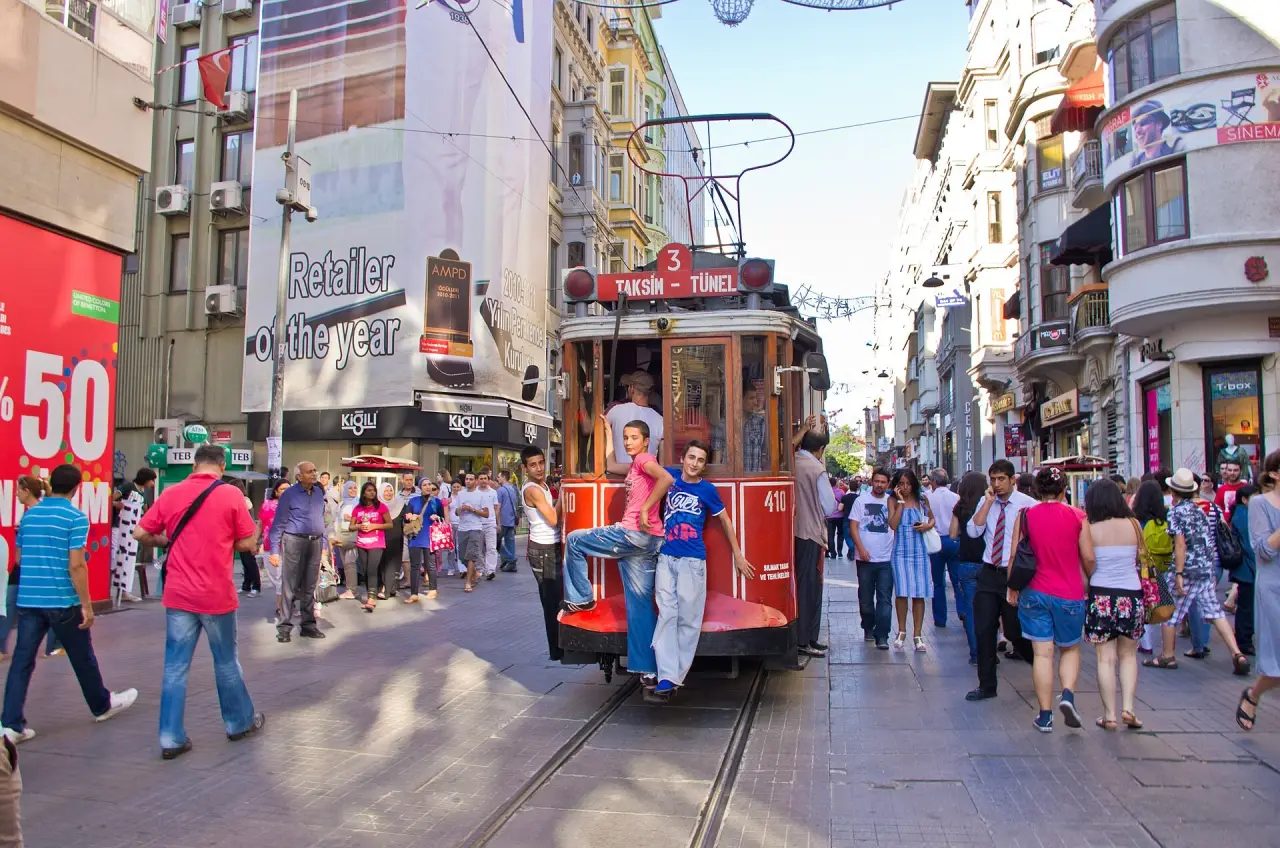
The tram is infrequent and slow in crowds; walking is often quicker.
Past the Ağa Mosque to Atıf Yılmaz Caddesi, ≈ 2 min · stay 60 min
An esnaf lokantası (traditional tradesmen's restaurant) whose roots go back to an eatery opened on the Karaköy quayside in 1888, and which moved to Beyoğlu in 1905. A good lunch stop for the slow-cooked stews of Ottoman and Istanbul cuisine, vegetables cooked with meat and seasonal desserts. This stop is an independent recommendation; we have no agreement with the restaurant.
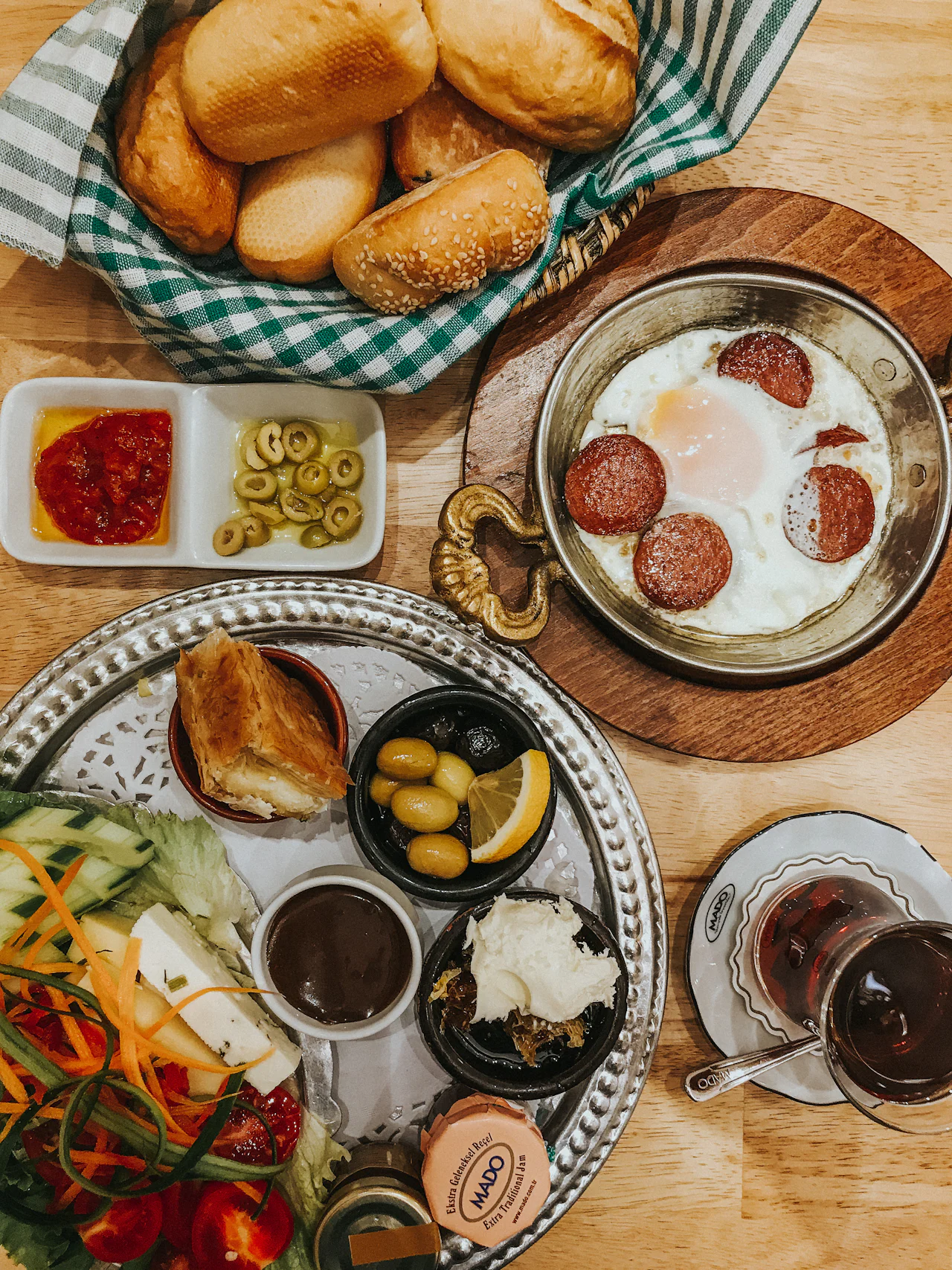
It can be busy at lunchtime; check opening hours before you go.
Back on to İstiklal, towards Galatasaray, ≈ 3 min · stay 40 min
A mansion built in 1877, after the fire of 1870, for the jeweller Agop Köçeyan; the Atlas Cinema, which opened in the block behind it on 19 February 1948, became one of Beyoğlu's best-known cinemas. Since 2021 the building has housed the Istanbul Cinema Museum; walking through the passage is free.
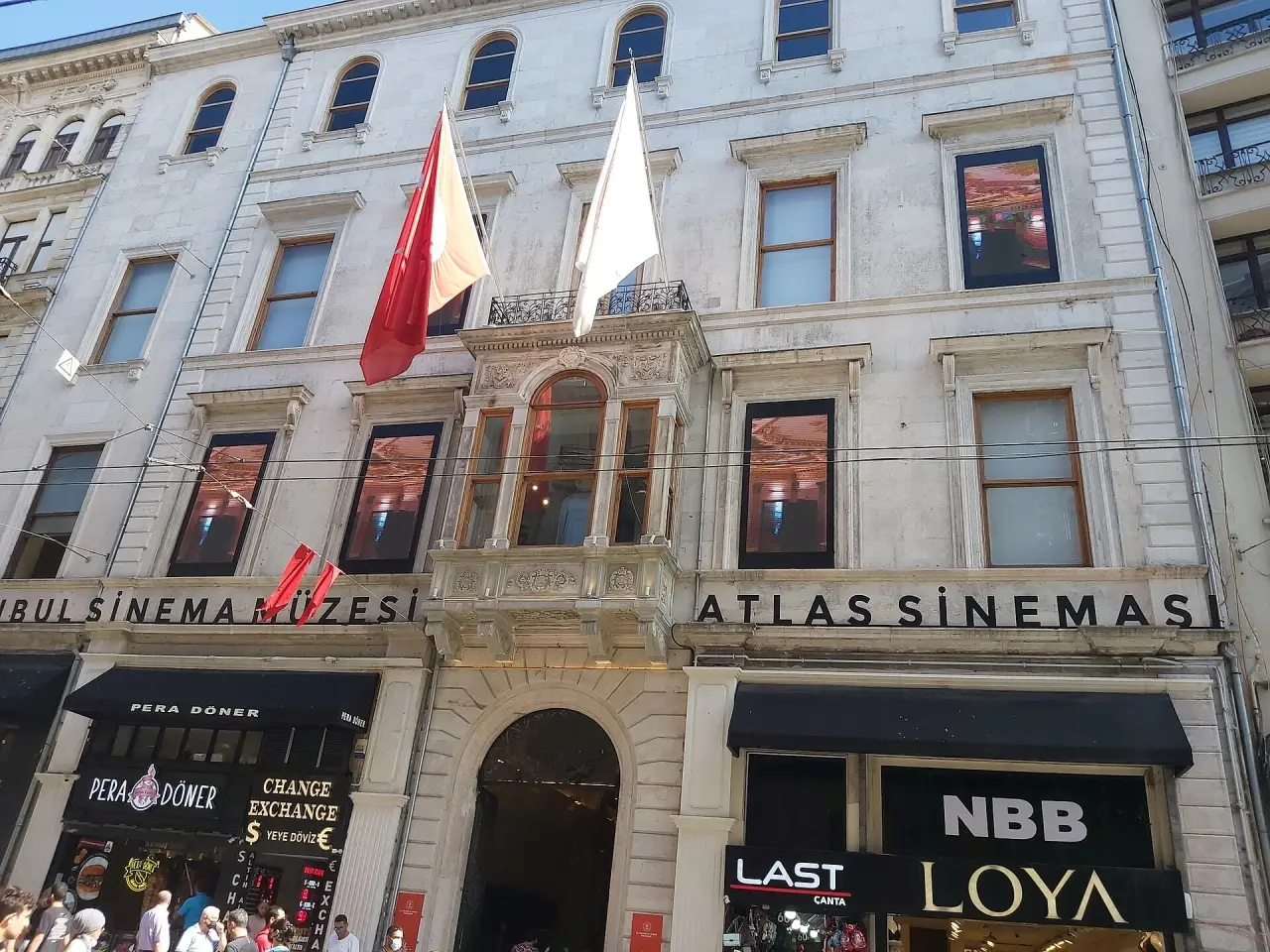
Check the museum's hours and admission price before you go.
≈ 4 min walk, on the right towards Galatasaray Square · stay 20 min
Built by Hristaki Zografos Efendi on the site of the Naum Theatre, which burned down in the fire of 1870, the Cité de Péra opened in 1876, with 24 shops in its arcade and 18 flats on the upper floors. After 1917, the women who sold flowers here gave the passage its name, and from the 1940s onwards the meyhanes multiplied. The building collapsed in 1978 and was rebuilt faithfully to the original; today restaurants line up beneath its glass roof.
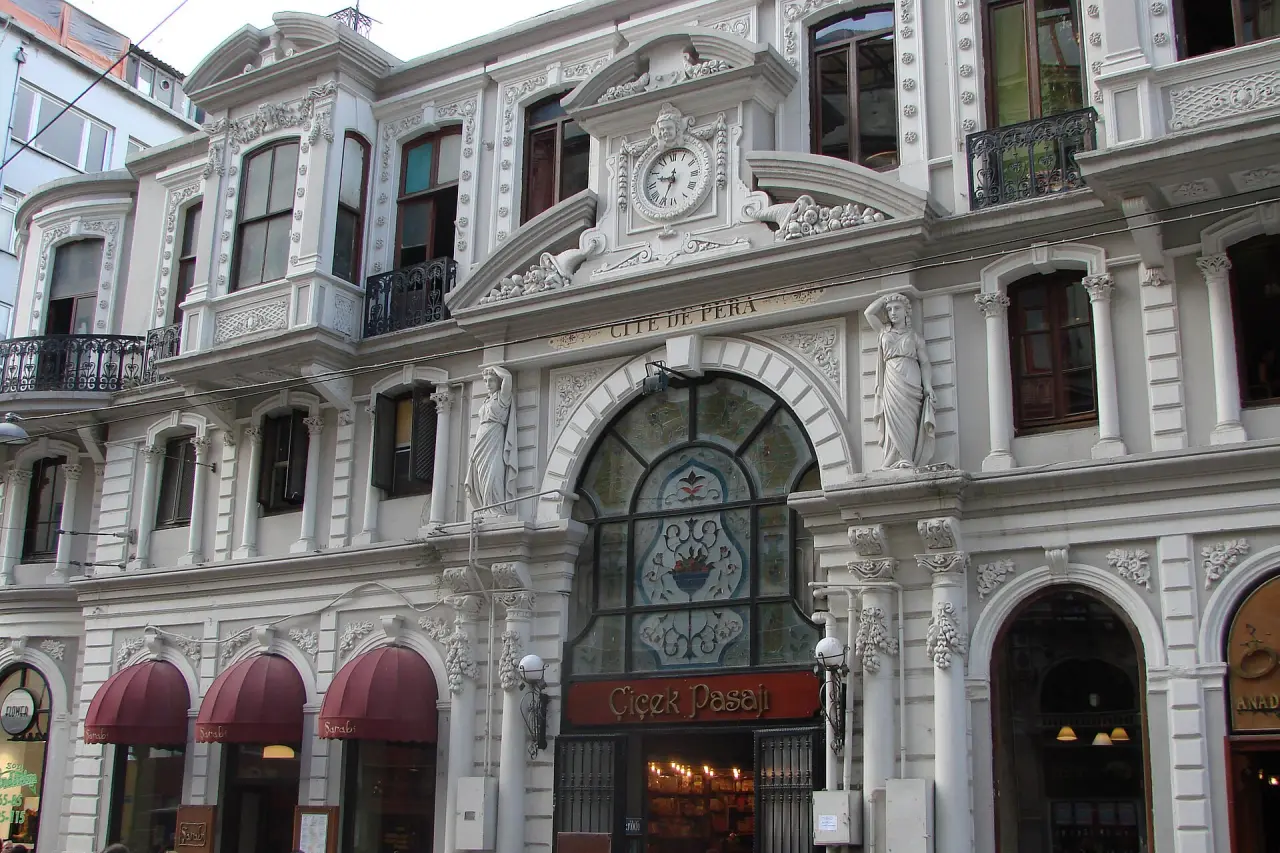
Walking through the passage is free; if you sit down, ask about prices first.
Out of the back exit of Çiçek Pasajı on to Sahne Sokağı · stay 25 min
In the Fish Market behind Çiçek Pasajı you'll find fishmongers, pickle sellers, delicatessens and kokoreç stalls; right next to it, Nevizade Sokağı is packed with meyhanes whose tables spill out into the street. Come by day and you'll see the stalls; come in the evening and you'll see Beyoğlu's meyhane crowd.
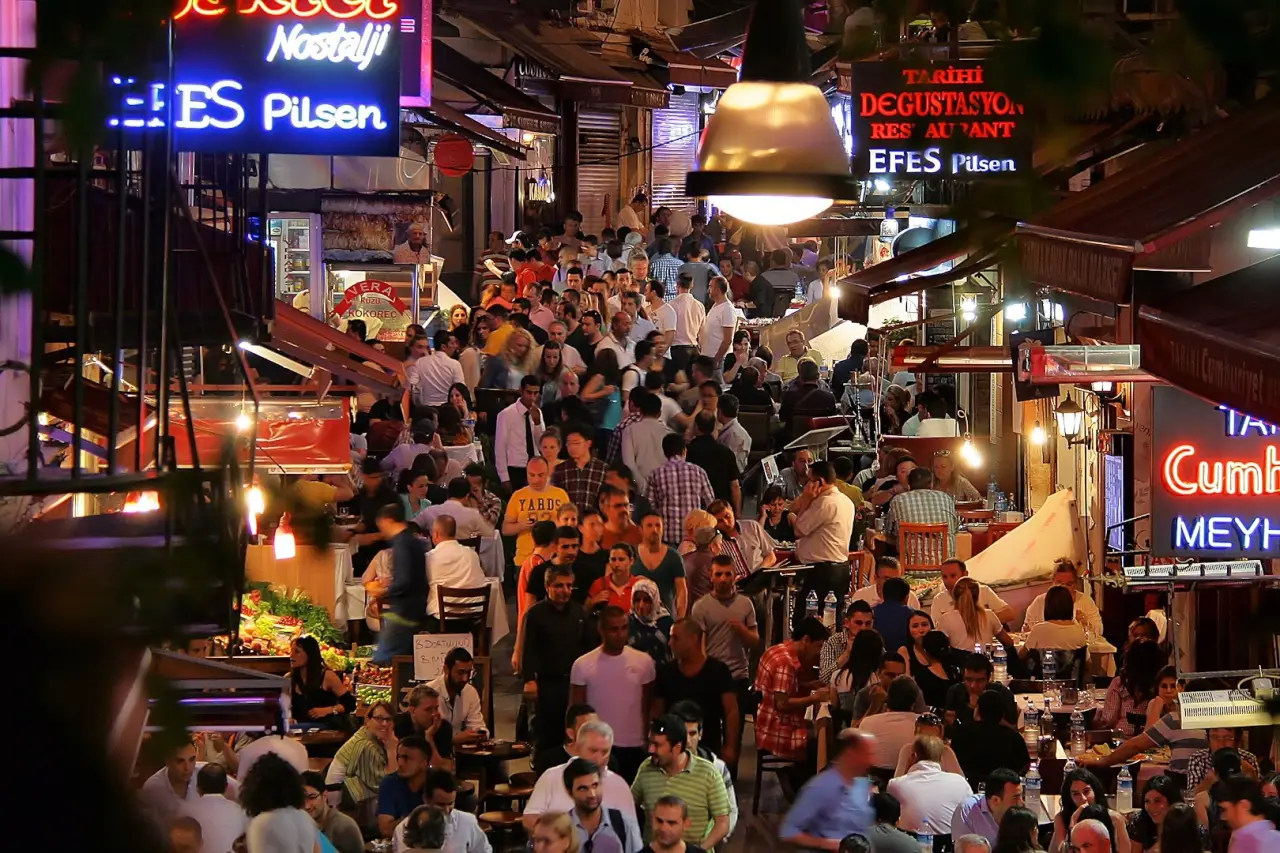
The street gets very crowded in the evenings; ask about prices before you sit down.
Through the Fish Market, ≈ 2 min · stay 15 min
Commissioned by the Armenian merchant Onnik Düz from the Austrian architect Domenico Pulgher, the passage opened in 1874; because of the mirrors inside, it is also known as the Aynalı Pasaj (Mirrored Passage). It links Sahne Sokağı with Meşrutiyet Caddesi; today its shops sell tiles, kilims, yemeni (printed cotton headscarves) and postcards.
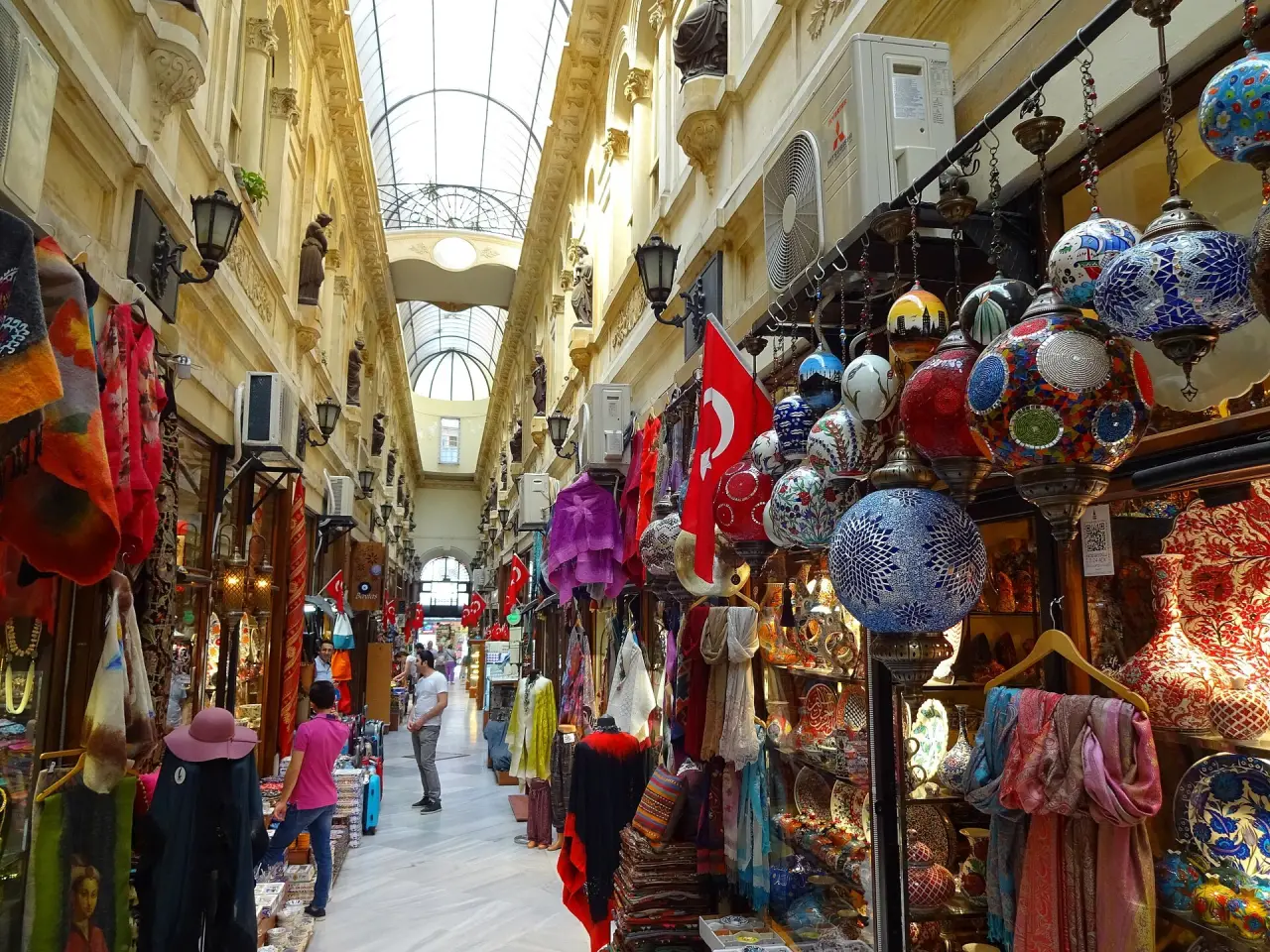
≈ 3 min from the Meşrutiyet Caddesi side; the passage also opens on to İstiklal · stay 30 min
Opened on 15 April 1871, the passage takes its name from the Hacopulo family of Greek merchants who built it. Namık Kemal's newspaper İbret was printed here. The stools of the tea stall in its courtyard make it one of the best-loved corners for escaping Beyoğlu's crowds over a glass of tea; a side door leads through to the Church of Panagia Isodion. When you come back out on to İstiklal, you'll see the monumental gate of Galatasaray High School opposite.
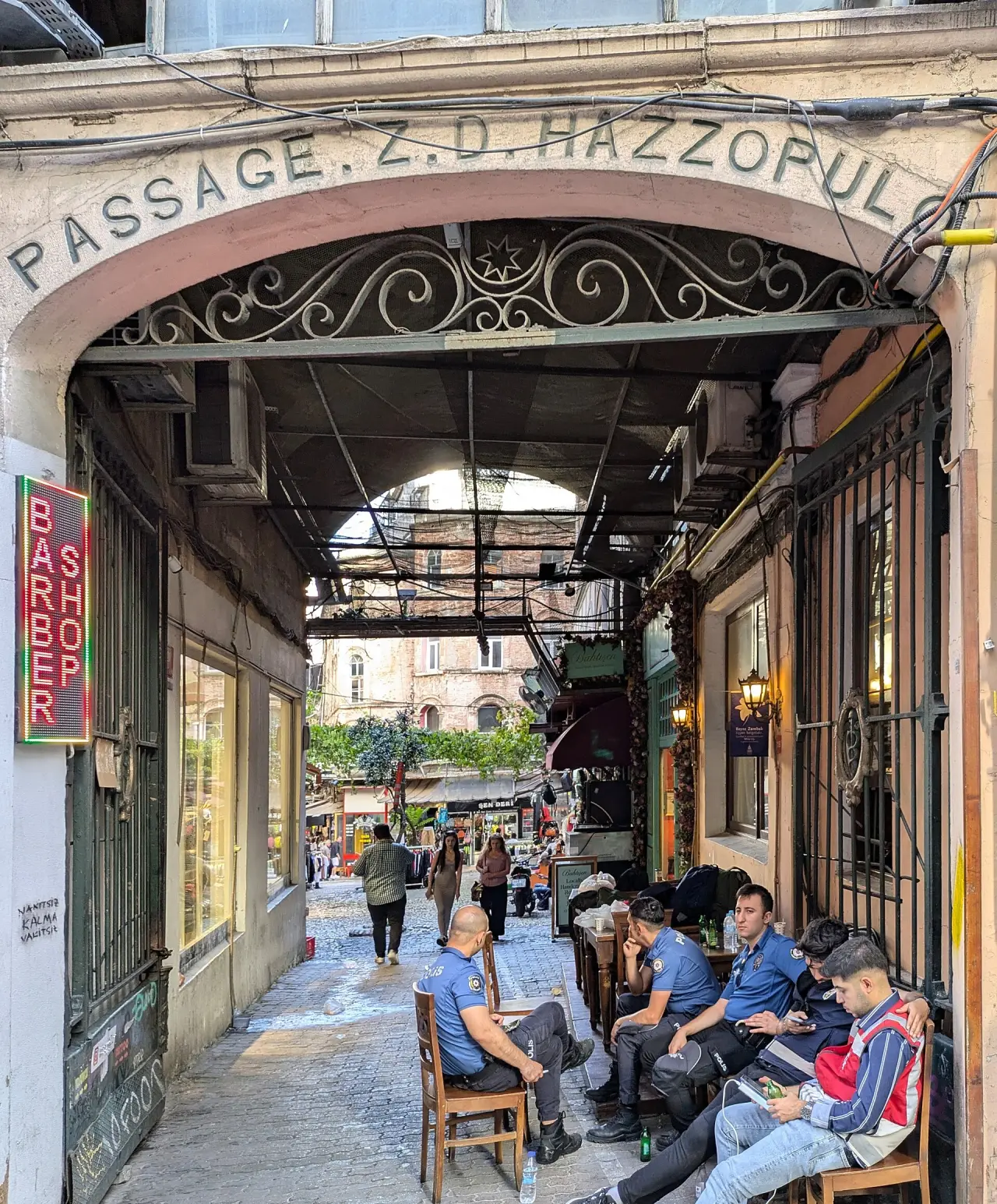
Along İstiklal towards Tünel, ≈ 4 min · stay 20 min
Designed by the Levantine architect Giulio Mongeri, the neo-Gothic church was built between 1906 and 1912; it is known as Istanbul's largest Catholic church. An Italian community church had stood on the site since the 18th century. Angelo Roncalli, who was in Istanbul in the 1930s and 1940s as the Vatican's representative to Turkey and later became Pope John XXIII, preached here; there is a statue of him in the courtyard.
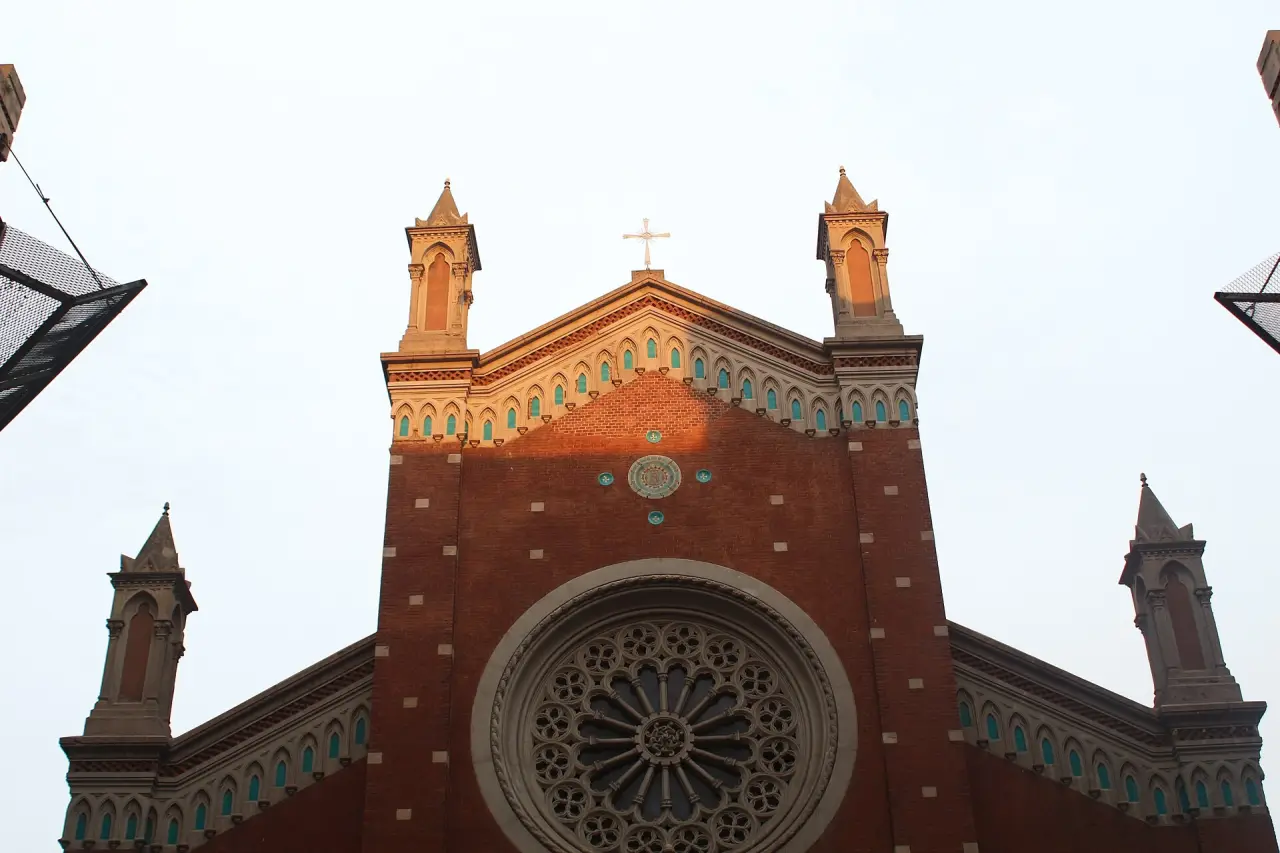
Don't walk around inside during a service; check visiting hours before you go.
To the end of İstiklal, at Tünel Square, ≈ 7 min · stay 15 min
Opened on 17 January 1875, the funicular climbs the roughly 573-metre route between Karaköy and Beyoğlu in under two minutes; the difference in height between the two stations is about 61 metres. It is described as the world's second-oldest underground line after London's first metro line (1863). If you like, take the Tünel down to Karaköy and carry on from there to a ferry or to Galata Bridge.
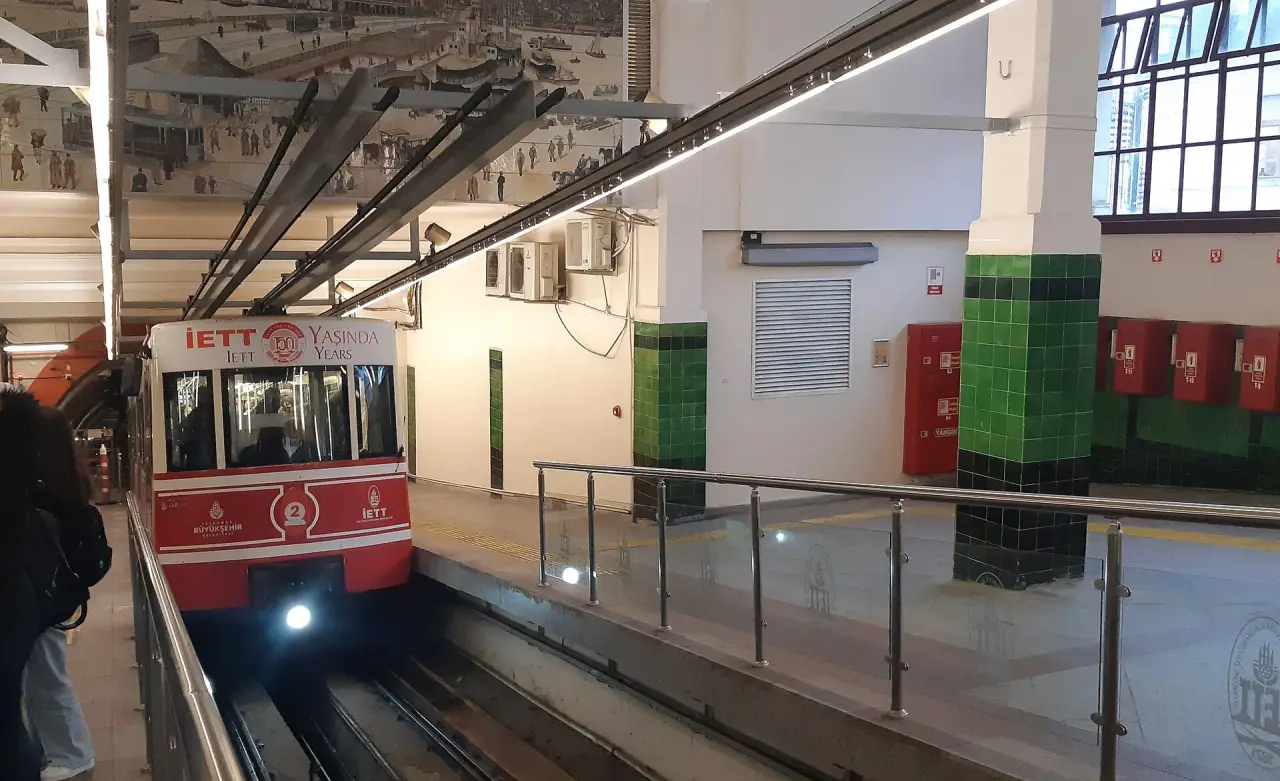
You ride with an İstanbulkart; check service times before you go.
≈ 2 h 15 min · fast ferry + bus · Day trip
Why here: The first Ottoman capital. The Green Mosque, the Grand Mosque and Koza Han make an easy day trip; we suggest it if you are staying in Istanbul for more than four days. Not part of this route.
Travellers who check in on this route can rate it. No one else can.
Be one of the first travellers to walk this route. If you have a question or a tip, share it with the community.
After walking the route you can rate it using the check-in in the app. Reviews go live after a short check.
Source: Prof. Dr. İlber Ortaylı (1947–2026)
Source: Prof. Dr. İlber Ortaylı (1947–2026)
