




Historian's route
1 tickets€29
Source: Prof. Dr. İlber Ortaylı (1947–2026)
İlber Ortaylı's Istanbul walk, in two days
1 ticketed stopsOpen the route
West from Fatih to the city's fifth and sixth hills: the Nişancı Mehmed Pasha Mosque from Sinan's last years, the Cistern of Aetius, now a football pitch, the Pammakaristos (Fethiye Mosque) with its mosaics, the Cistern of Aspar, now turned into a park, and the Yavuz Selim Mosque overlooking the Golden Horn. We compiled it from the thirteenth walk in Hilary Sumner-Boyd and John Freely's book Strolling Through Istanbul (1972); we added the timings, breaks and practical notes.
This route was compiled by AnatoliaPass editors from the published recommendations of the person named; the timings, breaks and practical notes are ours. It does not mean that the person recommends or endorses AnatoliaPass.
Hilary Sumner-Boyd was born in New York in 1913 and educated there and in England; he spent most of his life in Istanbul, teaching at Robert College, and died in the city on 2 September 1976. John Freely was born in Brooklyn in 1926; a physicist, he came to Istanbul in 1960 to teach at Robert College and over his lifetime wrote dozens of books on Istanbul, the Ottomans and the history of science; he died in 2017. Strolling Through Istanbul, which the two wrote together, was published in Istanbul by Redhouse Press in 1972 and is still in print today in revised editions.
Strolling Through Istanbul tours the historic peninsula by dividing it, like Rome, into seven hills. The fifth hill is the ridge above the Golden Horn where the Yavuz Selim Mosque stands; the sixth is the high ground near the land walls, where Karagümrük and Edirnekapı lie. The book's thirteenth walk starts from Fatih and wanders between these two hills.
For its water, the Byzantine city relied on aqueducts bringing it from beyond the walls and on great open cisterns. Two of the three great open cisterns built in the 5th century, those of Aetius and Aspar, lie on this route. In Ottoman times market gardens and houses settled inside both, and they became known as 'çukurbostan' (sunken gardens); one is now a stadium, the other a park.
The Pammakaristos, in the middle of the walk, was home to the Orthodox Patriarchate for a time after the conquest; it was converted into a mosque in 1591. In this chapter the book shows the art of late Byzantium and the Ottoman classical period side by side in the same few streets: on one side one of Sinan's last mosques, on the other gold-ground mosaics.
Start: Fatih Mosque; west along Fevzi Paşa Caddesi, then to Nişanca Caddesi, ≈ 12 min · stay 30 min
The book begins this walk at Fatih; the first stop is this mosque in Karagümrük. According to the inscription over its door, it was begun in 1584 and finished in 1589; as Sinan died in 1588, the mosque is thought to have been completed by his assistant Davud Ağa. The spacious interior, its dome resting on eight piers, is a mature example of the classical period; the design of the tughra of Murad III above the door is attributed to the mosque's founder, who was the nişancı, the official who drew the sultan's monogram.

Visits pause during prayer times; check the times before you go.
≈ 7 min, north-west · stay 15 min
An open cistern built in the Byzantine period, once one of the largest in the city. In Ottoman times it became a market garden, and since 1928 it has been a football pitch, known as the Karagümrük or Vefa stadium. The stone walls rising around the pitch mark the cistern's old boundaries.

The stadium is closed most days; you can see the walls from the surrounding streets. On match days the area gets crowded, so check the fixtures before you go.
≈ 8 min, east towards Çarşamba · stay 45 min
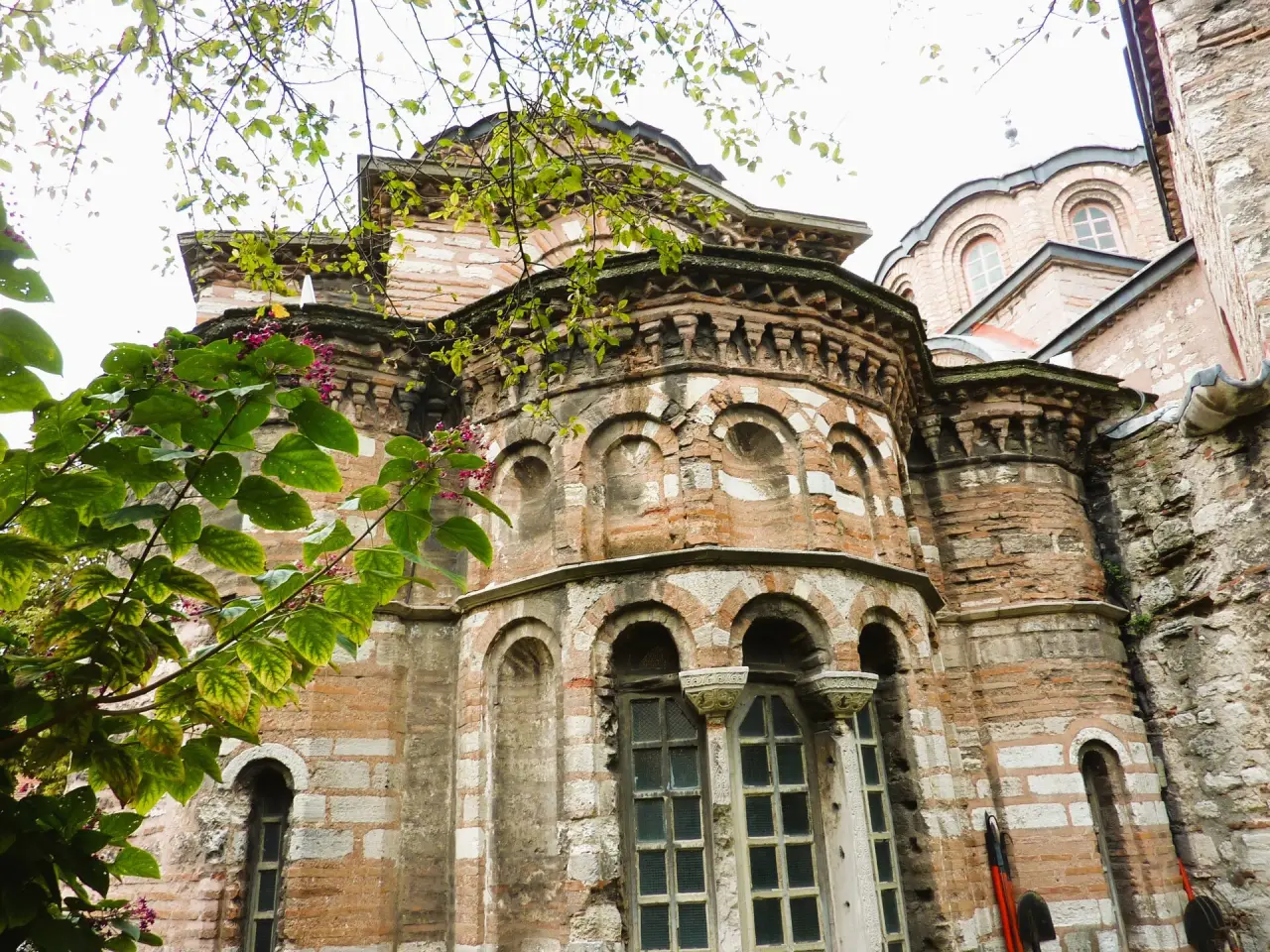
The church of the Pammakaristos Monastery, dedicated to the Virgin Mary; after the conquest it served for a time as the Orthodox Patriarchate. In 1591 it was converted into a mosque and named Fethiye ('Conquest') to commemorate the victories of Murad III's reign. The side chapel (parekklesion) is a separate museum section: with its gold-ground mosaics, it holds more Byzantine mosaics than anywhere else in Istanbul after Hagia Sophia and Kariye.
The museum section's opening days and entry fee may change; the mosque section cannot be entered at prayer times. Check before you go.
≈ 7 min, south-east · stay 20 min
An open cistern built in the 5th century, with sides about 150 metres long; it is named after Aspar, the powerful Byzantine general. In Ottoman times market gardens and houses settled inside it, and it became known as the Sultan Selim Çukurbostanı. Today it holds a park, seating and tea stalls; the cistern's high walls still stand at the edge of the park.

≈ 3 min from the northern edge of the cistern · stay 45 min
The mosque on the terrace on top of the fifth hill, overlooking the Golden Horn. Built in the name of Selim I and completed in 1522, it is one of the most distinctive examples of the early classical period, with its single great dome and plain interior. Selim the Grim (Yavuz Sultan Selim) is buried in the tomb in the garden. From the terrace beside the mosque you can see Fener below, Hasköy opposite and the long inlet of the Golden Horn.

Visits pause during prayer times; check the tomb's visiting hours before you go.
≈ 2 h 15 min · fast ferry + bus · Day trip
Why here: The first Ottoman capital. The Green Mosque, the Grand Mosque and Koza Han make an easy day trip; we suggest it if you are staying in Istanbul for more than four days. Not part of this route.
Travellers who check in on this route can rate it. No one else can.
Be one of the first travellers to walk this route. If you have a question or a tip, share it with the community.
After walking the route you can rate it using the check-in in the app. Reviews go live after a short check.
Source: Prof. Dr. İlber Ortaylı (1947–2026)
Source: Prof. Dr. İlber Ortaylı (1947–2026)
Your basket stays saved on this device, so you can pick up where you left off once sales open. Until then, routes, the map and audio guides are free.