


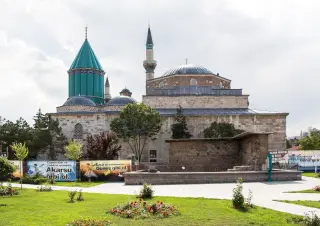


Historian's route
1 tickets€29
Source: Prof. Dr. İlber Ortaylı (1947–2026)
İlber Ortaylı's Istanbul walk, in two days
1 ticketed stopsOpen the route
A four-day road from the mosaics of Antakya to the waterfalls of Harbiye, from Adana's Taşköprü to the columns of Soli, to Kızkalesi, the sinkholes of Heaven and Hell, the Göksu where Barbarossa drowned, Mamure Castle at Anamur and Ermenek in the heart of the Taurus. We compiled it from the Cilician journey described by the British historian and writer Lord Kinross in his book Europa Minor; we added the timings, breaks and practical notes.
This route was compiled by AnatoliaPass editors from the published recommendations of the person named; the timings, breaks and practical notes are ours. It does not mean that the person recommends or endorses AnatoliaPass.
Patrick Balfour, 3rd Baron Kinross (1904–1976), was a journalist, historian and travel writer of Scottish descent. In Türkiye he is best known for his biography of Atatürk, published in 1964; The Ottoman Centuries, on Ottoman history, is also among his widely read books. He described the journey he made through inner Anatolia in 1950 in Within the Taurus (1954), and his journeys along the coasts in Europa Minor (1956), which he saw as its companion volume.
Kinross explains the book's title like this: the plateau enclosed by the Taurus is Asia Minor proper, while the coasts outside the Taurus, which have drawn their influences more from the West, are a Europe Minor. The book describes not a single journey but a series of journeys he made between 1947 and 1954: the Mediterranean and Aegean coast from Antakya on the Syrian border to Edirne on the Greek border. He wrote some of the Aegean chapters aboard the Elfin, David Balfour's boat, on which Freya Stark also travelled.
The book's first two chapters are on Cilicia. From the mosaics of Antakya and the waterfalls of Harbiye, Kinross goes by train to Adana, then to Mersin and the rugged western coast of Cilicia: Soli, where Pompey settled the pirates; a coast crowded with Roman tombs; Armenian castles; the caves of Korykos; the river where Barbarossa drowned; Anamur; and finally Ermenek in the heart of the Taurus. Along the way he also describes the people he meets, from consuls to farmers, from district governors to mayors.
We followed the order of Kinross's Cilicia chapters and drew on his observations of the places. Antakya and Harbiye were very badly damaged in the earthquakes of 6 February 2023; we have noted separately that visiting arrangements at these stops may change. The timings, driving times, meal breaks and warnings are ours.
Start: Antakya · stay 120 min
Kinross begins his book at the Syrian border, in Antakya. He writes that little remains in the city of the splendour of ancient Antioch, but that the air of Daphne lives on in the Roman mosaics in the museum: villa floors full of gods, nymphs, fish and birds. Those mosaics are now displayed in the city's new archaeology museum, one of the richest mosaic collections in the world.

Since the earthquakes of 6 February 2023, visiting arrangements for Antakya's museums and historic buildings have changed. Check whether they are open before you go.
≈ 20 min from the museum · stay 75 min
Daphne, the summer retreat of ancient Antioch: a grove sacred to Apollo, waterfalls tumbling from the rocks, pools and mossy slopes. Kinross describes it as a descendant of the Persian gardens; he notes with concern that it has become a picnic spot for Antakya families arriving by bus at weekends, and that the waterfalls were beginning to be harnessed to turbines for electricity. He adds that he bought a fake Roman coin in the Antakya bazaar. Have a tea in the gardens beside the waterfalls.

The rocks around the waterfalls are slippery. Check which areas have been open since the earthquake before you go.
From Antakya to Adana along the Gulf of İskenderun ≈ 2.5 hours · stay 45 min
Kinross goes by train from İskenderun to Adana; he describes the Çukurova as a delta grown rich on cotton, and Adana as the city of cotton millionaires. He doesn't warm much to the city, but singles out the fine bridge over the Seyhan. Built in the Roman period and repaired over the centuries, the Taşköprü is considered one of the oldest bridges in the world still in use. Adana kebab for lunch.

The bridge is now reserved for pedestrians. Check the state of the riverside promenade and the park before you go.
From Adana to Mersin ≈ 1 hour; to Mezitli ≈ 20 min · stay 60 min
Kinross's chapter on the pirate coast begins here. Pompey, who defeated the Cilician pirates who had plagued Rome, settled them in the old city of Soli and gave it his own name; Kinross considers this a far-sighted decision that linked piracy to poverty. The colonnaded street still standing at Mezitli speaks of the great city on the harbour.

The archaeological site is undergoing excavation and landscaping. Check visiting arrangements before you go.
≈ 50 min from Mersin along the coast road · stay 60 min
Kinross likens this coast, where the houses of the dead outnumber those of the living, to a Roman suburb crowded with buildings: monumental tombs, vaults and sarcophagi all along the road. Elaiussa Sebaste, built on an island that later silted up into a peninsula, is the city Strabo mentions; the remains of the theatre, a temple and a church with mosaics lie on both sides of the road.

The archaeological site spreads out on both sides of the main road, so watch out for traffic. Check entry arrangements before you go.
≈ 5 min from Ayaş · stay 120 min
Kinross writes that, turning a corner among the Roman ruins, they suddenly entered the Middle Ages: on the shore, the Armenian kingdom's castle of Korykos, and opposite it, on an islet, Kızkalesi rising out of the sea. Korykos was one of the castles that held out when the last Armenian king fled the Mamluks; the island castle has a folk tale attached to it, of a princess shut away there to protect her from a snake. For lunch, sit down at the restaurants on the beach.
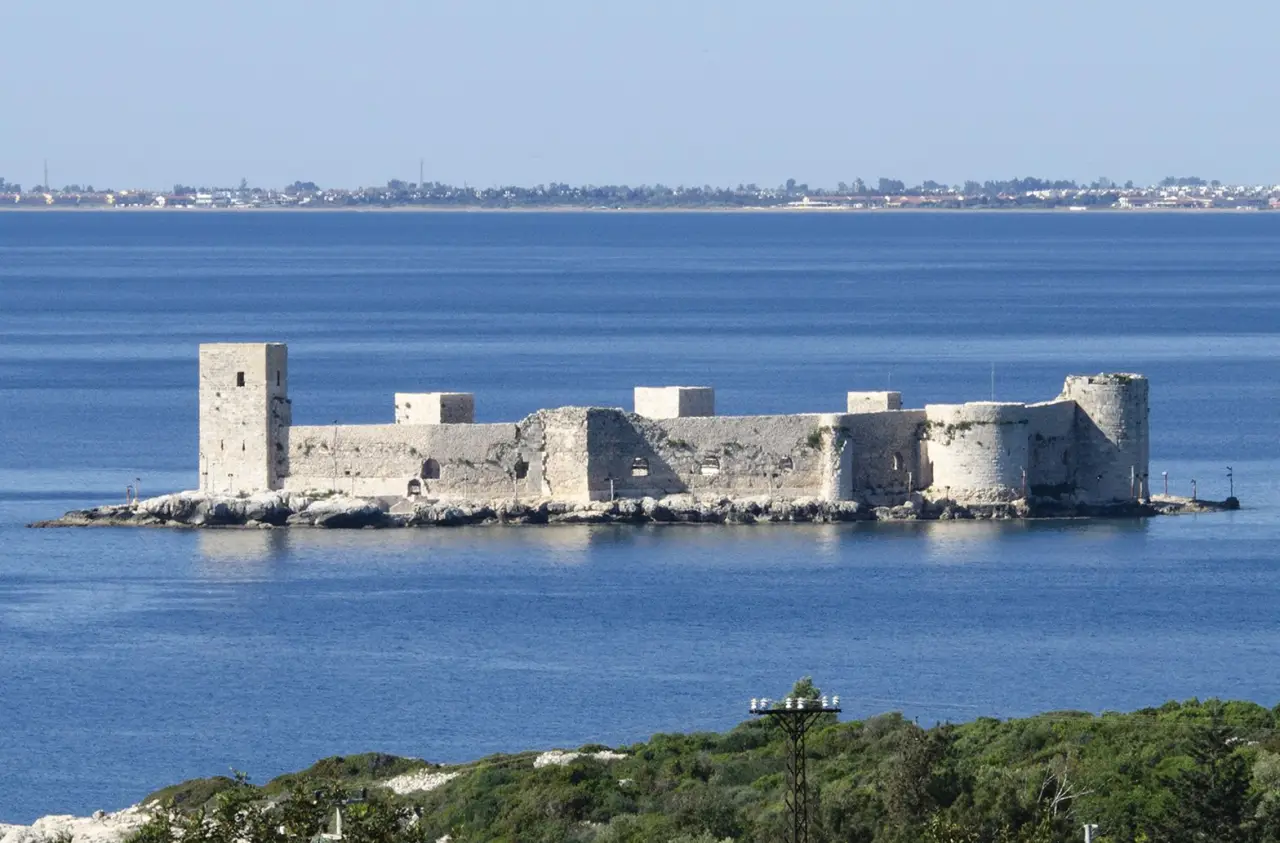
The island castle is reached by boat or by swimming; the boats do not run when there are waves or wind. Check boat and castle times before you go.
≈ 15 min from Kızkalesi · stay 90 min
The Korykian caves that Kinross mentions: two giant sinkholes that Strabo also described. About 450 steps lead down into Cennet ('Heaven'); at the mouth of the cave at the bottom stands a small Byzantine chapel of the Virgin Mary. The neighbouring Cehennem ('Hell') sinkhole is held in legend to be where Zeus imprisoned the monster Typhon after defeating him, and it can only be seen from above.

The steps of the Cennet sinkhole are long and damp, and the climb back up is tiring. Check opening hours before you go.
≈ 25 min from Cennet · stay 60 min
At ancient Seleucia, today's Silifke, crossing the milky current of the Göksu, Kinross tells of the emperor who drowned here: Frederick Barbarossa, the German emperor who had crossed the Taurus from Karaman on the Third Crusade, died in this river in 1190. From the medieval castle on the hill you look out over the river and the town; the monument put up in Barbarossa's memory is on the Mut road.
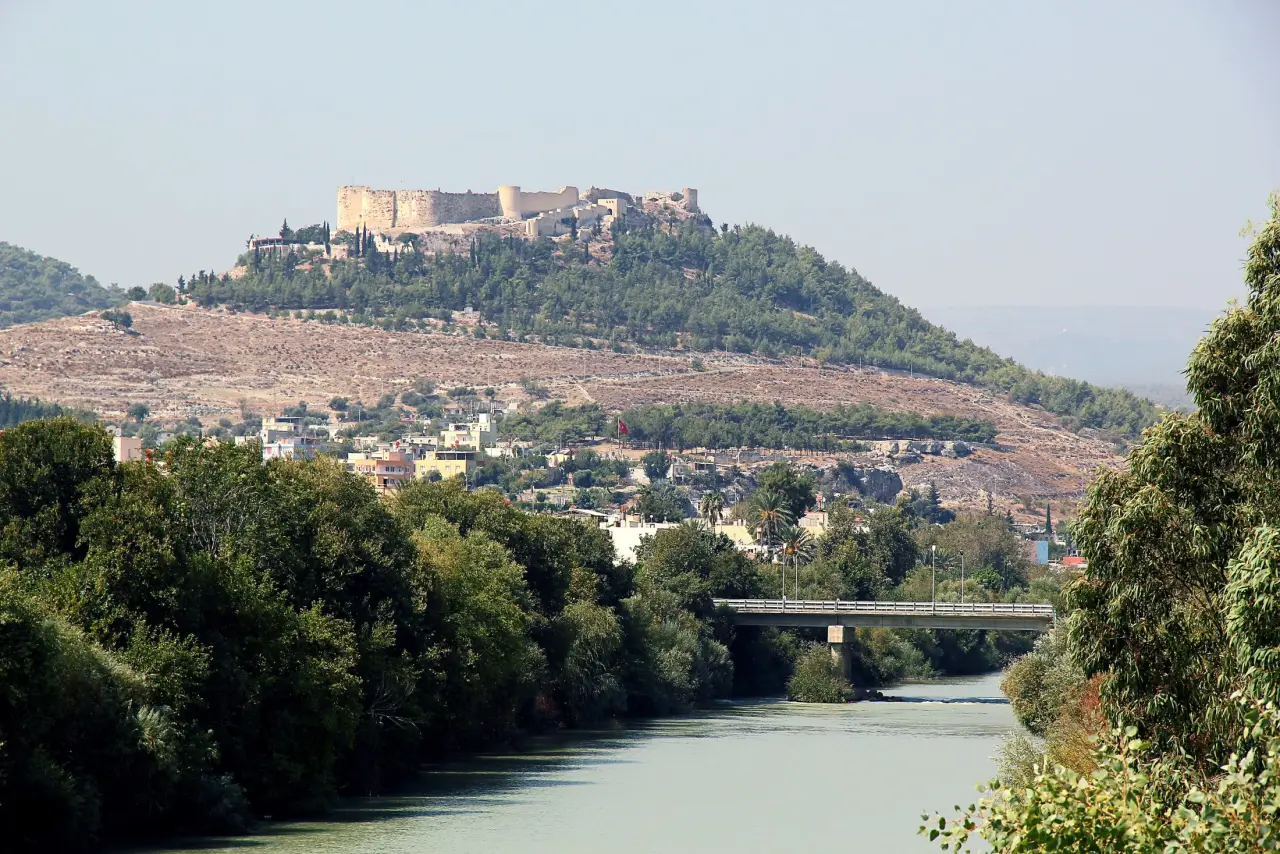
The last part of the path up to the castle is steep. Check visiting arrangements before you go.
From Silifke along the coast road ≈ 2.5 hours; break at Aydıncık (Kelenderis) · stay 90 min
Kinross has lunch at Kelenderis, founded by Phoenician Greeks, today's Aydıncık, and comes down the winding coast road to the Anamur plain, full of banana plantations. Mamure Castle, rising from the sand at the eastern end of the bay with its towers lapped by the sea, he finds more romantic and splendid than all the castles of the pirate coast.
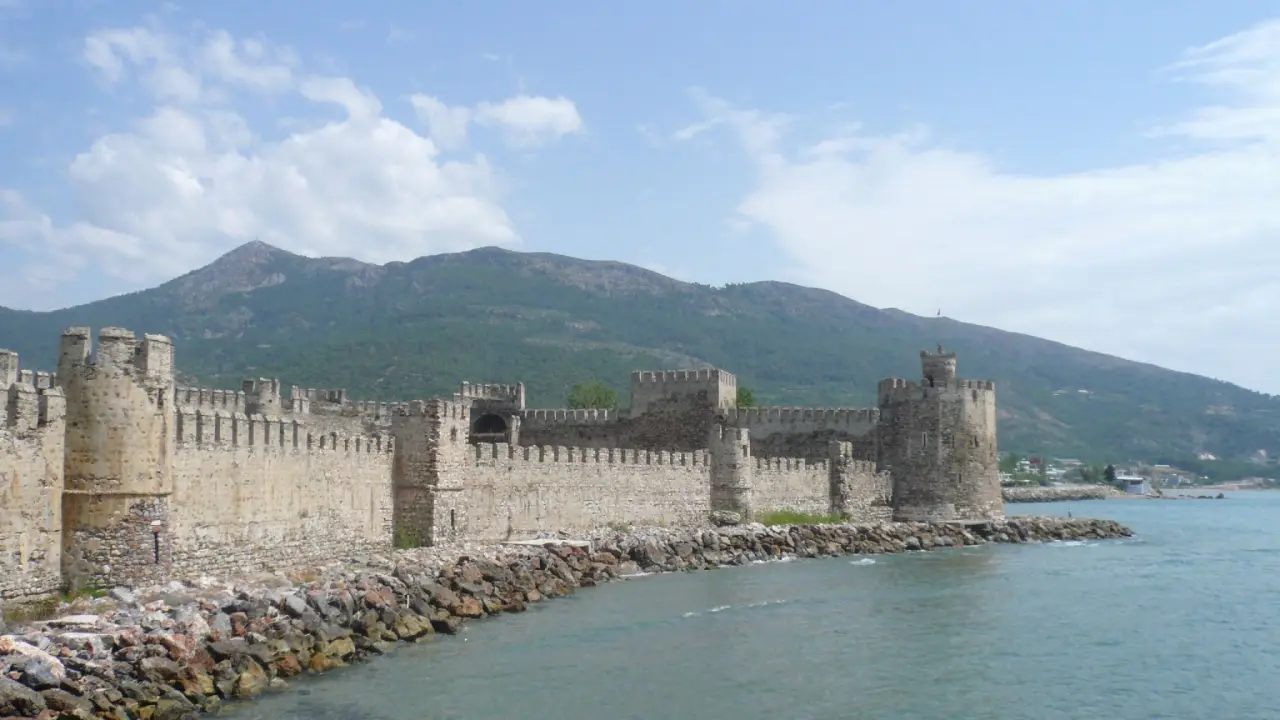
In places the castle ramparts have no railings. Check opening hours before you go.
From Anamur on the mountain road over the Taurus ≈ 2.5 hours · stay 90 min
Kinross wants to climb from the coast into the Taurus, and to do so waits days for the district governor's car. At last, crossing a narrow bridge over a deep valley, he reaches Ermenek, built on the southern slope of the mountain; contrary to his friends' fears, the mayor puts him up in his own home. The town, one of the old centres of the Karamanids, has buildings from this period such as the Ulu Cami and the Tol Medrese.

The Taurus road is winding and narrow in places; in winter there is snow and ice. Check road conditions before you go.
≈ 2 h 15 min · fast ferry + bus · Day trip
Why here: The first Ottoman capital. The Green Mosque, the Grand Mosque and Koza Han make an easy day trip; we suggest it if you are staying in Istanbul for more than four days. Not part of this route.
Travellers who check in on this route can rate it. No one else can.
Be one of the first travellers to walk this route. If you have a question or a tip, share it with the community.
After walking the route you can rate it using the check-in in the app. Reviews go live after a short check.
Source: Prof. Dr. İlber Ortaylı (1947–2026)
Source: Prof. Dr. İlber Ortaylı (1947–2026)
Your basket stays saved on this device, so you can pick up where you left off once sales open. Until then, routes, the map and audio guides are free.