






Historian's route
1 tickets€29
Source: Prof. Dr. İlber Ortaylı (1947–2026)
İlber Ortaylı's Istanbul walk, in two days
1 ticketed stopsOpen the route
A day of remembrance on the peninsula where tens of thousands of soldiers from both sides died in the 1915 Gallipoli land campaign: from the visitor centre at Kabatepe to Arıburnu, where the Anzacs landed, to Lone Pine, Australia's memorial site, to the 57th Regiment Memorial and Chunuk Bair (Conkbayırı), and on to the Çanakkale Martyrs' Memorial at the southern tip of the peninsula. The Anzac Day dawn service for Australians and New Zealanders is held here on 25 April. You travel between the stops by car.
Mustafa Kemal Atatürk (1881–1938)His life, the War of Independence, the Republic and AnıtkabirRead →When the Allied fleet's attempt to force the Dardanelles failed on 18 March 1915, the land campaign began. On the morning of 25 April, troops of the Australian and New Zealand Army Corps (ANZAC) landed at Arıburnu, and British and French troops at the southern tip of the peninsula.
The fighting continued until the evacuation in January 1916. In places the trenches were dug just a few metres apart; tens of thousands of soldiers from both sides died, and many more were wounded or fell ill.
The peninsula is now protected as the Gallipoli Historical Site; Turkish martyrs' cemeteries and Commonwealth cemeteries lie a few hundred metres from each other. The memorial at Arıburnu carries words attributed to Atatürk and dated 1934, saying that the foreign soldiers buried here lie "side by side with the Mehmets". The source of the words is debated among historians; even so, the memorial has become a symbol of remembering the losses of both sides together.
Every year Türkiye marks 18 March as the Çanakkale Victory and Martyrs' Remembrance Day. Australia and New Zealand remember their dead on 25 April, Anzac Day: since 1999 the dawn service on the peninsula has been held at the Anzac Commemorative Site north of Arıburnu, followed by the Australian ceremony at Lone Pine and the New Zealand ceremony at Chunuk Bair. Attending the ceremonies requires advance registration and an entry pass.
Remembrance and mourning (grief tourism) means visiting places people go to remember loss and share grief: martyrs' cemeteries, war cemeteries, monuments, historic cemeteries and museums that preserve the memory of disasters. Every place here is an officially open memorial site; we don't include very recent tragedies that people are still grieving, or contested sites. At these places, someone may still be remembering a loved one: keep quiet, don't pose for photos, and don't photograph anyone praying.
Start: ≈ 15 min by car from Eceabat; you need a car or a tour to get around the peninsula · stay 90 min
A visitor centre that tells the story of the campaign with simulation halls. If you start here before touring the peninsula, you will better understand where you are standing at the later stops and what happened on those ridges.
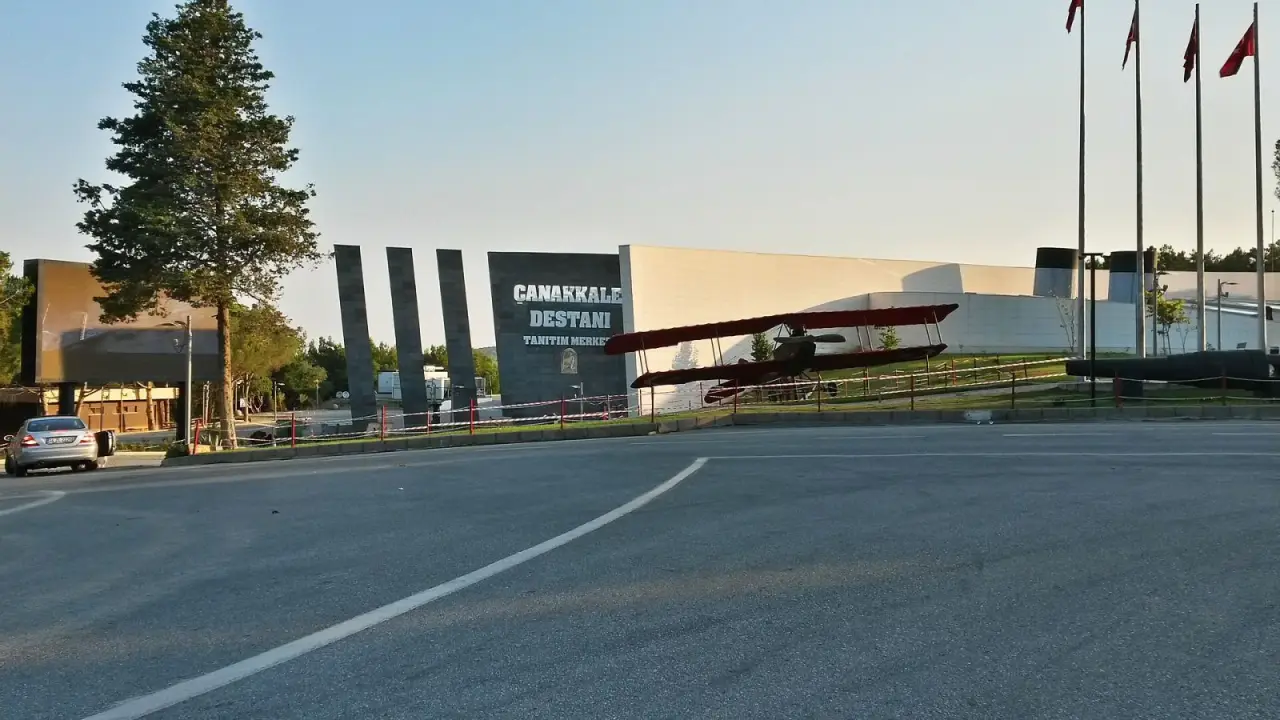
Check prices and hours before you go; it can be busy on some days.
≈ 5 min by car (4 km), coast road · stay 45 min
The shore where Anzac units landed on the morning of 25 April 1915. Ariburnu Cemetery, the cove of about 600 metres and the memorial inscribed with the 1934 words attributed to Atatürk stand side by side. The Dawn Service held every year on 25 April takes place a little further north at the Anzac Commemorative Site.

There are steep, crumbling slopes along the shore; do not leave the marked paths. The 25 April ceremonies can only be attended with an entry pass obtained in advance; check dates and registration conditions before you go.
≈ 5 min by car (2 km), up to the ridge inland · stay 30 min
On Kanlısırt, scene of heavy fighting in August 1915, a cemetery maintained by the Commonwealth War Graves Commission and a memorial bearing the names of Australian and New Zealand soldiers with no known grave. Australia's Anzac Day ceremony is held here.

Do not touch the headstones or move flowers and objects left there.
≈ 5 min by car (2 km), north along the ridge road · stay 40 min
The memorial cemetery of the 57th Infantry Regiment, which went on the attack on Mustafa Kemal's orders on 25 April 1915 to stop the Anzac landing. On the Kabatepe–Chunuk Bair road, with its symbolic headstones and monument, it is one of the most visited places on the peninsula.
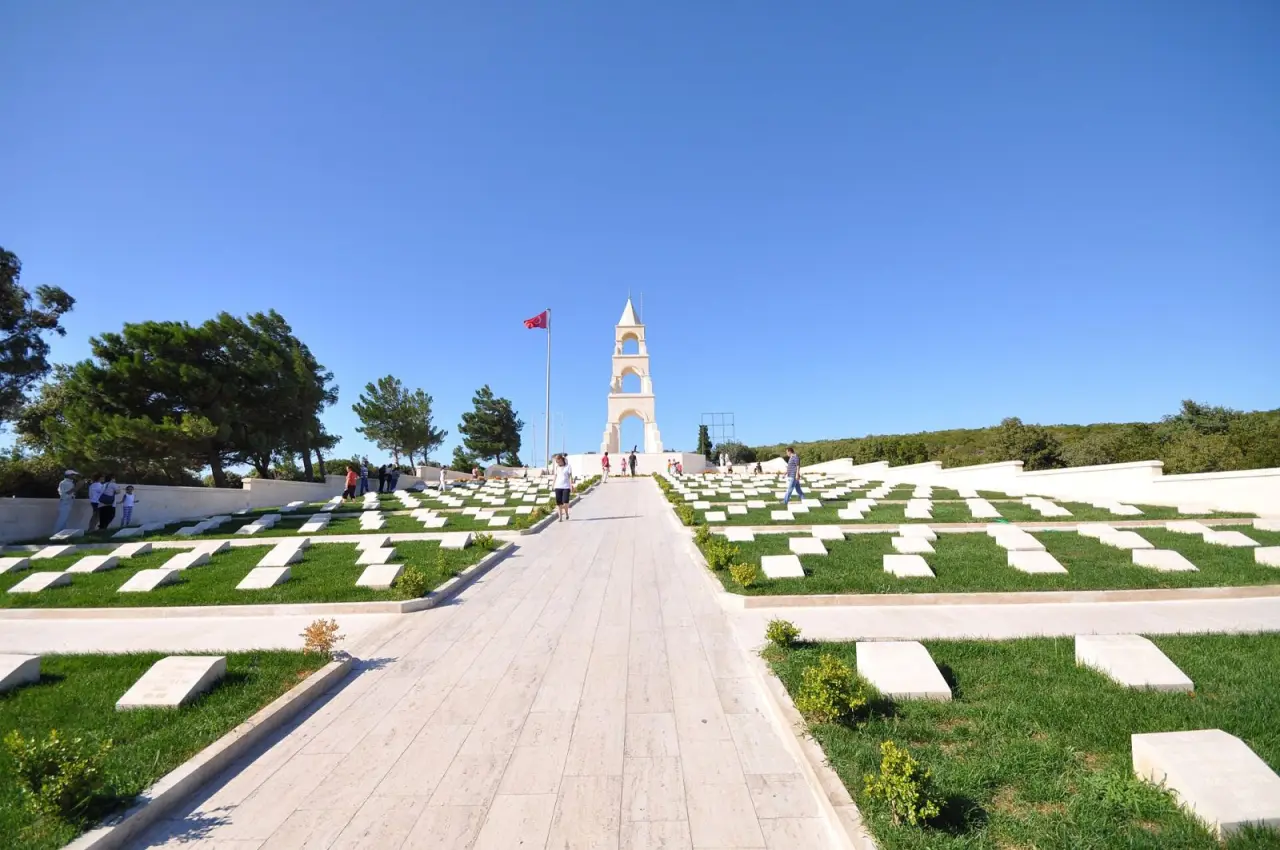
Place of remembrance: be quiet, and keep to the paths when walking among the headstones.
≈ 5 min by car (2 km), ridge road · stay 50 min
The ridge that saw the bloodiest fighting of the campaign, where Mustafa Kemal led the counter-attack on the morning of 10 August 1915. The Atatürk monument, the New Zealand memorial and the Conkbayırı Mehmetçik inscriptions stand side by side; from here you can see Arıburnu and Anzac Cove. New Zealand's Anzac Day ceremony is held here.
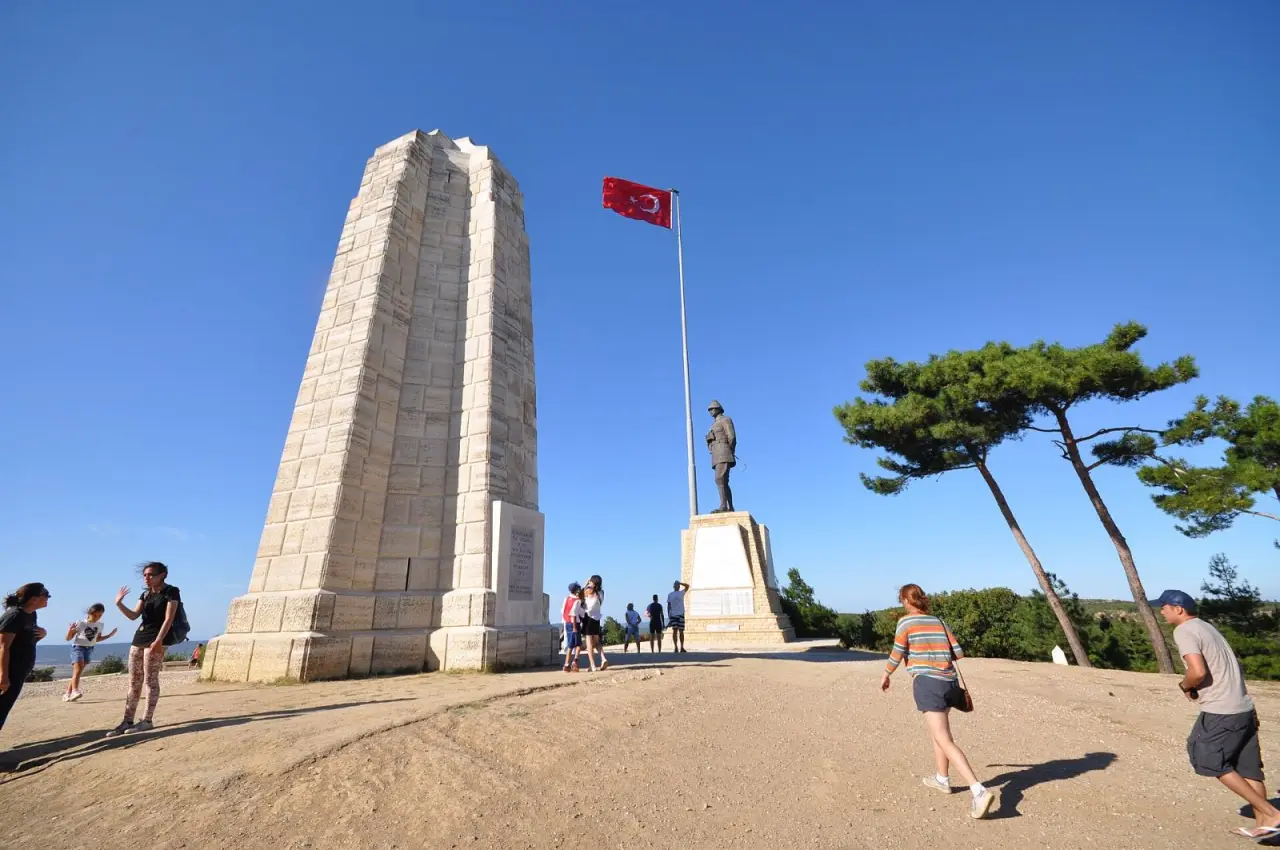
A windy hilltop with no shade; bring water and a hat.
≈ 40 min by car (27 km) to the southern tip of the peninsula · stay 60 min
The 41.7-metre memorial on Hisarlık Hill, overlooking Morto Bay, opened in 1960; around it, a martyrs' cemetery and the mouth of the Dardanelles. End the day here, looking out over the strait.

Access may be restricted during official ceremonies; check before you go.
≈ 2 h 15 min · fast ferry + bus · Day trip
Why here: The first Ottoman capital. The Green Mosque, the Grand Mosque and Koza Han make an easy day trip; we suggest it if you are staying in Istanbul for more than four days. Not part of this route.
Travellers who check in on this route can rate it. No one else can.
Be one of the first travellers to walk this route. If you have a question or a tip, share it with the community.
After walking the route you can rate it using the check-in in the app. Reviews go live after a short check.
Source: Prof. Dr. İlber Ortaylı (1947–2026)
Source: Prof. Dr. İlber Ortaylı (1947–2026)
