


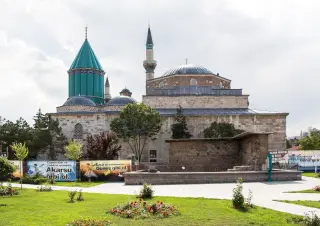


Historian's route
1 tickets€29
Source: Prof. Dr. İlber Ortaylı (1947–2026)
İlber Ortaylı's Istanbul walk, in two days
1 ticketed stopsOpen the route
A short but packed walk from the square beside Hagia Sophia to Beyazıt, along Divanyolu, which follows the line of Byzantium's main street: two Byzantine cisterns, the Tomb of Mahmud II, the Column of Constantine, Atik Ali Pasha, one of the first mosques built after the conquest, the two complexes at Çarşıkapı and the Beyazıt Mosque. We compiled it from the seventh walk in Hilary Sumner-Boyd and John Freely's book Strolling Through Istanbul (1972); we added the timings, breaks and practical notes.
This route was compiled by AnatoliaPass editors from the published recommendations of the person named; the timings, breaks and practical notes are ours. It does not mean that the person recommends or endorses AnatoliaPass.
Hilary Sumner-Boyd was born in New York in 1913 and educated there and in England; he spent most of his life in Istanbul, teaching at Robert College, and died in the city on 2 September 1976. John Freely was born in Brooklyn in 1926; a physicist, he came to Istanbul in 1960 to teach at Robert College and over his lifetime wrote dozens of books on Istanbul, the Ottomans and the history of science; he died in 2017. Strolling Through Istanbul, which the two wrote together, was published in Istanbul by Redhouse Press in 1972 and is still in print today in revised editions.
The Mese, Constantinople's main street, ran west from the Augusteion square, linking the forums, all the way to the walls. In Ottoman times the first part of this road took the name Divanyolu: the ceremonial way to the Divan at Topkapı Palace, along which processions, envoys and viziers passed. The viziers, too, built their tombs, madrasas and sebils along this street.
Sumner-Boyd and Freely begin this chapter in the square beside Hagia Sophia and end it in Beyazıt Square. The four stops listed under the chapter heading, the Basilica and Binbirdirek cisterns, the Column of Constantine and the Beyazıt Complex, form the backbone of the route; the book also describes the tombs, mosques and complexes in between, one after another along the same road. The authors' interest always lies in two layers: Byzantium beneath the ground and the Ottoman foundations on both sides of the street.
The street has changed a great deal since the book was written: since the early 1990s a tram has run down the middle of it, the cisterns have been restored, and the courtyard of Çorlulu Ali Pasha's madrasa has become a tea garden. Yet the order of the monuments has stayed the same. The walk is short; don't hurry, and at each stop look at the courtyards, the inscriptions and the graveyards.
Start: the Sultanahmet stop on the T1 tram; ≈ 3 min to the square west of Hagia Sophia · stay 45 min
The walk in the book starts from the square beside Hagia Sophia and first goes underground. Built under Justinian in the 6th century, the cistern, with its 336 columns, is the largest covered reservoir in the city; some of the columns were brought from other buildings. The two Medusa heads in the north-west corner are also reused pieces, serving as column bases.
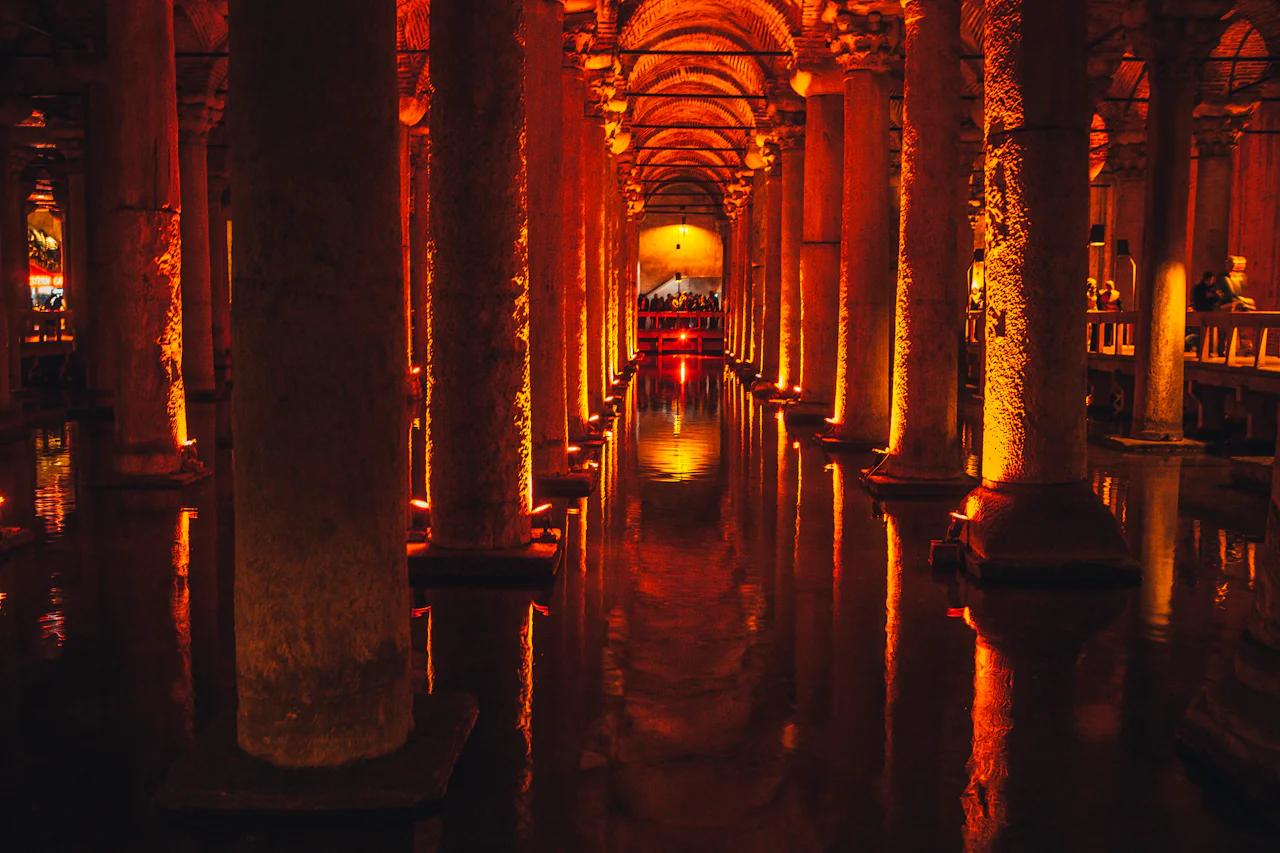
Entry is charged and queues can be long; go early in the morning. Check opening hours and the fee before you go.
≈ 5 min, west to İmran Öktem Sokağı · stay 30 min
After the Basilica Cistern, the city's second-largest covered cistern; its Byzantine name is the Cistern of Philoxenos. The columns were heightened by setting two shafts one on top of the other; the name 'thousand and one columns' comes from this dense forest of columns. The restored cistern can be visited today and from time to time hosts exhibitions and events.
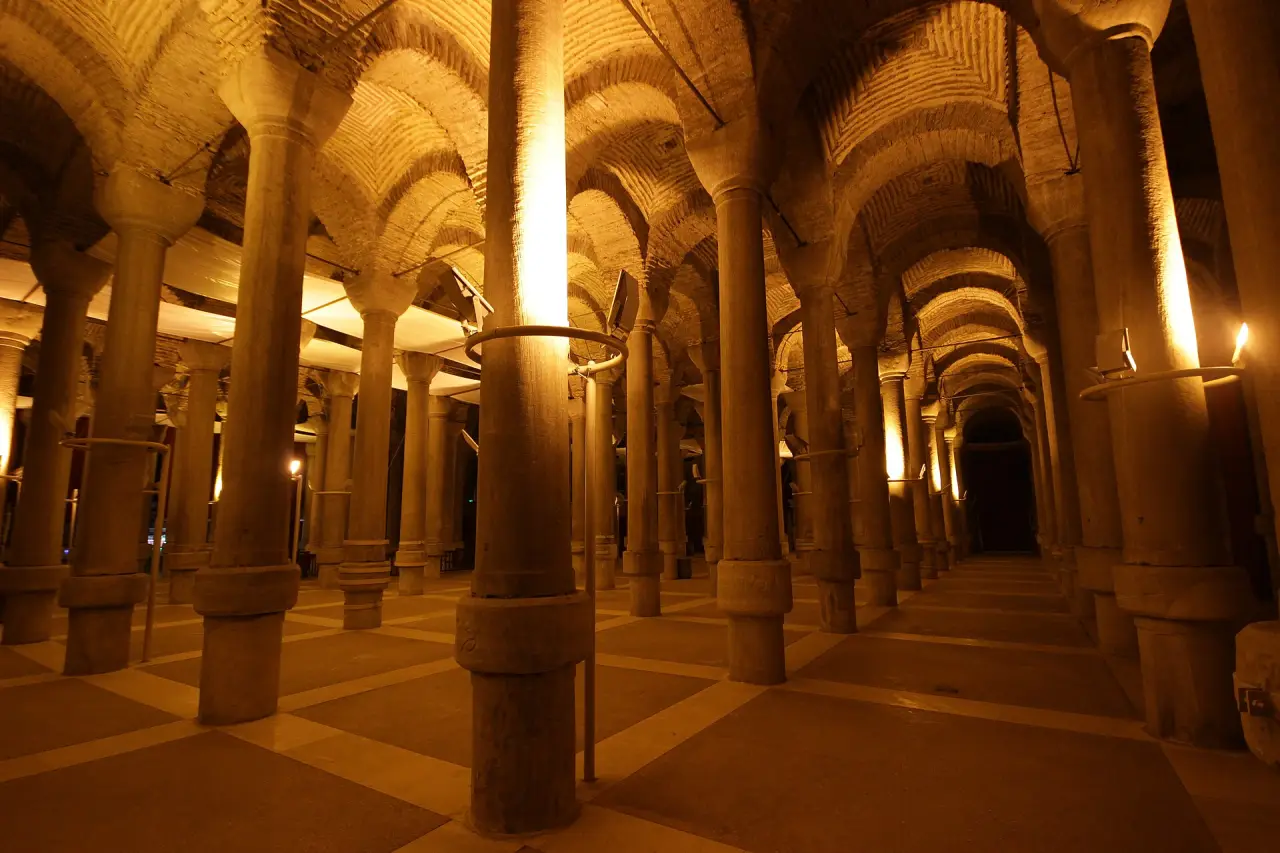
It may close to visitors on event days; check opening hours and the entry fee before you go.
Come out onto Divanyolu and head towards Çemberlitaş, ≈ 5 min · stay 25 min
The tomb that Sultan Abdülmecid built for his father, Mahmud II, completed in 1840; in the Empire style, it is very different from classical Ottoman tombs. Sultan Abdülaziz and Abdülhamid II are also buried here; the graveyard in the garden is full of statesmen from the last century of the Ottoman Empire. The Köprülü Library across the street was completed in 1661; it is considered the first Ottoman foundation library to be housed in a building of its own.
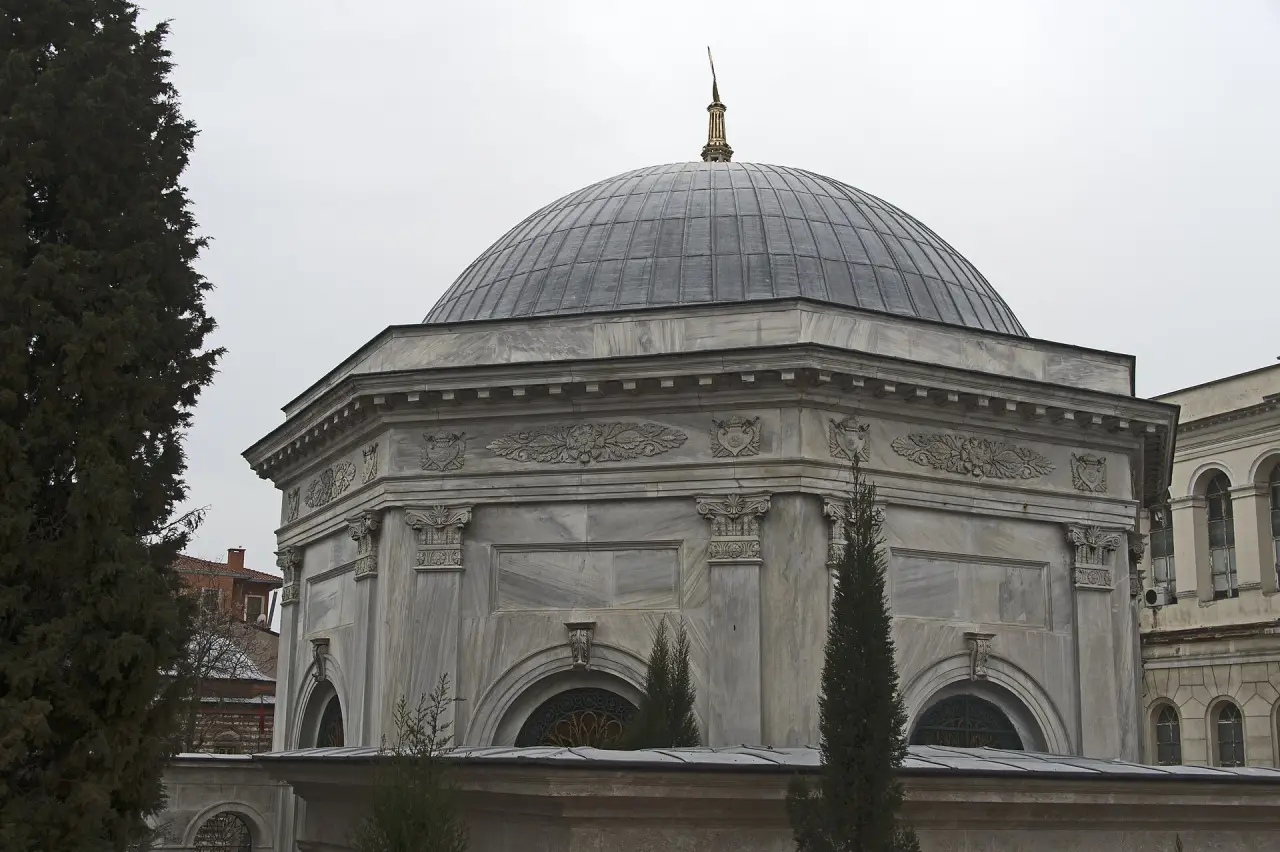
The tomb's visiting hours may change; check before you go.
≈ 2 min, on the other side of the street · stay 15 min
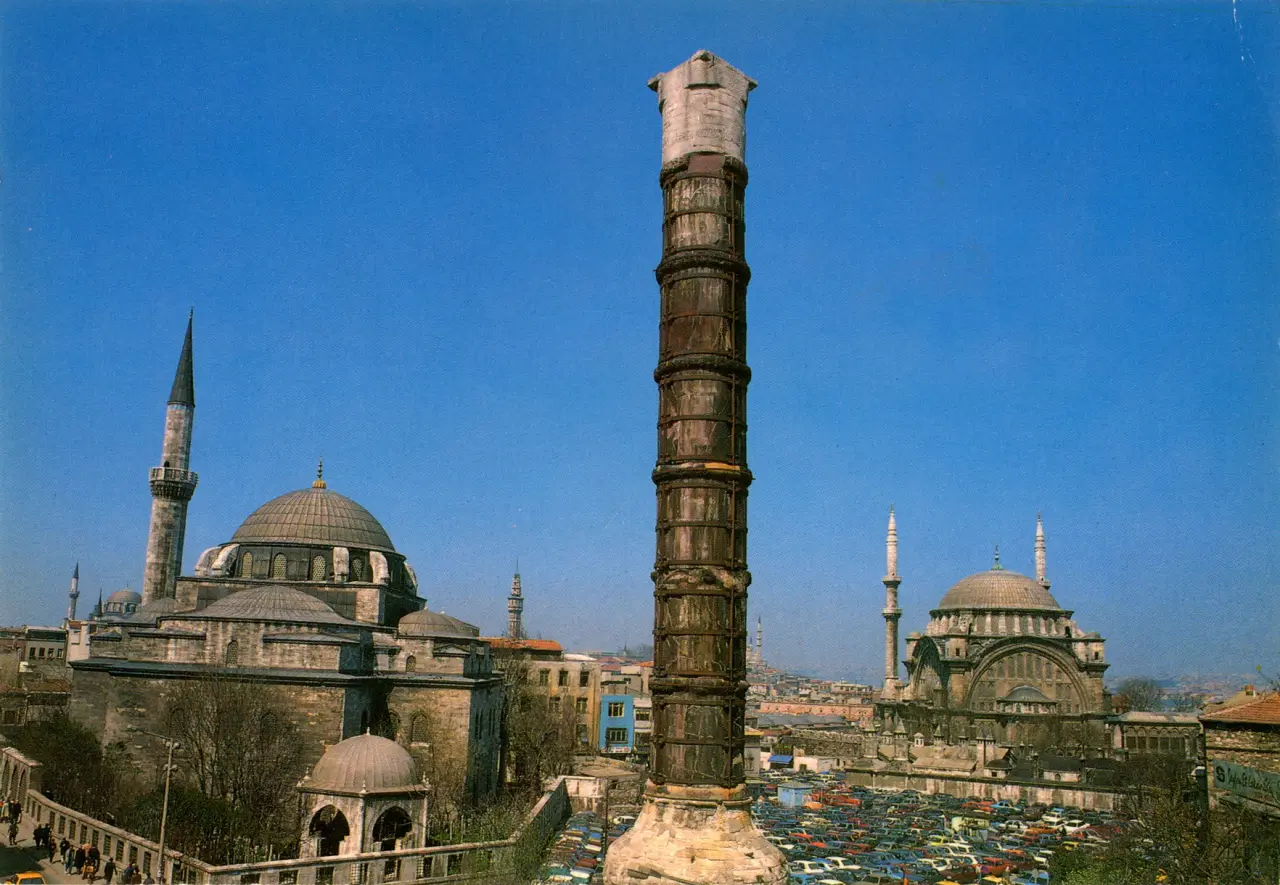
The column Constantine raised in the middle of his forum when he inaugurated the city as the new capital in 330; the oldest monument from Constantine's time still standing in Istanbul. It stood right in the middle of the Mese; Divanyolu today more or less follows the line of that street. During repairs in the early 1500s iron hoops were fitted around the shaft, and that is where its Turkish name, 'the hooped stone', comes from.
≈ 2 min along Yeniçeriler Caddesi · stay 25 min
Built by Hadım Atik Ali Pasha, grand vizier to Bayezid II, this is one of the oldest mosques built in Istanbul after the conquest. It stands within the bounds of the Forum of Constantine; its domed interior and muqarnas portal carry the simplicity of early Ottoman architecture. The Vezir Han beside it and the shops lining the street are a reminder that the street has been a trade route for centuries.

Visits pause during prayer times; check the times before you go.
≈ 4 min, towards Beyazıt · stay 40 min
Two complexes facing each other on either side of the street. Koca Sinan Pasha's madrasa, tomb and corner sebil are the work of the architect Davud Ağa, completed in 1594. Opposite, the Çorlulu Ali Pasha Complex was built in 1708; it is said that the head of the executed pasha was buried in its graveyard. The tea garden in the madrasa courtyard is a good place for the walk's lunch break.

The tea gardens get crowded in the afternoon; ask the prices before you sit down and check opening hours before you go.
≈ 5 min, to Beyazıt Square · stay 45 min
The complex built by Bayezid II in the early 1500s; the oldest surviving imperial mosque in Istanbul. The square stands on the site of Byzantium's Forum of Theodosius; fragments of the forum's arches and columns still stand beside the tram line. The book ends the seventh walk in this square; the next chapter goes down from here to the bazaars, so carry on to the Grand Bazaar if you like.

Visits pause during prayer times and at Friday midday prayers; check the times before you go.
Midday prayer today is at 12:53: Beyazıt Mosque is closed to visitors from about 12:23 to 13:53. Move this stop to before or after.
≈ 2 h 15 min · fast ferry + bus · Day trip
Why here: The first Ottoman capital. The Green Mosque, the Grand Mosque and Koza Han make an easy day trip; we suggest it if you are staying in Istanbul for more than four days. Not part of this route.
Travellers who check in on this route can rate it. No one else can.
Be one of the first travellers to walk this route. If you have a question or a tip, share it with the community.
After walking the route you can rate it using the check-in in the app. Reviews go live after a short check.
Source: Prof. Dr. İlber Ortaylı (1947–2026)
Source: Prof. Dr. İlber Ortaylı (1947–2026)
Your basket stays saved on this device, so you can pick up where you left off once sales open. Until then, routes, the map and audio guides are free.