




Historian's route
1 tickets€29
Source: Prof. Dr. İlber Ortaylı (1947–2026)
İlber Ortaylı's Istanbul walk, in two days
1 ticketed stopsOpen the route
A three-day road from the grandest of the Seljuk caravanserais to the madrasas of Konya, to the Eşrefoğlu Mosque, the Kubadabad Palace and the Hittite monument of Eflatunpınar on Lake Beyşehir, and from there over the Taurus Mountains via İbradı and Akseki down to Alanya. We compiled it from the route Prof. Dr. İlber Ortaylı suggested in Hürriyet in 2017 and 2025; we added the timings, breaks and practical notes.
This route was compiled by AnatoliaPass editors from the published recommendations of the person named; the timings, breaks and practical notes are ours. It does not mean that the person recommends or endorses AnatoliaPass.
Prof. Dr. İlber Ortaylı (1947–2026) returned to the country south of Konya, Lake Beyşehir and the Taurus in two separate articles. In his Hürriyet piece of 13 August 2017, with travel suggestions for the rest of the summer, he wrote that Konya Ereğlisi also deserved to be known, and described the Kubadabad Palace on the shore of Lake Beyşehir, the Eşrefoğlu Mosque on the far side of the lake and the Hittite monument of Eflatunpınar; he praised the pleasant climate and cool evenings south of Konya.
In the same article he asks his readers whether they have thought of driving down from Konya to Alanya; he writes that the road is no longer as adventurous as it once was, but that you must stop at İbradı and Akseki. These were towns that raised many Ottoman scholars and judges. Ortaylı says that, like the other towns of Central Anatolia, their architecture is changing by the day, and that they should be seen before they lose their character. He also suggests Sagalassos, in Burdur, as a branch of the same road.
Eight years later, in his summer travel routes article of 27 July 2025, he comes down from Cappadocia to the Sultanhanı caravanserais and Konya. He mentions the Mevlana Museum, writes that the Karatay and İnce Minareli madrasas together will give you a grasp of Seljuk architecture, and once again suggests extending the trip to Lake Beyşehir, Kubadabad, Eflatunpınar and Eşrefoğlu; he adds that the fish from the lake is excellent. The road over the Taurus via Karaman down to Silifke he recommends for September.
We combined the Konya and Beyşehir sections of the two articles with the descent to Alanya from the 2017 article, and divided them into three days. We put Sagalassos in the separate route we built from Ortaylı's Antalya suggestions; Konya Ereğlisi and the Karaman–Silifke road we left as options mentioned in the articles. The timings, driving times, meal breaks and warnings are ours.
Start: the Aksaray–Konya road; ≈ 40 min from Aksaray · stay 60 min
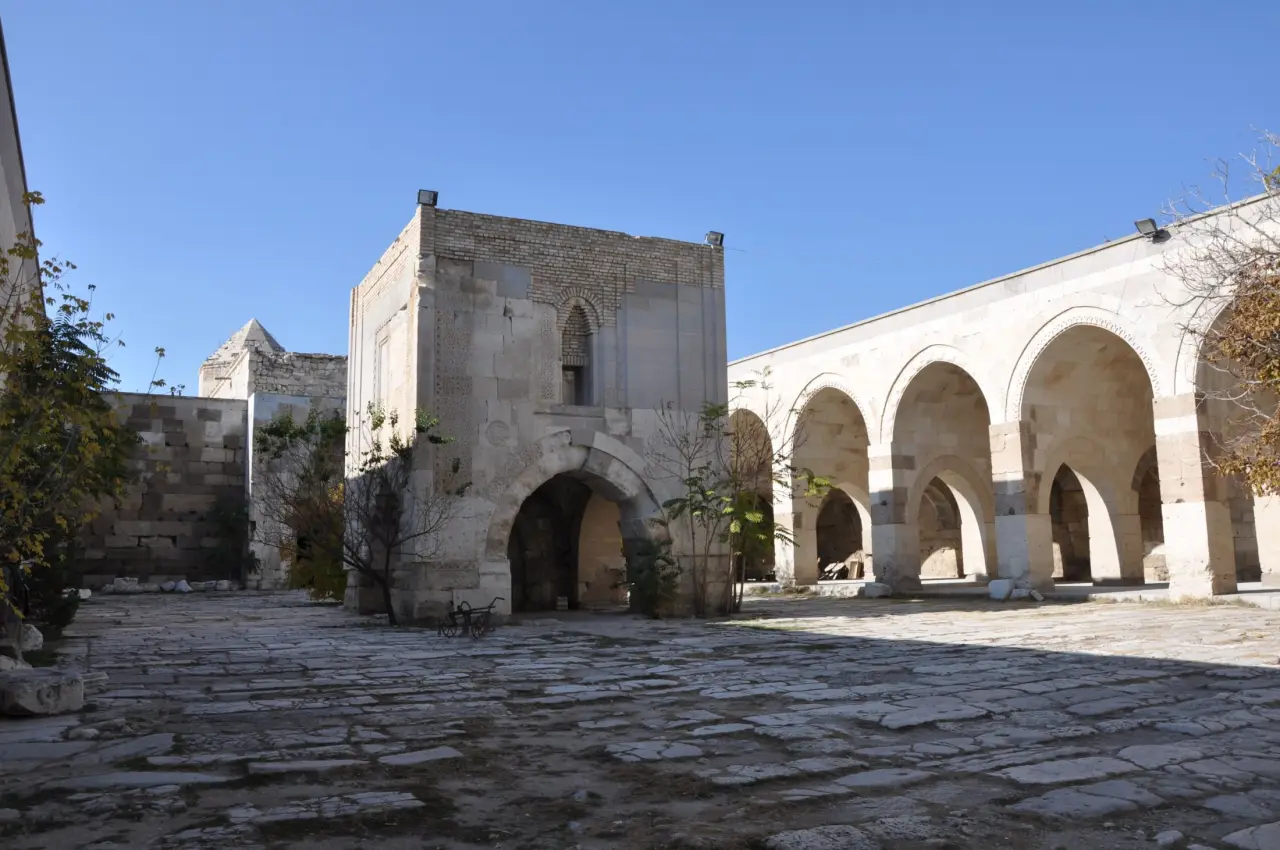
Coming down from Cappadocia to Konya, Ortaylı mentions the caravanserais along the road and counts the Alaeddin Keykubad Caravanserai at Sultanhanı as the grandest of them. Built in 1229, the han was one of the staging posts on the Konya–Aksaray caravan route; with its monumental portal, its courtyard with a small kiosk mosque at the centre and its winter hall rising like a basilica, it is one of the largest Seljuk caravanserais.
There is an entrance fee. Check visiting hours before you go.
≈ 1.5 hours from Sultanhanı to Konya · stay 75 min
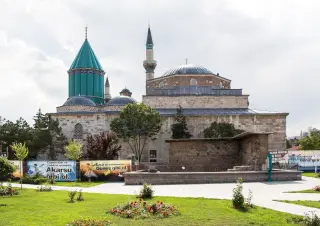
The first place Ortaylı mentions in Konya. The tomb of Mevlana Jalaluddin Rumi and the old dervish lodge beneath the Green Dome are now a museum; the semahane, the dervish cells and the manuscripts are all visited around the same courtyard.

The tomb section is crowded with visitors; keep to the queue and keep your voice down. Check opening hours before you go.
After lunch, ≈ 15 min to Alaeddin Hill · stay 45 min
For Ortaylı, the Karatay and İnce Minareli madrasas together are enough to understand Seljuk architecture. Built in 1251 by the vizier Jalaluddin Karatay, the madrasa is now the Museum of Tile Works; the turquoise and black tiles covering its dome are displayed in the same halls as tiles from the Kubadabad Palace, whose site you will see the next day.

The museum may be closed on maintenance days; check the opening hours before you go.
On the far side of Alaeddin Hill, ≈ 5 min · stay 45 min
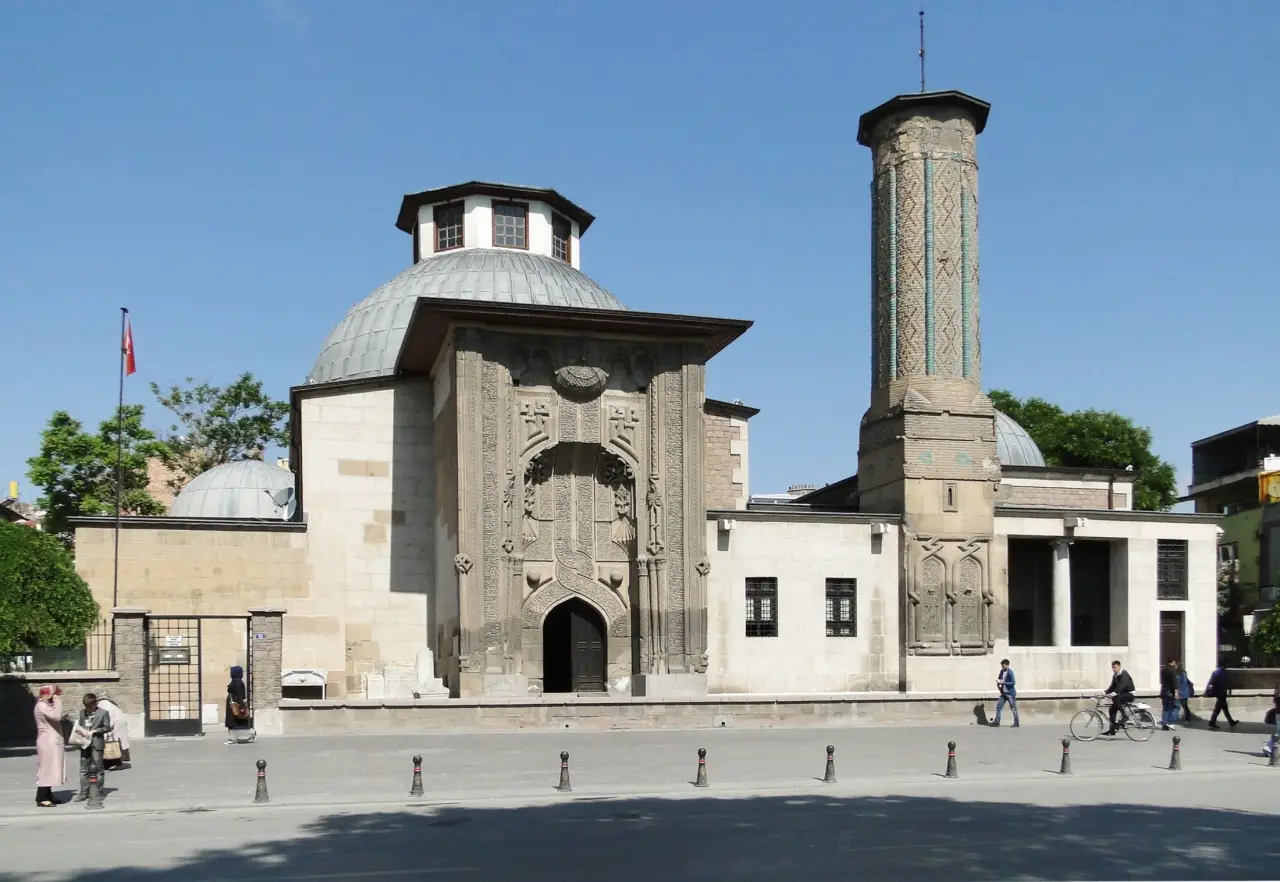
The madrasa built in the 1260s by the vizier Sahib Ata Fahreddin Ali; with the interlacing bands of inscription and the geometric decoration on its portal, it is one of the most flamboyant examples of Seljuk stonework. The upper part of the slender minaret that gives it its name was destroyed by lightning in 1901. Today it houses the Museum of Stone and Wood Works.
Museum hours may change; check before you go.
≈ 1.5 hours from Konya towards Beyşehir; before reaching Beyşehir, take the road north to Sadıkhacı · stay 45 min
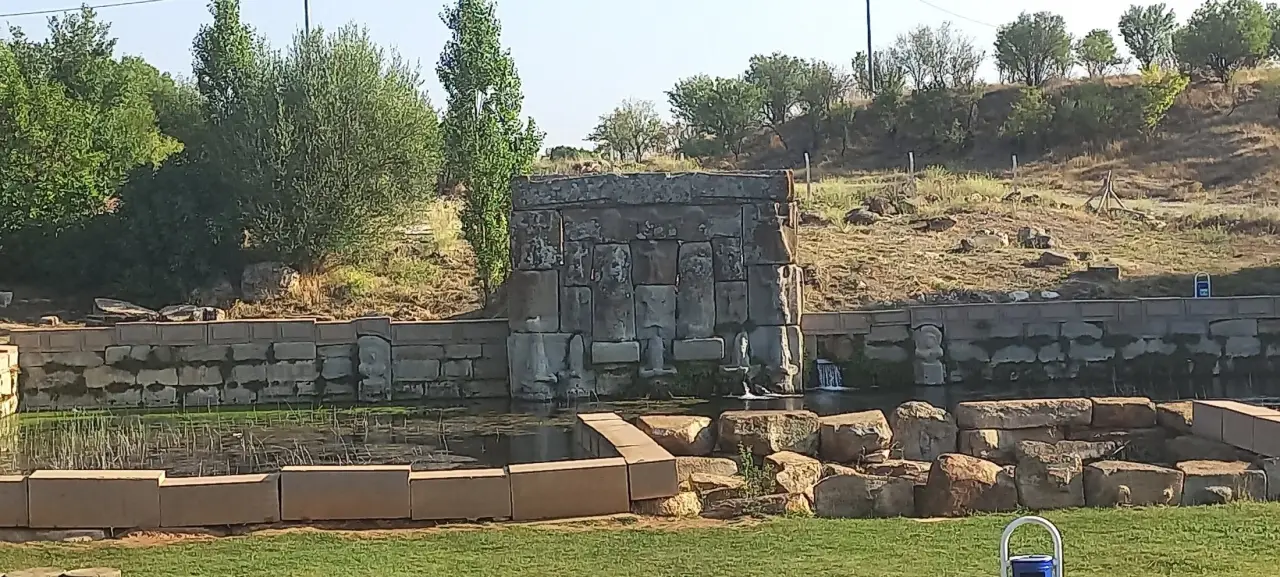
Ortaylı describes this spring monument as one of the most important works of the Hittite Empire, the oldest known monumental fountain before Hellenism – a nymphaeum, in other words. Spring water still fills the pool in front of the stone façade, some 3,200 years old, with its figures of gods and its winged sun disc.
It's a rural site with few facilities nearby; bring water and food. Check visiting arrangements before you go.
≈ 25 min from Eflatunpınar · stay 90 min
The mosque Ortaylı counted among the important monuments of the Beylik period is a wooden-columned building commissioned by Eşrefoğlu Süleyman Bey between 1296 and 1299. With its painted wooden ceiling carried on juniper columns and its tiled mihrab, it is regarded as the grandest of Anatolia's wooden-columned medieval mosques; it was added to the UNESCO World Heritage List in 2023. For lunch, head down to the lakeshore: Ortaylı also praises the fish of Lake Beyşehir.
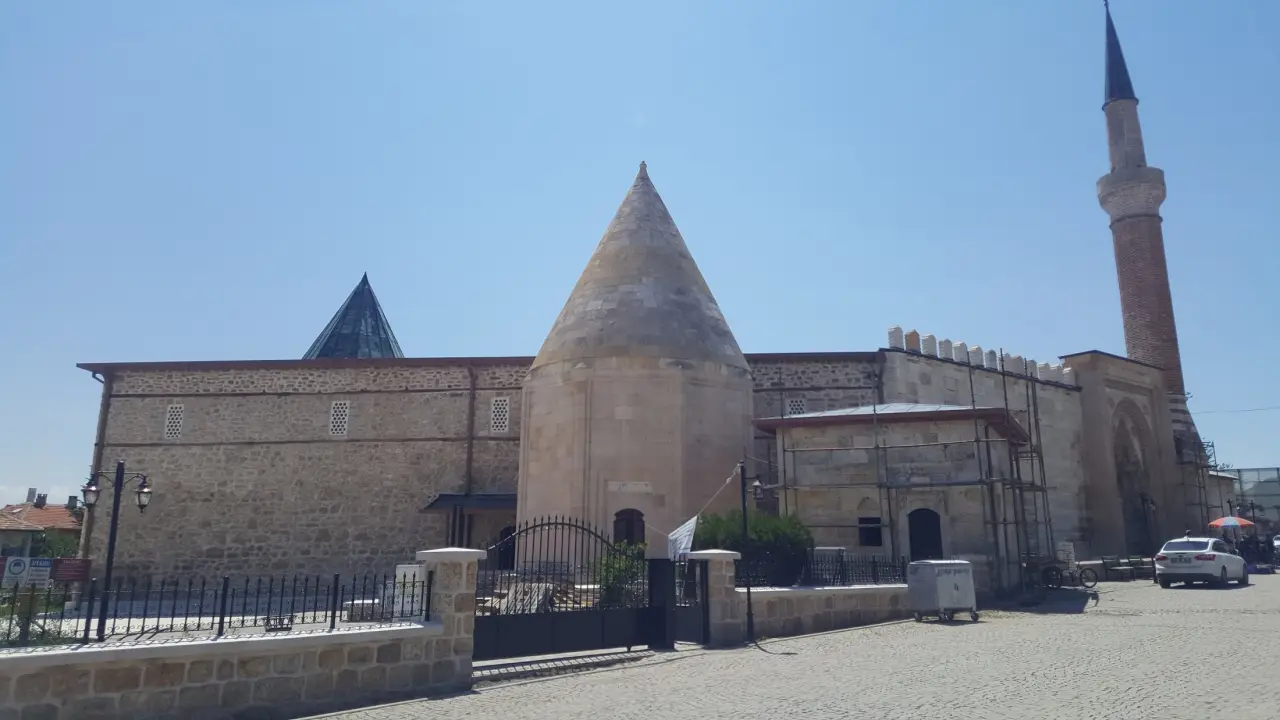
The wooden interior is fragile; don't use flash inside. Visits pause during prayer times; check the times before you go.
≈ 1 hour from Beyşehir to the western shore of the lake, towards Gölyaka · stay 60 min
The Seljuk summer palace Ortaylı described as an important national palace. Of the palace Alaeddin Keykubad built on the western shore of the lake in the 1230s, only the foundations survive today; but the tiles found here, shaped as people, animals and stars, are the liveliest known images of Seljuk court life. Here you are looking at the place where the tiles you saw at the Karatay Madrasa in Konya came from.

It's an excavation site; don't go inside the fences. Check whether it's open to visitors before you go.
≈ 2.5–3 hours from Beyşehir on the mountain road over the Taurus · stay 75 min
When suggesting the drive down from Konya to Alanya, Ortaylı insists that you call in at İbradı and Akseki: these were towns that raised many Ottoman scholars and judges. In his view the architecture of these towns is changing every day, and they should be seen before they lose their character. In the village of Ormana, part of İbradı, old houses built of stone and timber still stand.
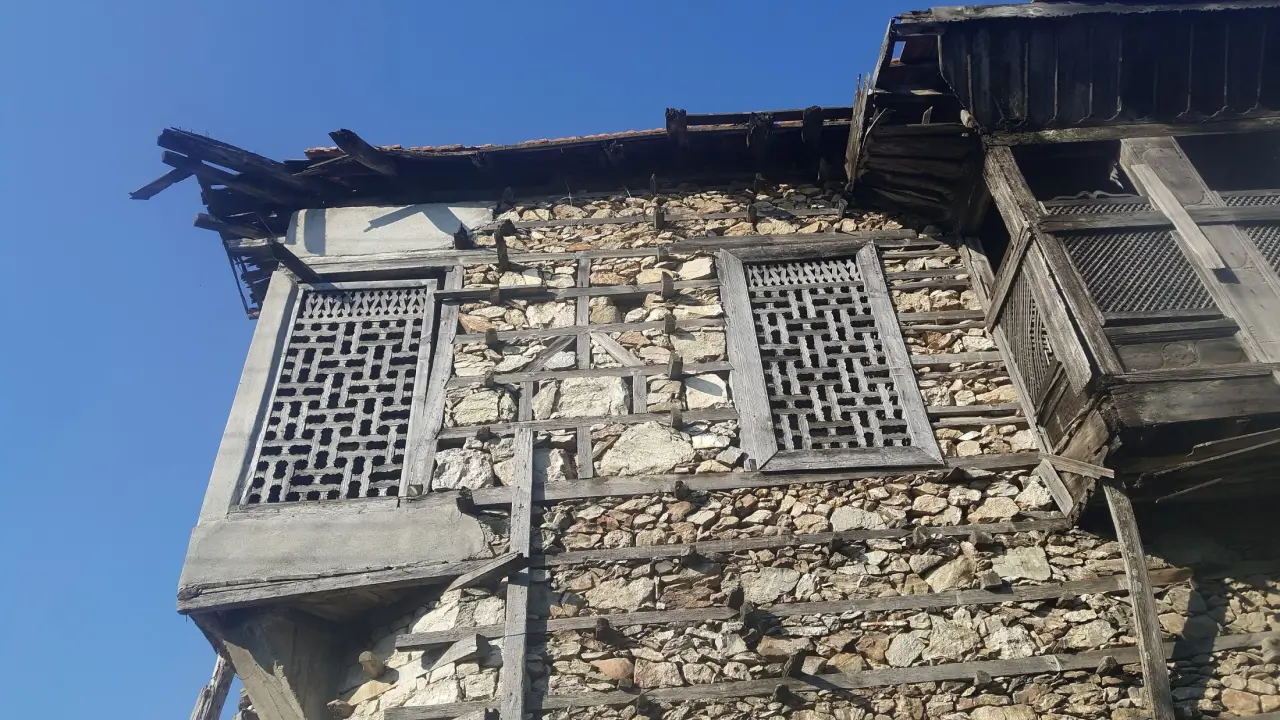
Taurus roads are winding and narrow in places; it snows in winter. Check road conditions before you go.
≈ 30 min from İbradı · stay 60 min
A district town on the southern slopes of the Taurus, surrounded by pine and cedar forests. The town of scholars and judges that Ortaylı mentions together with İbradı; walk among the old houses spread across the slopes, and sit down in town for lunch.
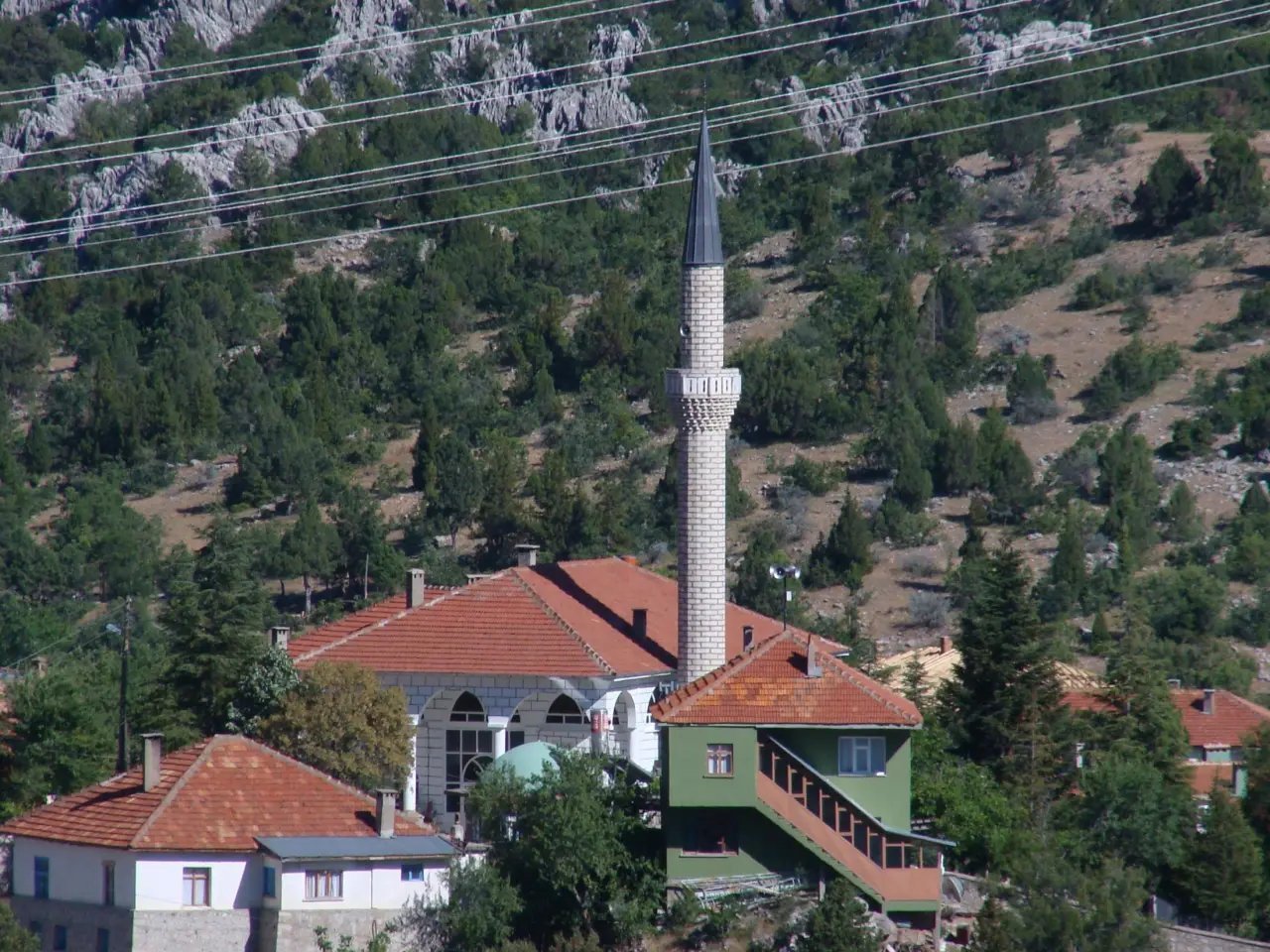
Services in the town are limited; fill up with fuel. Check road conditions before you go.
≈ 2 hours from Akseki to Alanya via Manavgat · stay 120 min
Where the road comes down to the Mediterranean. Alaeddin Keykubad took the Byzantine fortress of Kalonoros in 1221 and gave the town his own name; the walls encircling the peninsula, the inner citadel, the octagonal Red Tower on the harbour and the shipyard belong to this period. So the road that began at Sultanhanı ends in a port town founded by the same sultan.

The road up to the castle is steep; it gets crowded at sunset. Check the castle and Red Tower opening hours before you go.
≈ 2 h 15 min · fast ferry + bus · Day trip
Why here: The first Ottoman capital. The Green Mosque, the Grand Mosque and Koza Han make an easy day trip; we suggest it if you are staying in Istanbul for more than four days. Not part of this route.
Travellers who check in on this route can rate it. No one else can.
Be one of the first travellers to walk this route. If you have a question or a tip, share it with the community.
After walking the route you can rate it using the check-in in the app. Reviews go live after a short check.
Source: Prof. Dr. İlber Ortaylı (1947–2026)
Source: Prof. Dr. İlber Ortaylı (1947–2026)
Your basket stays saved on this device, so you can pick up where you left off once sales open. Until then, routes, the map and audio guides are free.