




Historian's route
1 tickets€29
Source: Prof. Dr. İlber Ortaylı (1947–2026)
İlber Ortaylı's Istanbul walk, in two days
1 ticketed stopsOpen the route
A coastal road from Halicarnassus to Knidos, to Loryma opposite Rhodes, to Kaunos among the reed beds, to Fethiye and the Xanthos valley, to the sunken city of Kekova, to Myra, to the fires of Yanartaş and to Phaselis. We compiled it from the voyage the British traveller and writer Freya Stark made in 1952 on a motor sailer and described in her book The Lycian Shore; we added the timings, breaks and practical notes.
This route was compiled by AnatoliaPass editors from the published recommendations of the person named; the timings, breaks and practical notes are ours. It does not mean that the person recommends or endorses AnatoliaPass.
Freya Stark (1893–1993) was a British traveller and writer who roamed southern Arabia and the mountains of Iran, often alone, and described her journeys in more than twenty books. In the 1950s she returned to Türkiye several times; these journeys produced Ionia: A Quest (1954), The Lycian Shore (1956), Alexander's Path (1958) and Riding to the Tigris (1959).
The Lycian Shore tells of the voyage Stark made in 1952 aboard the Elfin, the small motor sailer of her friend David Balfour. Setting out from the Gulf of İzmir, the boat sails south among the islands; it goes from Bodrum to Knidos, Loryma and Kaunos, from Fethiye to Kaş, Kekova and Myra, and rounds Cape Gelidonya to reach Phaselis. At the helm is a captain named Hüseyin, and in the galley Mehmet; in the Xanthos valley and at Patara the journey continues on land, by Land Rover.
Stark sets out on this voyage while reading the history of Alexander. She writes that we always picture Alexander against the background of Greece or of the distant East he conquered, whereas his first adventure took place among the old cities of the Asian coast; she wants to understand what he found in people's minds as he came south from the Granicus in 334 BC. So the book describes both the coast of today and the Caria and Lycia of the 4th century BC: Persian gold, pirates, oracles and the Lycian League.
We followed the sections of the book on the Turkish coast in Stark's order, and left out the sections on the Aegean islands. We adapted the sea route for land: a ferry from Bodrum to Datça, a boat to Loryma, and the rest by car. The timings, driving times and warnings are ours.
Start: Bodrum harbour · stay 180 min
Stark's boat passes Kos and sails into ancient Halicarnassus, today's Bodrum. Of the Mausoleum, one of the Seven Wonders of the World, only the foundations and scattered stones remain; some of its stones went into the walls of the Castle of St Peter, which the Knights of Rhodes built at the harbour mouth in the 15th century. The castle is now the Museum of Underwater Archaeology; Stark's book also has photographs taken from inside the castle.
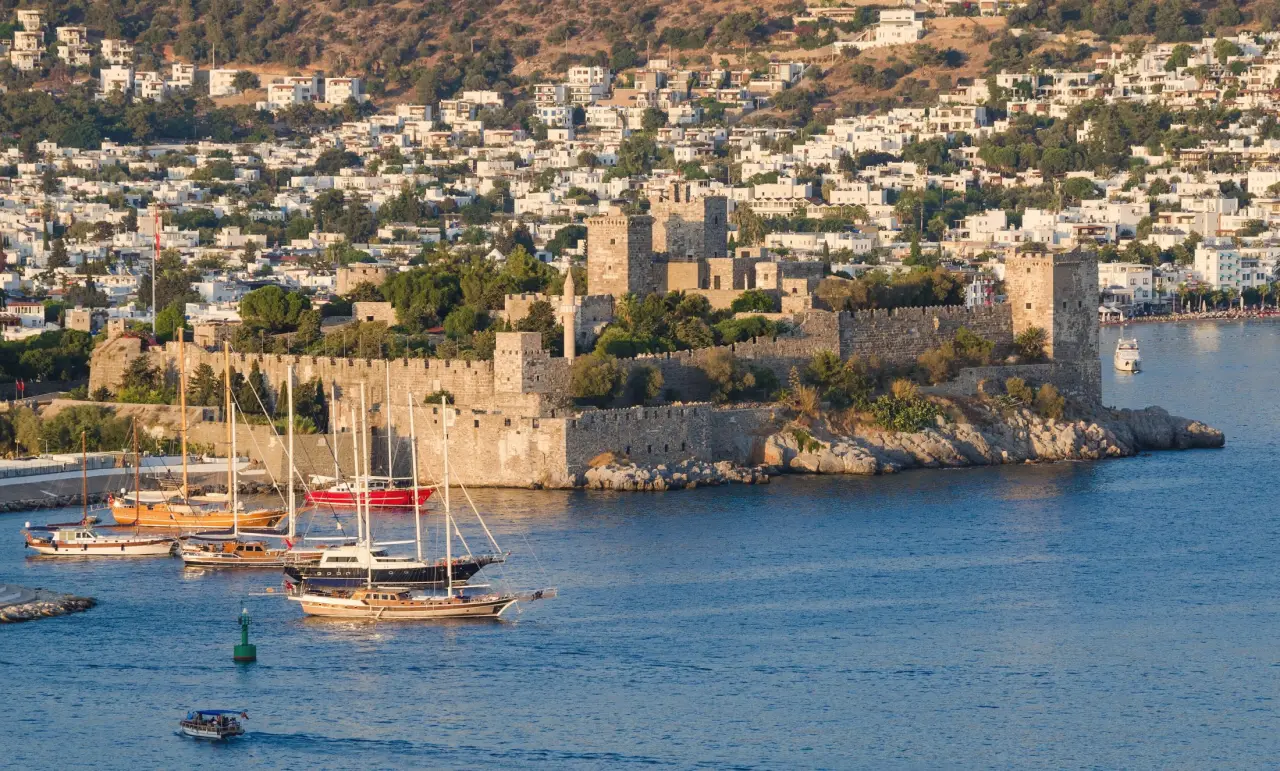
The castle and the Mausoleum have separate tickets. Check which galleries are open and the opening hours before you go.
By ferry from Bodrum to Datça (≈ 2 hours), then ≈ 45 min from Datça · stay 150 min
Stark likens the slender peninsula that the mountains of Knidos stretch out into the sea to a spear aimed at the sunset; in 1952 the only road ended halfway along the peninsula, at Datça, and getting from the last village to the tip of the cape took hours. On either side of the isthmus joining the old island at the tip to the mainland lie two harbours, and on the slope the theatre and temple terraces: the city made famous by Praxiteles' statue of Aphrodite.

The site has no shade and gets very hot in summer. Check ferry times and the site's opening hours before you go.
≈ 1.5 hours from Datça to Bozburun; on to Loryma by boat or on a rough dirt road · stay 120 min
From Knidos, Stark's boat heads south-east between limestone cliffs and enters the bay of Loryma opposite Rhodes; she likens those cliffs to the naves of cathedrals standing in the sea. The long Hellenistic fortress guarding the bay kept watch over the Rhodians' territory on the Anatolian coast; in this section Stark describes how Persian gold flowed into Greek politics.
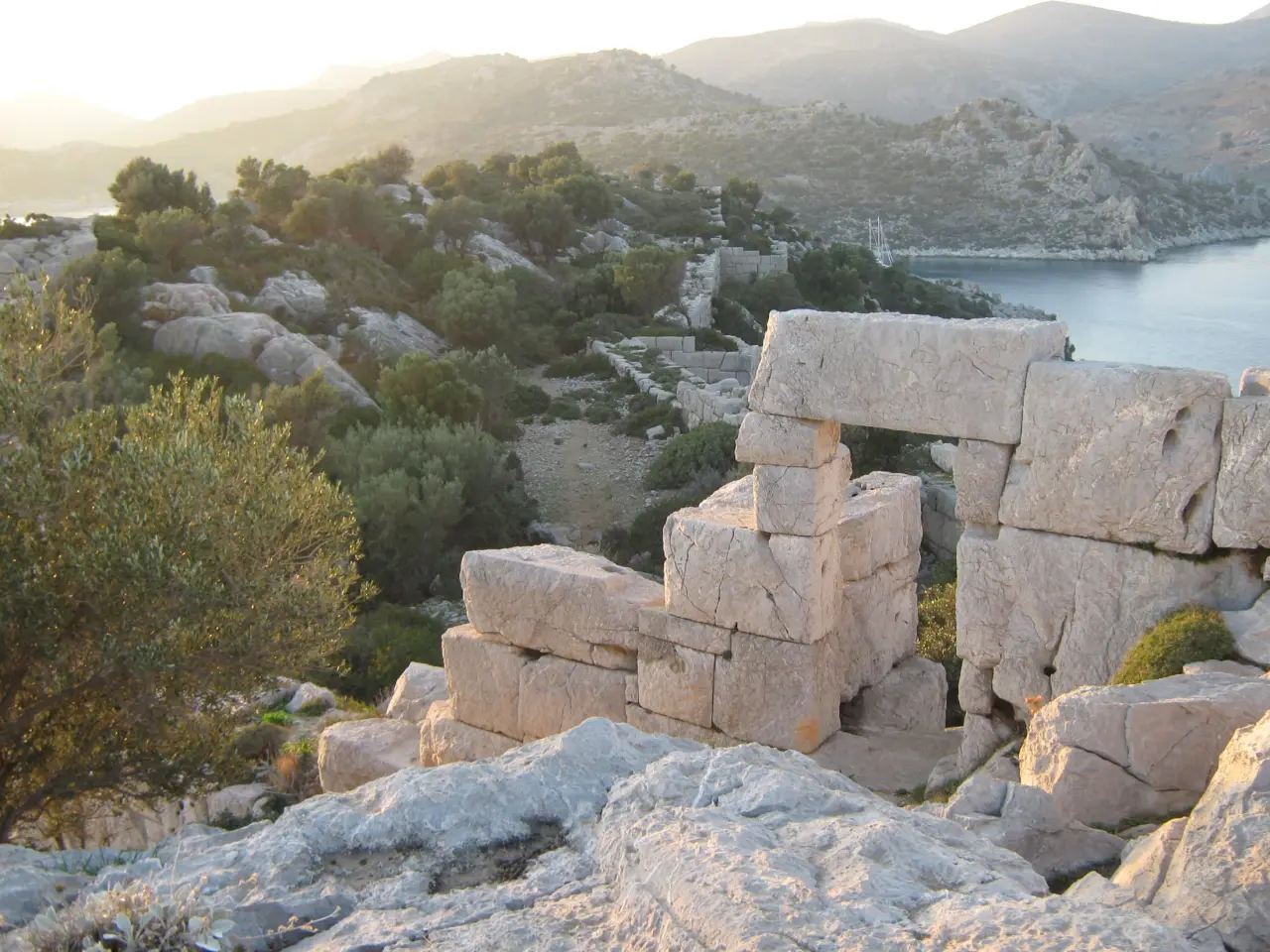
The road to Loryma overland is very rough; it's easier to go by boat. Check boat schedules and the weather before you go.
≈ 2 hours from Bozburun to Dalyan via Marmaris; across to the far bank by rowing boat · stay 120 min
Stark relates that Kaunos was still unknown in the time of Colonel Leake, who travelled through Anatolia in 1800, and was found about forty years later by an officer from a British ship. She walks round the harbour choked by marsh, the coots swimming in the reeds, the walls climbing to the citadel and the theatre; she also recalls that for centuries the city was a byword for malaria. The rock tombs on the far bank of the Dalyan river are the backdrop to this walk.

You cross from Dalyan to the far bank by rowing boat; agree the fare before you get in. Check the site's opening hours before you go.
≈ 1 hour from Dalyan to Fethiye · stay 45 min
Describing ancient Telmessos on the Gulf of Fethiye, Stark recalls that the city was famous for its seers, and links to it a story told by Arrian: Gordias the Phrygian asked a girl of Telmessos the meaning of an eagle that had settled on the yoke of his plough, and later married her; their son was Midas. The temple-fronted Tomb of Amyntas, carved into the rock above the town, is the grandest work left from ancient Telmessos.

The steps up to the tomb are steep and slippery. Check opening hours before you go.
≈ 1 hour from Fethiye on the Kaş road · stay 120 min
One of the largest cities of Lycia and one of the centres of the Lycian League. Stark explores the valley at length; from Xanthos she drives down to Patara by Land Rover, between cotton fields and marsh. The pillar tombs beside the theatre and the Harpy Monument stand in place; the originals of the reliefs taken to England in the 1840s are now in the British Museum.

Xanthos, together with the nearby Letoon, is a UNESCO World Heritage Site; the midday heat in summer is intense. Check opening hours before you go.
≈ 45 min from Kaş to Üçağız; to the bays by boat · stay 150 min
In this section Stark describes the sea-drowned houses of Aperlai and the necropolis seen from the castle of Kekova; the boat reaches these bays by way of Kaş, ancient Antiphellos. Sunken walls show beneath the shallow water, and the castle of Simena (Kaleköy) looks down over the bay.

Swimming and diving over the sunken ruins are forbidden; boat tours follow set routes. Check boat schedules before you go.
≈ 40 min from Üçağız to Demre · stay 120 min
Stark's boat enters Andriake, the port of Myra; this is the harbour where the Apostle Paul changed ships on his way to Rome. Stark also writes that by 1952 a small hotel and a clean restaurant had opened in Finike, and that the three-house hamlet of the traveller Fellows's day was beginning to grow. At Andriake, the great granary from the reign of Hadrian is now the Museum of Lycian Civilisations; the rock tombs of Myra are a few kilometres inland.

Andriake and Myra have separate tickets. Check the museum and site opening hours before you go.
≈ 1.5 hours from Demre to Çıralı; ≈ 20 min uphill from the car park to the flames · stay 75 min
Stark comes to the Chimaera by way of Bellerophon and his winged horse Pegasus on Lycian coins: the undying fire, seen at night by sailors from within the forest, reached by a ride of just over an hour from the long beach north of Olympos. Today you climb up by path from Çıralı; the natural gas flames emerging from between the rocks look their best in the dark.
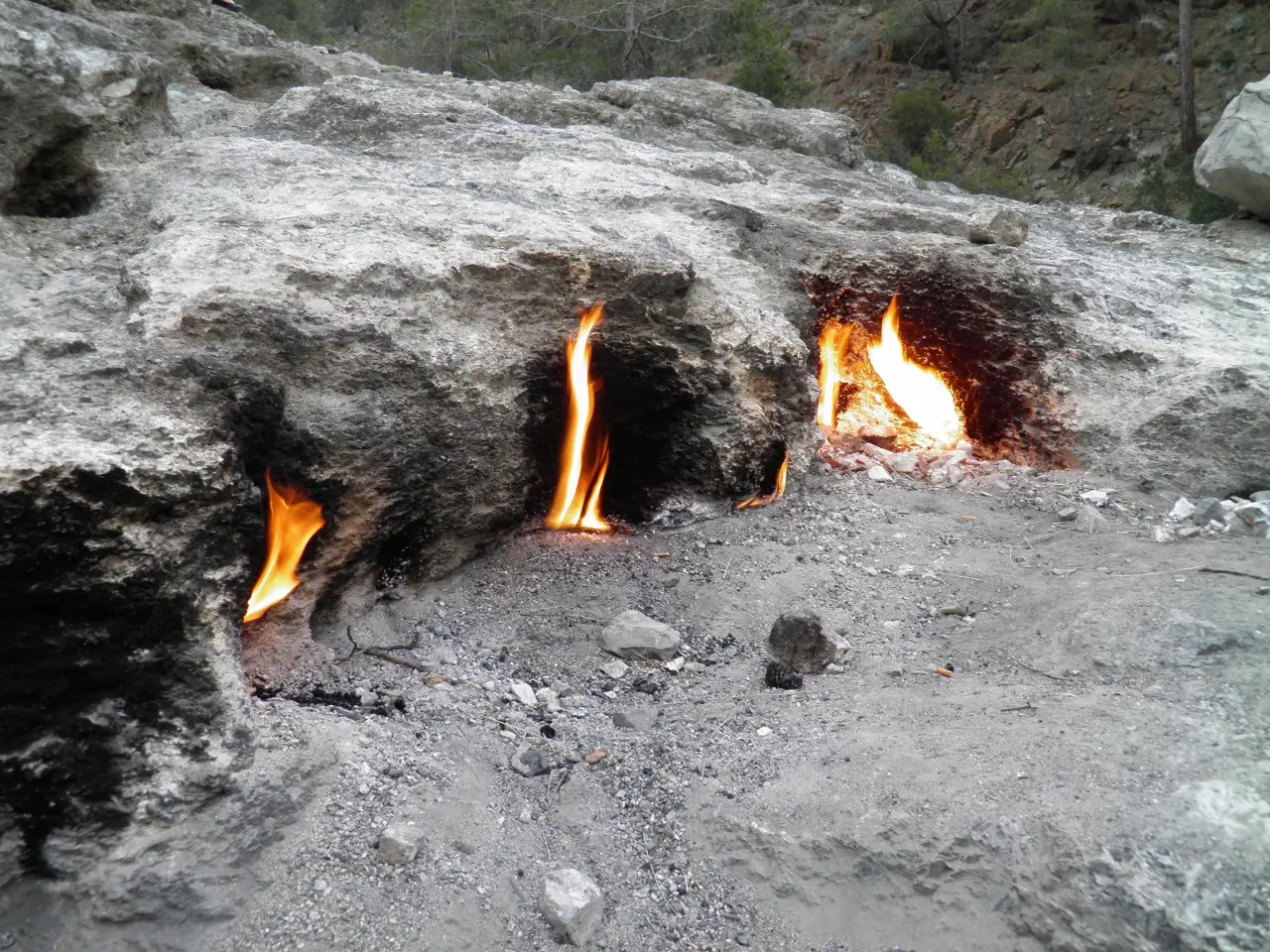
The path is stony and you'll need a torch on the way down; don't get too close to the flames. Check opening hours before you go.
≈ 40 min from Çıralı towards Kemer · stay 150 min
The book ends at Phaselis with its three harbours. Alexander had spent part of the winter of 334–333 BC here; and it was his first march along this coast that Stark had been tracing throughout her voyage. The main street in the pine forest, Hadrian's gate and the aqueducts; don't leave without a swim in the south harbour.
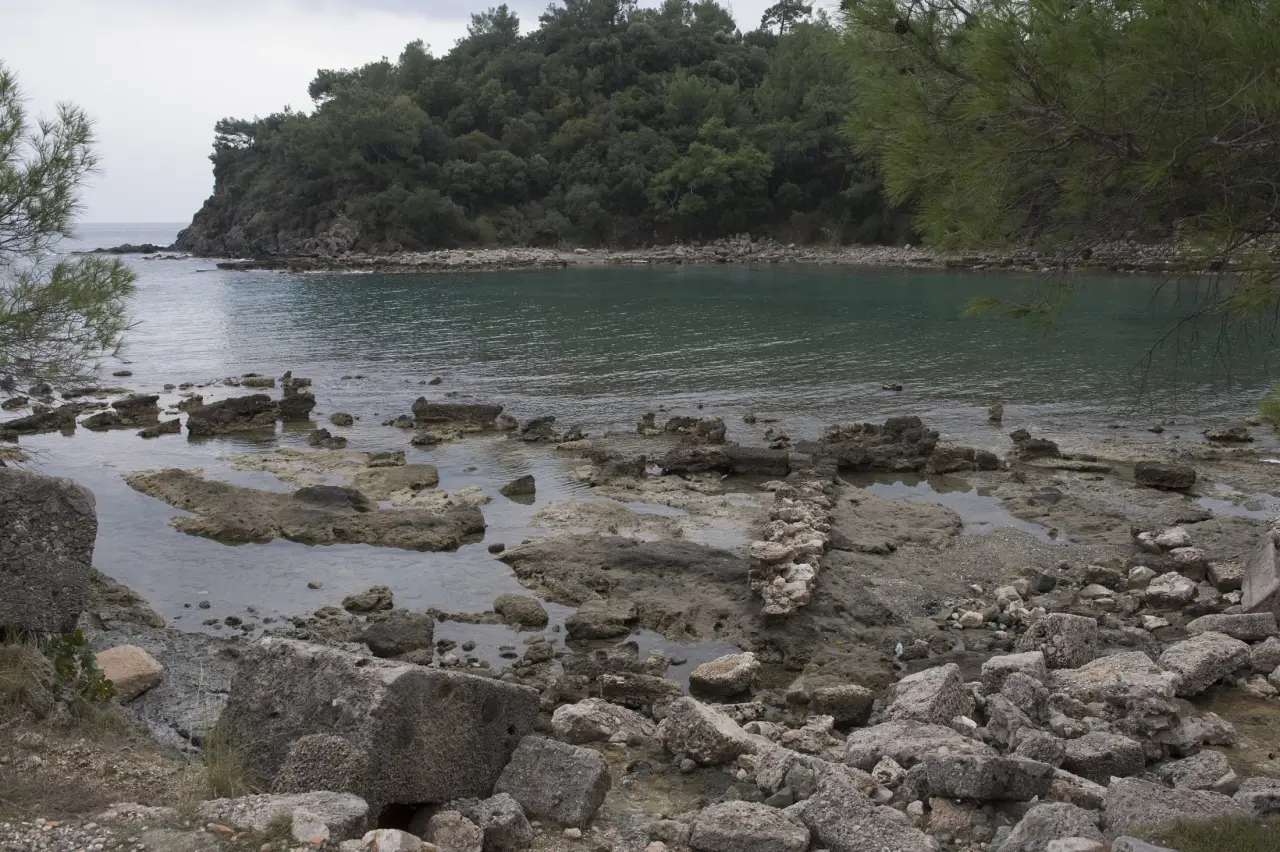
On summer days it gets crowded with boat tours in the afternoon; go early in the morning. Check opening hours before you go.
≈ 2 h 15 min · fast ferry + bus · Day trip
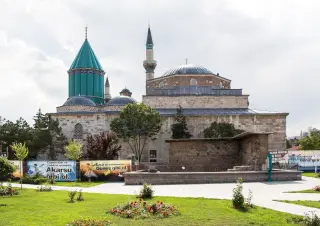
Why here: The first Ottoman capital. The Green Mosque, the Grand Mosque and Koza Han make an easy day trip; we suggest it if you are staying in Istanbul for more than four days. Not part of this route.
Travellers who check in on this route can rate it. No one else can.
Be one of the first travellers to walk this route. If you have a question or a tip, share it with the community.
After walking the route you can rate it using the check-in in the app. Reviews go live after a short check.
Source: Prof. Dr. İlber Ortaylı (1947–2026)
Source: Prof. Dr. İlber Ortaylı (1947–2026)
Your basket stays saved on this device, so you can pick up where you left off once sales open. Until then, routes, the map and audio guides are free.