


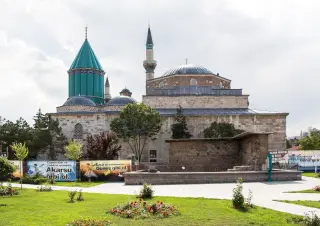


Historian's route
1 tickets€29
Source: Prof. Dr. İlber Ortaylı (1947–2026)
İlber Ortaylı's Istanbul walk, in two days
1 ticketed stopsOpen the route
A four-day Ionian journey from Foça to Kyme, from Klazomenai at Urla to Erythrae at Ildır and Teos at Sığacık, to Klaros, where Apollo gave his oracles, to Priene, to Herakleia at the foot of Mount Latmos, to Miletus and to Didyma. We compiled it from the journey Freya Stark made in the autumn of 1952 with Herodotus as her travelling companion, and described in her book Ionia: A Quest; we added the timings, breaks and practical notes.
This route was compiled by AnatoliaPass editors from the published recommendations of the person named; the timings, breaks and practical notes are ours. It does not mean that the person recommends or endorses AnatoliaPass.
Freya Stark (1893–1993) was a British traveller and writer who roamed the Middle East and turned her journeys into books. Ionia: A Quest (1954) is the first of the four books she wrote about Türkiye.
In the book's preface Stark writes that in the autumn of 1952 she travelled the western coasts of Anatolia, and that the ruins she visited eventually numbered fifty-five; in only one of them, Pergamon, did she meet another traveller like herself. Some of the cities were buried in earth, some sunk in marsh, and the seats of the theatres had been split by tree roots.
After a few days in İzmir she decides that one cannot travel without a guide, and chooses Herodotus: she will go to the cities he mentions, whether they still stand or not. She says she loves forgotten ruins that not even the archaeologist has touched. She describes her book as a guide in time; in each ruin she looks for an idea that the city gave to civilisation: philosophy at Klazomenai, Anacreon's joy in living at Teos, a people's decision at Phocaea, art at Priene.
From the book's twenty-four chapters we chose ten stops that can be visited today and lie close to one another. We left out Chios; places that appear in other routes on the site, such as Pergamon, Sardis, Ephesus, Aphrodisias and Hierapolis; and the chapters on Myrina, Gryneion, Pitane, the Panionion and Magnesia. We arranged the stops from north to south; the timings, driving times and warnings are ours.
Start: ≈ 1 hour north of İzmir · stay 90 min
Stark calls her Phocaea chapter “Decision”. According to Herodotus, when the Persian army besieged their city, the Phocaeans, rather than surrender, boarded their ships and abandoned it; it was they, too, who founded Marseille and sailed out into the western Mediterranean in their long-oared ships. Within today's Foça: the ancient theatre, the remains of the temple of Athena and the harbour's two bays.
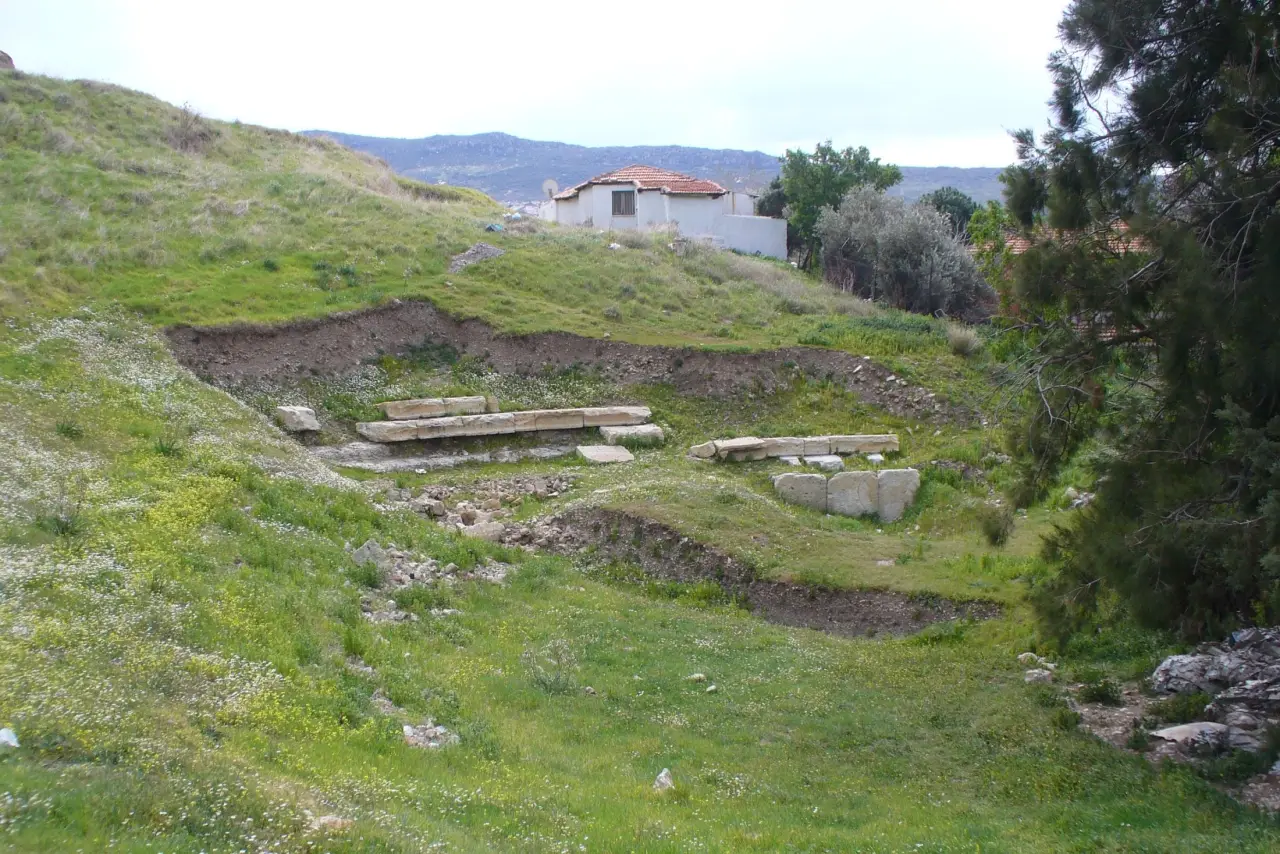
The ancient theatre and the excavation areas are fenced off. Check visiting arrangements before you go.
≈ 30 min from Foça, before you reach Aliağa · stay 60 min
The largest city of Aeolis. Stark relates that after the defeat at Salamis, Kyme gave winter quarters to Xerxes' fleet; that because it collected no harbour dues for three centuries, the ancients thought the Kymeans simple; and that the father of the poet Hesiod emigrated from here. In 1952 camels carrying bales of cotton and tobacco passed beneath the low acropolis; today it is a quiet site beside Aliağa's industrial zone.
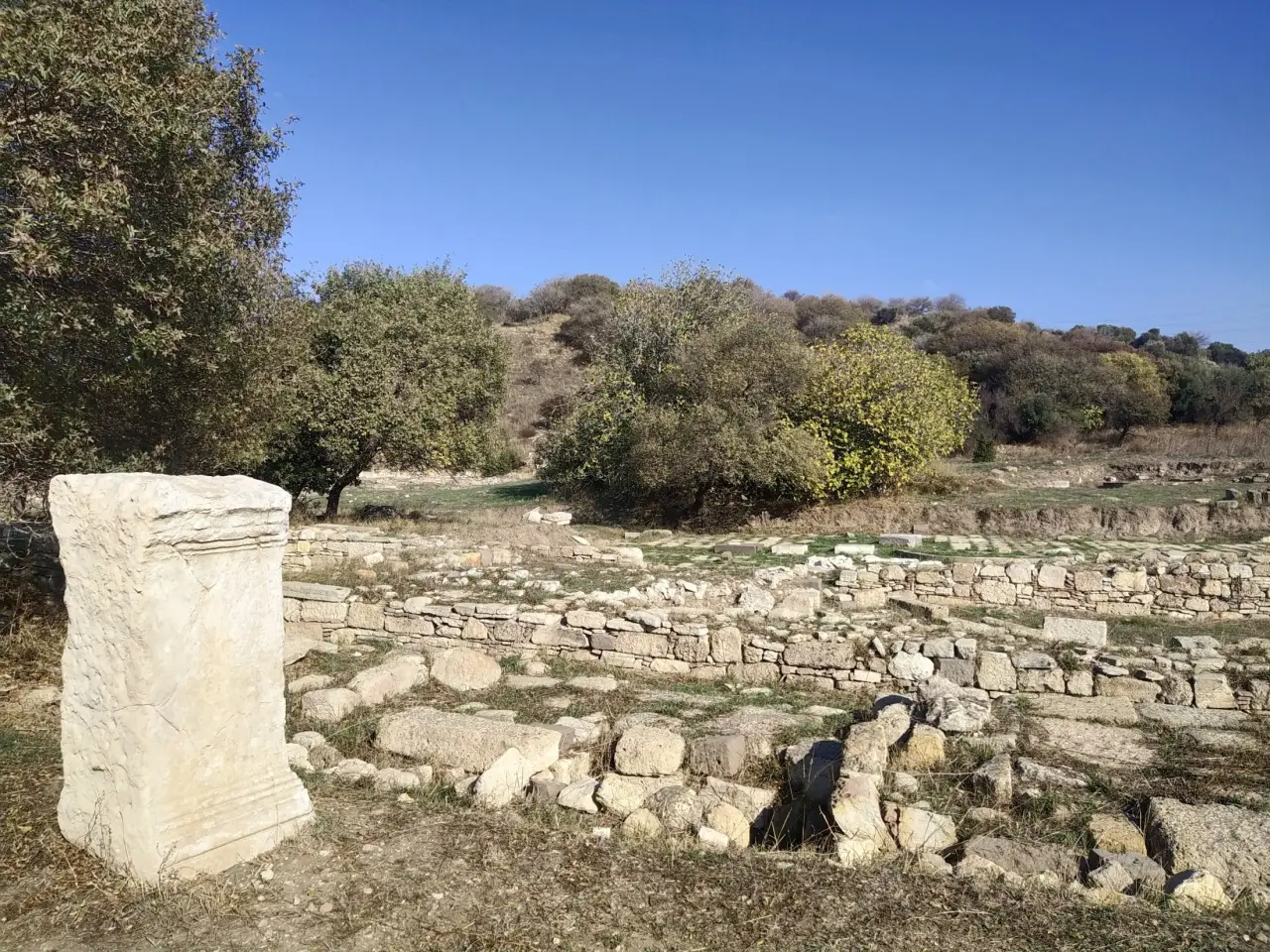
The site lies among industrial plants; follow the road signs. Check visiting arrangements before you go.
≈ 1.5 hours via İzmir to Urla İskele · stay 75 min
After a few days in İzmir, Stark goes to Klazomenai, thirty kilometres to the west, as the first of the twelve cities of Ionia, taking Herodotus along as her travelling companion. The city of the philosopher Anaxagoras lies on the island off Urla İskele and at Liman Tepe on the shore; the reconstructed ancient olive oil workshop on the shore can also be visited.

Part of the excavation area is fenced off. Check the olive oil workshop's visiting hours before you go.
≈ 45 min from Urla to the village of Ildır · stay 75 min
In this chapter Stark writes of exile and slavery; in the small Ionian towns along the coast she sees the traces left by the great migrations of the 1920s. On the acropolis above the village of Ildır, the Hellenistic theatre restored in the reign of Hadrian and the remains of walls looking out over the gulf. For lunch, sit down by the shore in Ildır.
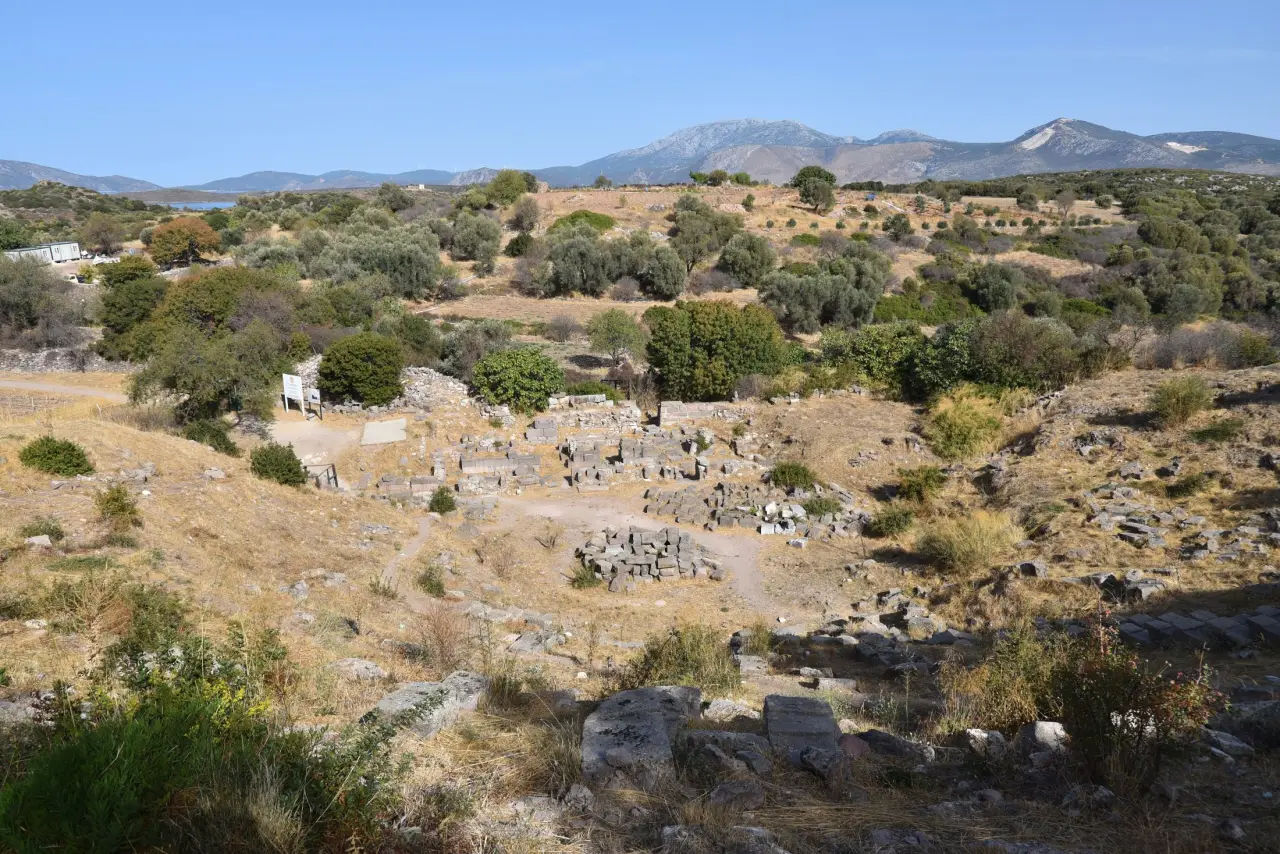
The path up to the acropolis is rocky and has no shade. Check the site's visiting arrangements before you go.
≈ 1 hour from Ildır to Sığacık via Seferihisar · stay 90 min
Stark describes the road to Teos as one that runs through the shade of valonia oaks and greets you almost with an embrace. The city of the poet Anacreon; you reach the site past the medieval castle of Sığacık. The architect Hermogenes' temple of Dionysus, the theatre and the council house stand among the olive groves; spend the evening at Sığacık harbour.
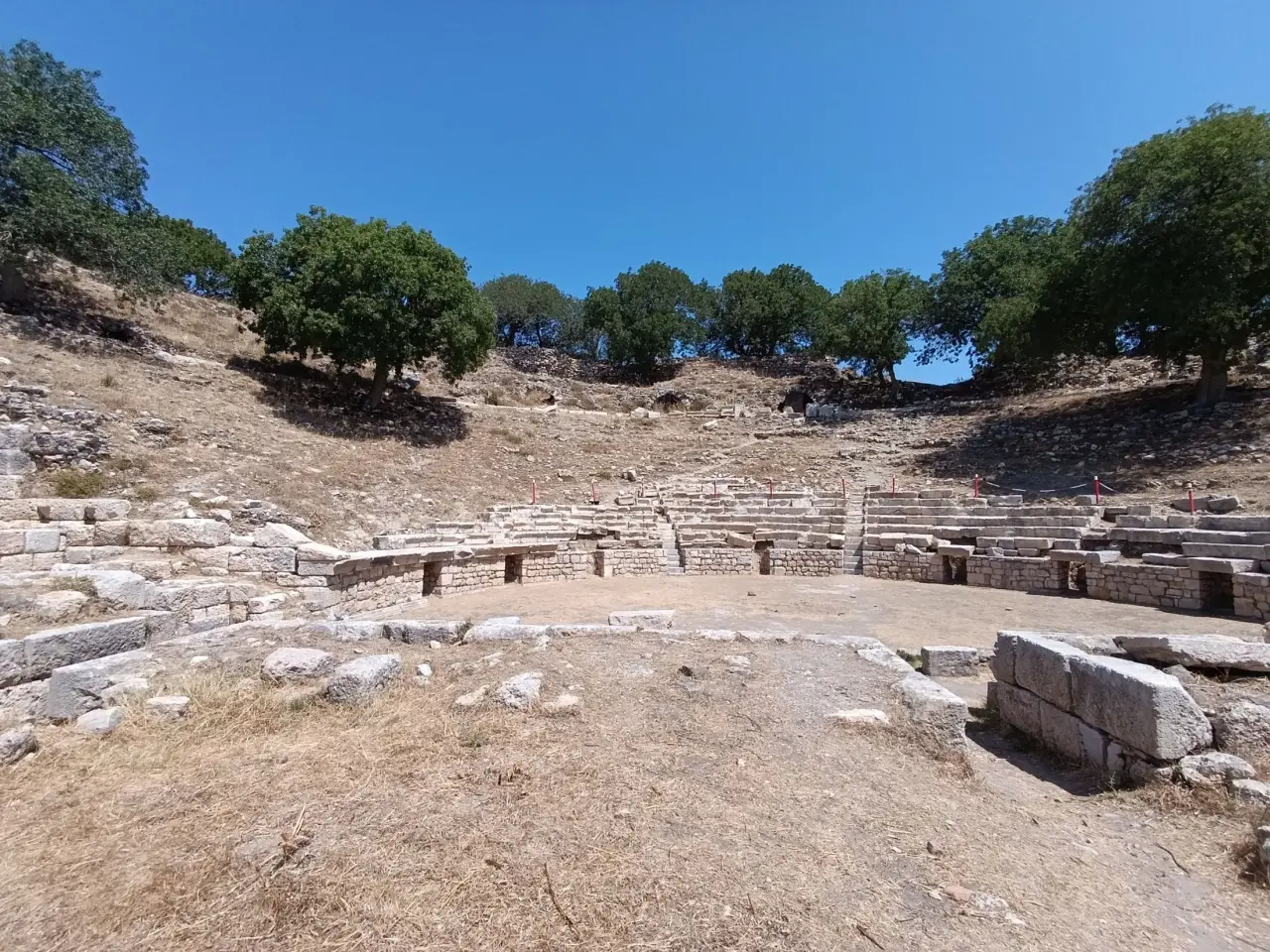
The site is large and closes around sunset. Check opening hours before you go.
≈ 1 hour from Sığacık towards Değirmendere and Ahmetbeyli · stay 90 min
Coming out of the paths of Kolophon, Stark follows the pine-covered foothills down to Klaros, where Apollo gave his oracles; a roadside fountain is, in her eyes, the symbol of this road. Column fragments of the temple, where oracles were given in an underground chamber, rise out of the groundwater; two kilometres to the south, on a hill above the sea, lies Notion, the port of Kolophon.
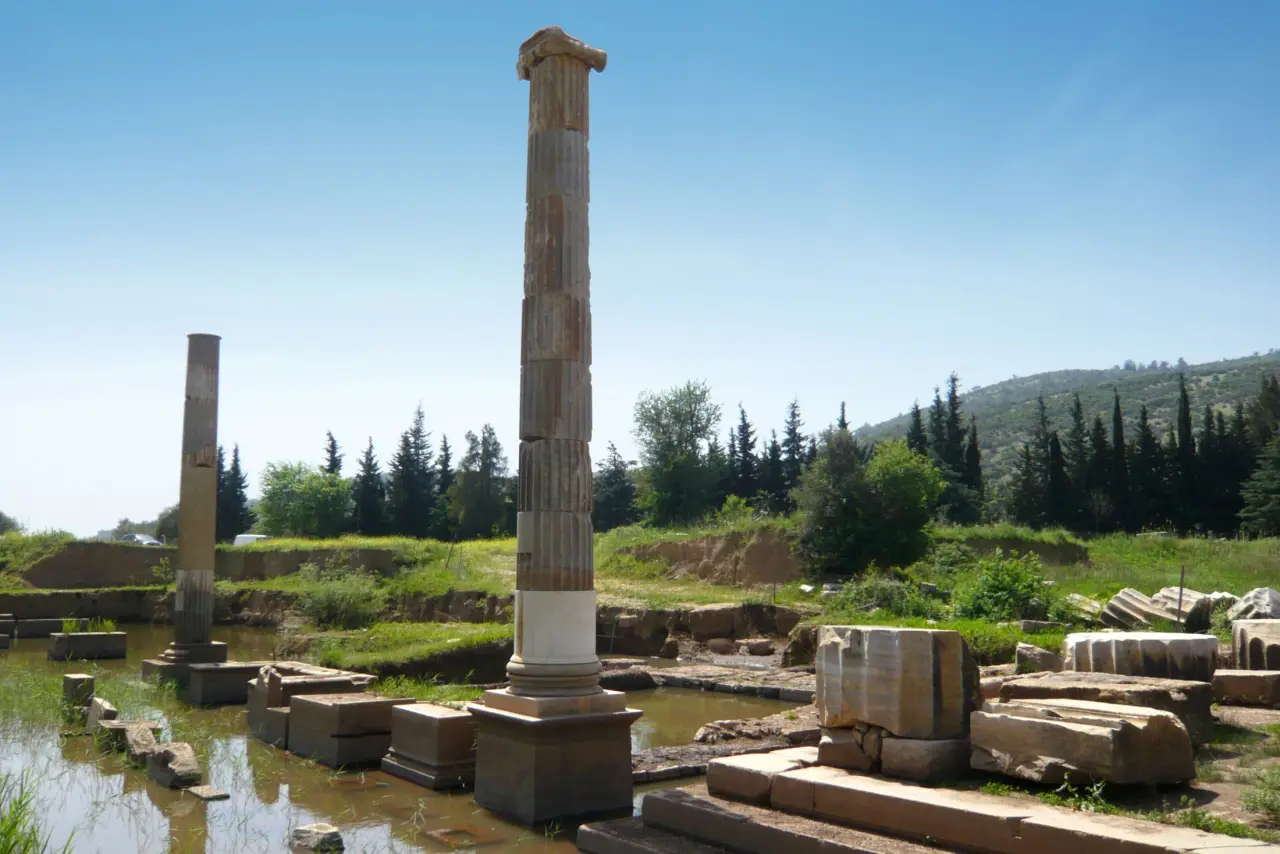
Part of the sanctuary is under water in winter. Check opening hours before you go.
≈ 1.5 hours from Klaros via Kuşadası and Söke · stay 120 min
Stark enters Priene, thirteen kilometres from Söke, by the east gate, and describes coming out on to the theatre all at once, wholly unprepared, as if stepping onto a stage that actors and audience had fled a moment before. The city's temple of Athena, laid out with the rest of the city on a grid plan on terraces in front of the mountain, is known for the inscription recording Alexander's dedication; from the terrace you look out over the Meander delta.
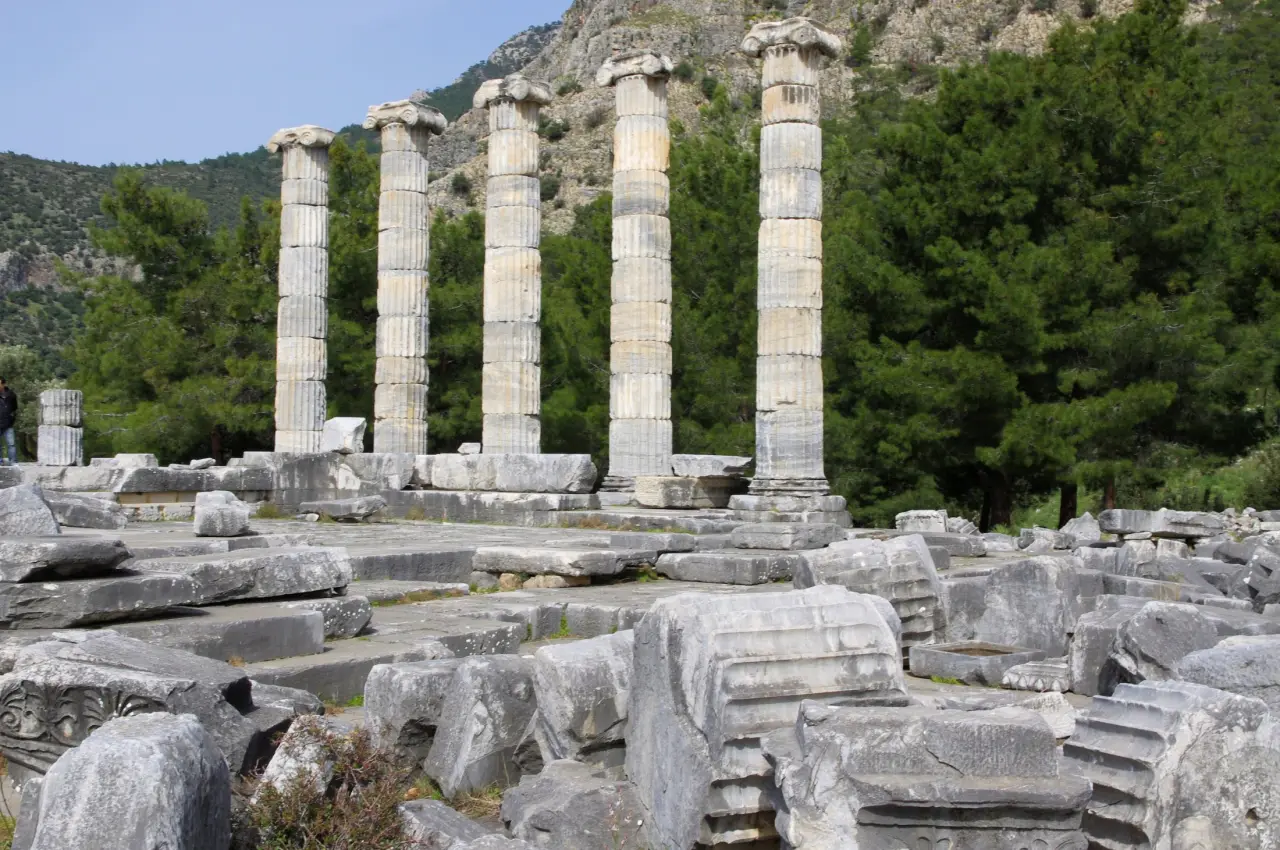
The road up to the city is uphill; bring water and a hat. Check opening hours before you go.
≈ 50 min from Söke to Kapıkırı on the shore of Lake Bafa · stay 90 min
Herakleia, on the shore of Lake Bafa at the foot of Mount Latmos, which the Turks call Beşparmak, among the houses of the village of Kapıkırı. Here Stark watches the moon rise, appearing and vanishing among the peaks of Beşparmak; the legend of the moon goddess Selene falling in love with the sleeping shepherd Endymion is set on this mountain. The temple of Athena, the agora and the walls running down to the lake.

There's a risk of falling on the rocky paths; wear sturdy shoes. Keep quiet as you pass through the village, and check visiting arrangements before you go.
≈ 1 hour from Kapıkırı · stay 120 min
Stark reaches Miletus after watching it for days from afar, across the flat Meander delta: the low plateau of the old acropolis, the body of the city and the huge theatre on what was once a headland reaching into the sea. Today the sea is kilometres away; the city of Thales and Anaximander lost its harbours to the silt brought down by the Meander.
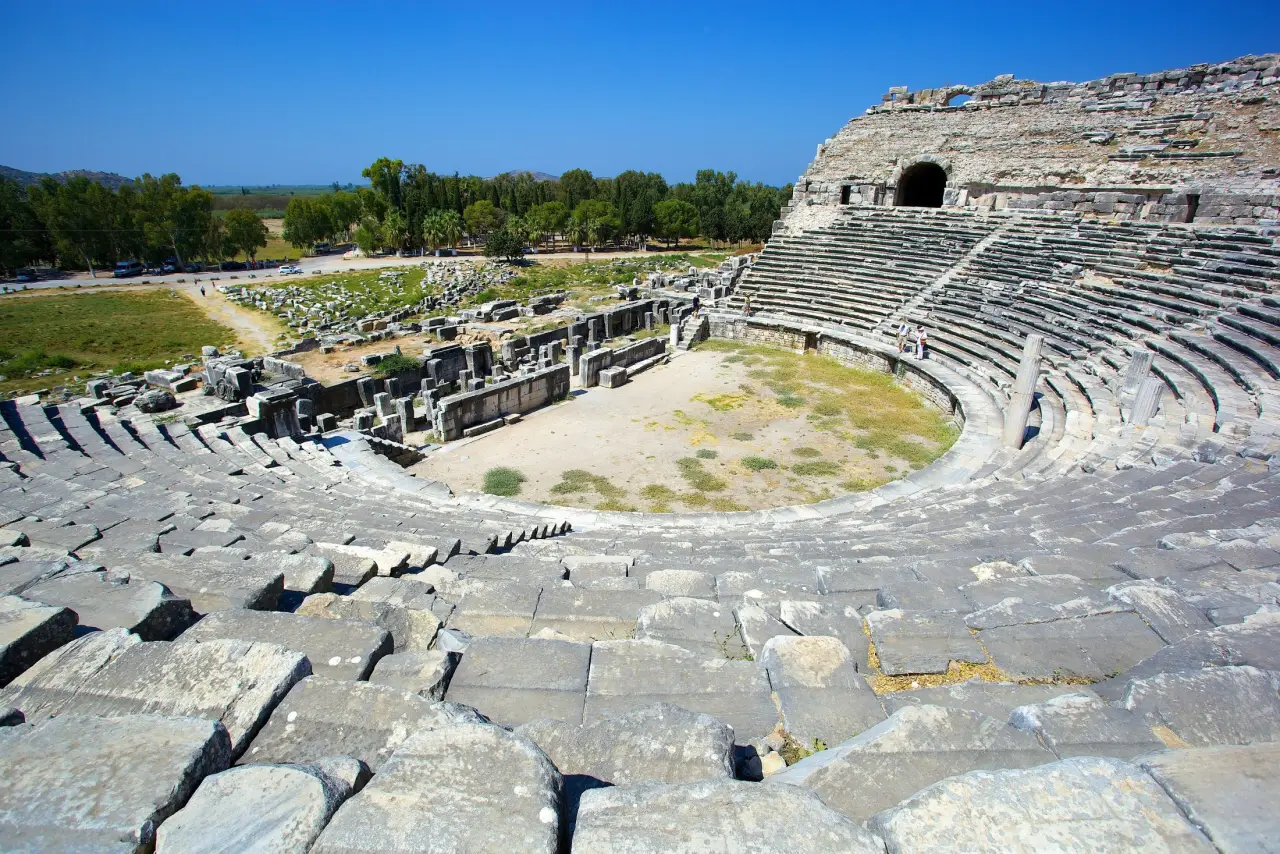
In winter and spring, the low-lying parts of the site can flood. Check opening hours before you go.
≈ 25 min from Miletus · stay 90 min
The oracle of Apollo, linked to Miletus by a sacred way. Stark tells this chapter after the days she spent waiting out the November rains in Söke, in the house of the managers of the liquorice factory who put her up. The giant columns of the temple that was never finished, the inner court where the oracles were given and the stairway passages; wait for the sunset here.

The temple is in the middle of Didim and gets crowded in summer. Check opening hours before you go.
≈ 2 h 15 min · fast ferry + bus · Day trip
Why here: The first Ottoman capital. The Green Mosque, the Grand Mosque and Koza Han make an easy day trip; we suggest it if you are staying in Istanbul for more than four days. Not part of this route.
Travellers who check in on this route can rate it. No one else can.
Be one of the first travellers to walk this route. If you have a question or a tip, share it with the community.
After walking the route you can rate it using the check-in in the app. Reviews go live after a short check.
Source: Prof. Dr. İlber Ortaylı (1947–2026)
Source: Prof. Dr. İlber Ortaylı (1947–2026)
Your basket stays saved on this device, so you can pick up where you left off once sales open. Until then, routes, the map and audio guides are free.