




Historian's route
1 tickets€29
Source: Prof. Dr. İlber Ortaylı (1947–2026)
İlber Ortaylı's Istanbul walk, in two days
1 ticketed stopsOpen the route
A half-day walk at the very head of the Golden Horn: Mimar Sinan's Zal Mahmut Paşa Complex, Eyüp Sultan Square and its market, the tomb of Abu Ayyub al-Ansari and the mosque courtyard, then the stone path that climbs through the old cemetery to Pierre Loti Hill. Tea at the café, views over the Golden Horn, down by cable car and back on the Golden Horn ferry.
Eyüp takes its name from Khalid ibn Zayd, better known as Abu Ayyub al-Ansari. When the Prophet Muhammad migrated from Mecca to Medina in 622, he spent his first months in Abu Ayyub's house. According to the sources, Abu Ayyub, by then a very old man, died before the walls of Constantinople during the Arab siege of the 670s and was buried outside the walls.
It is said that Akşemseddin, the teacher of Mehmed II, who took the city in 1453, pointed out where Abu Ayyub's grave lay. According to tradition, when the spot was dug, a marble slab inscribed with the name of Khalid ibn Zayd was found. Mehmed II had a complex built here in 1458, and Eyüp became one of the first Ottoman districts to grow up outside the walls after the conquest. The present mosque was rebuilt on the orders of Selim III and completed in 1800.
After coming to the throne, Ottoman sultans would come to Eyüp to be girded with a sword. The sultan travelled from Topkapı up the Golden Horn to Eyüp in the imperial caique, was girded with the sword at the tomb and, on the way back, usually returned to the palace overland via Edirnekapı, Fatih and Divanyolu. The sword was most often girded on by the şeyhülislam (the chief religious authority) or the nakibüleşraf (the head of the Prophet's descendants), and sometimes by the sheikh of a Sufi order. The last of these ceremonies was held for Vahdeddin, who came to the throne in 1918.
Over the centuries, the slope behind the tomb became a cemetery in which the people of Istanbul longed to be buried. It is said that Pierre Loti, the French naval officer and writer who came to Istanbul in 1876, often visited the café on the hilltop and finished his first novel, Aziyadé, here. Known in the 19th century as the Rabia Kadın Coffee House, the café now bears his name, and the hill is known as Pierre Loti Hill. Looking out from here, it is easy to see why the Golden Horn, that long, narrow inlet where palace caiques once passed, was the city's harbour.
Start: Eyüp pier by Golden Horn ferry, or Feshane on the T5 tram; ≈ 6 min walk from the pier · stay 30 min
The complex Mimar Sinan built in the second half of the 1570s for Zal Mahmud Paşa, a vizier in the reign of Murad III, and his wife Şah Sultan, daughter of Selim II: a mosque, two madrasas, a tomb and a fountain. The two madrasas sit at different levels on the sloping site, showing how Sinan made use of the terrain. According to tradition, Zal Mahmud Paşa and Şah Sultan died on the same day and lie together in the tomb in the courtyard. On your way, also take a look at Feshane, the old fez factory right next to the pier.
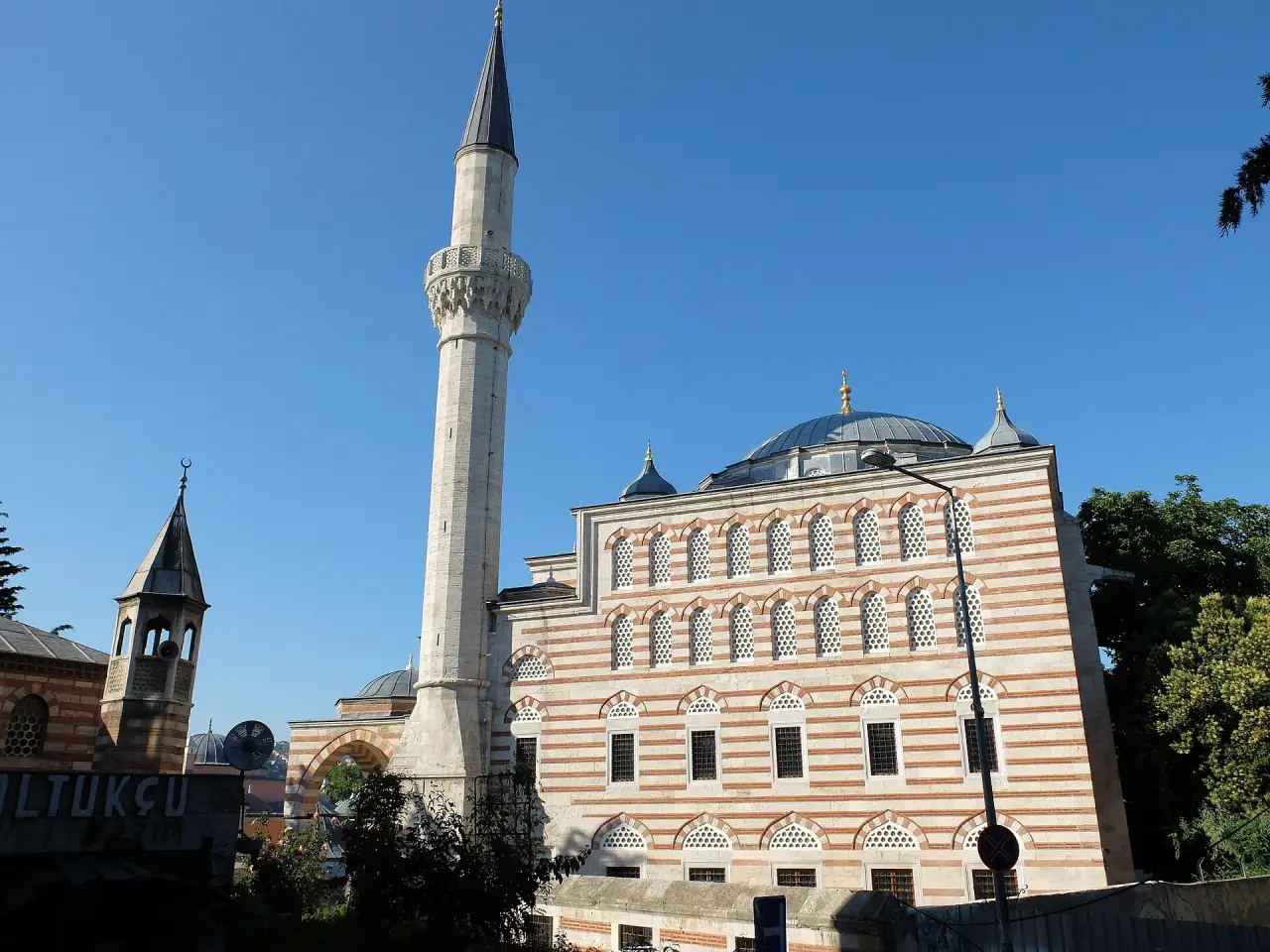
The mosque is closed to visitors at prayer times; the courtyard and the area around the tomb stay open.
≈ 6 min walk (450 m), heading north · stay 30 min
The broad square in front of the mosque and the market around it: shops selling prayer beads, skullcaps, books, sweets and toys. Eyüp was once known for its toymakers, too: Evliya Çelebi is reported to have counted around a hundred toyshops here in the 17th century, and ‘Eyüp toys’ have begun to be made again in recent years. Bringing boys who are about to be circumcised to Eyüp Sultan in their ornate costumes is also an old Istanbul tradition; you will often see them in the square at weekends.
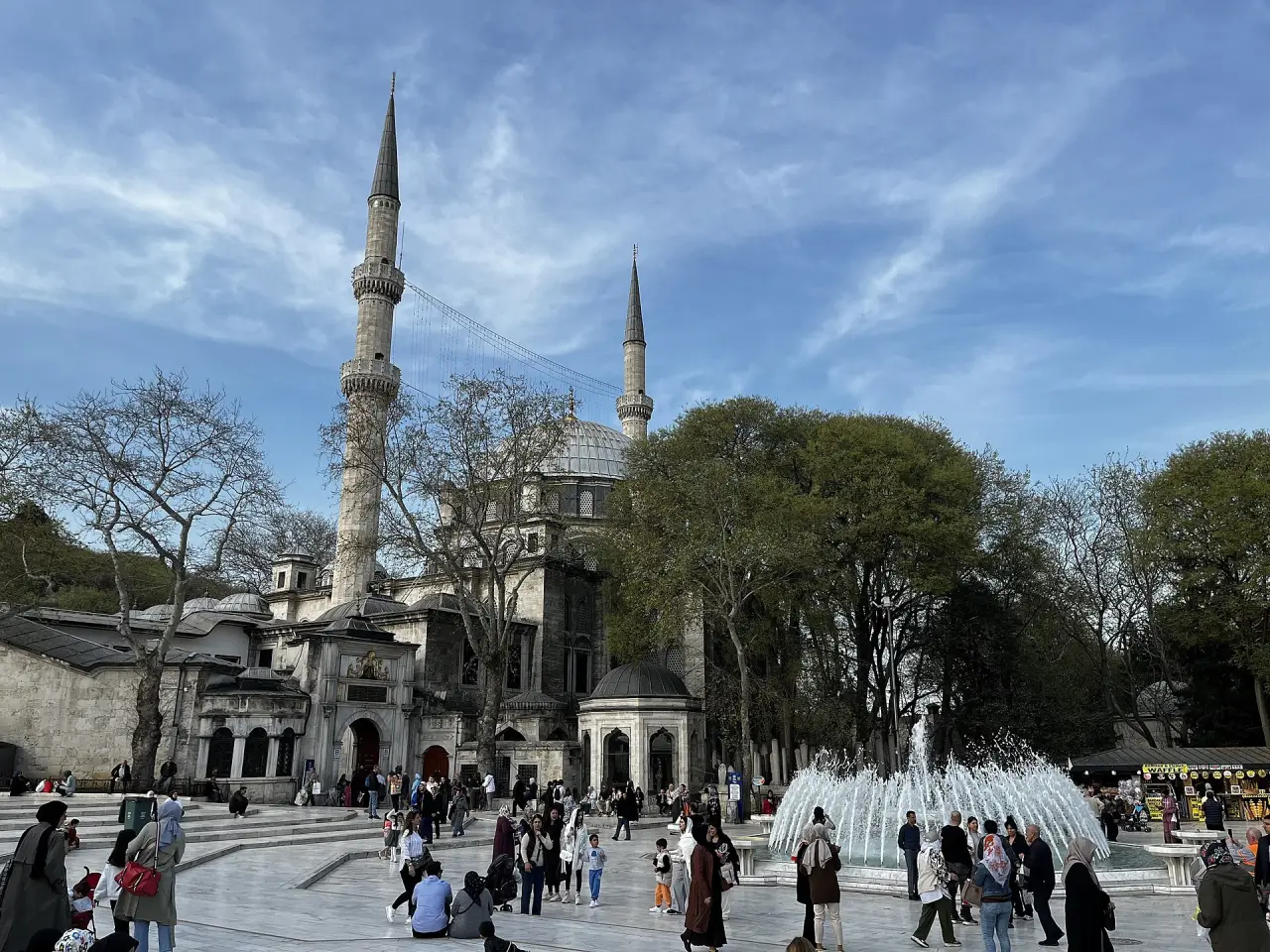
The square gets very crowded at weekends and on holy nights (kandil).
A few steps from the square to the courtyard gate · stay 30 min
The present mosque was built on the orders of Selim III to replace the earlier building he had demolished, and was completed in 1800; it combines Baroque decoration with the plan of classical Ottoman mosques. The inner courtyard has old plane trees and a section facing the tomb: this is where Ottoman sultans were girded with a sword in a ceremony after coming to the throne.
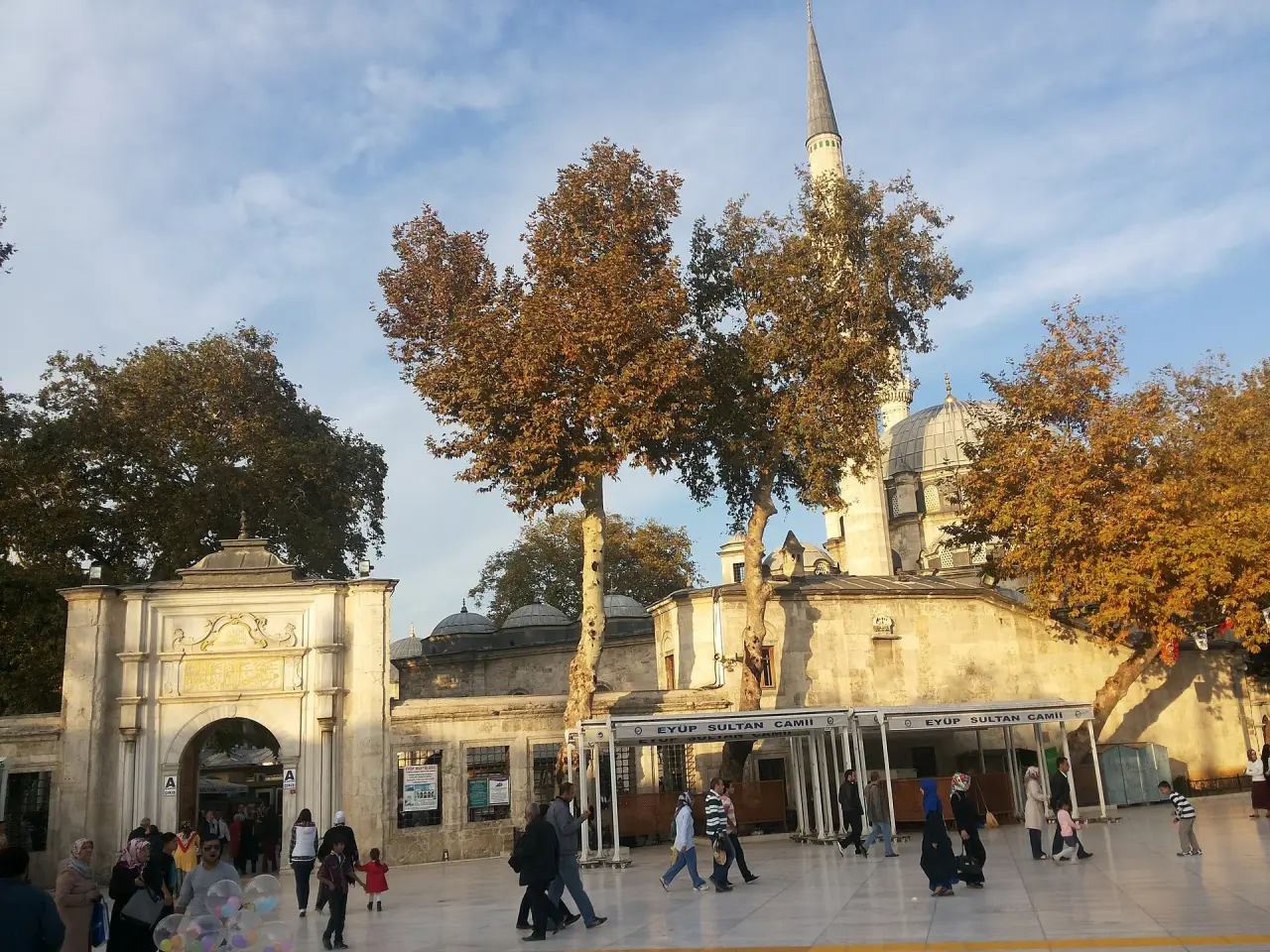
The courtyard and mosque fill up at Friday midday prayers; on a Friday, go before noon, or choose another day. Check prayer times before you go.
The far side of the courtyard · stay 20 min
The tomb of Abu Ayyub al-Ansari. Its outer walls and interior are clad in tiles, and it bears inscriptions and decoration commissioned by sultans such as Ahmed I, Mahmud I and Selim III. Visitors pray quietly at the window in front of the tomb and inside; you need to join the queue and move through slowly.
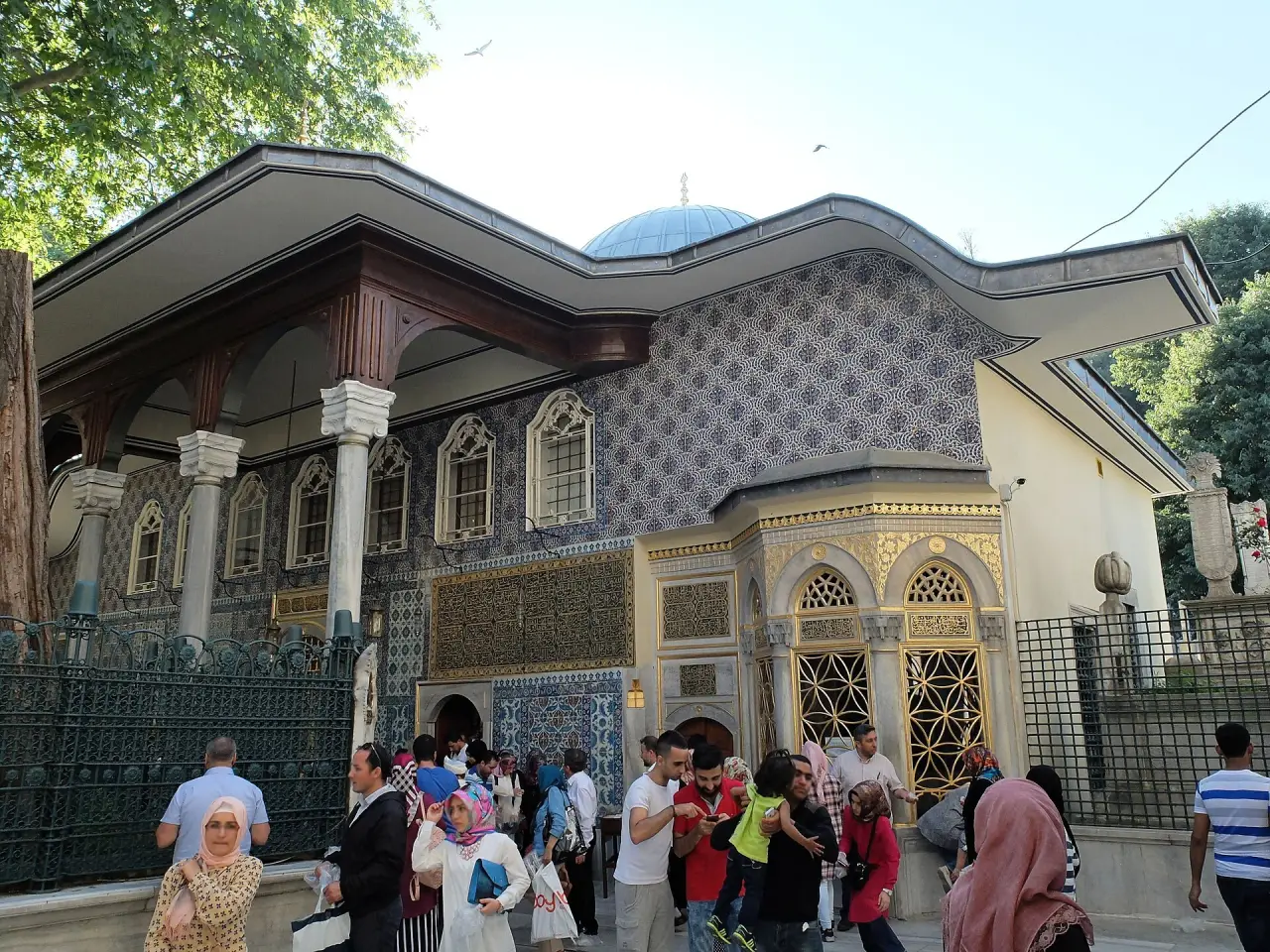
Don't take photos or video in the tomb; don't talk inside. Shoes come off at the entrance.
From behind the tomb on to the cemetery path; a stone path uphill, ≈ 15–20 min · stay 30 min
The slope behind the tomb holds one of Istanbul's oldest and largest Ottoman cemeteries. For centuries, statesmen, poets, artists and ordinary Istanbulites wished to be buried near Eyüp Sultan. Stones crowned with carved headdresses and turbans, or decorated with floral reliefs, tell you whom they belong to and what period they date from; walk slowly and read them.
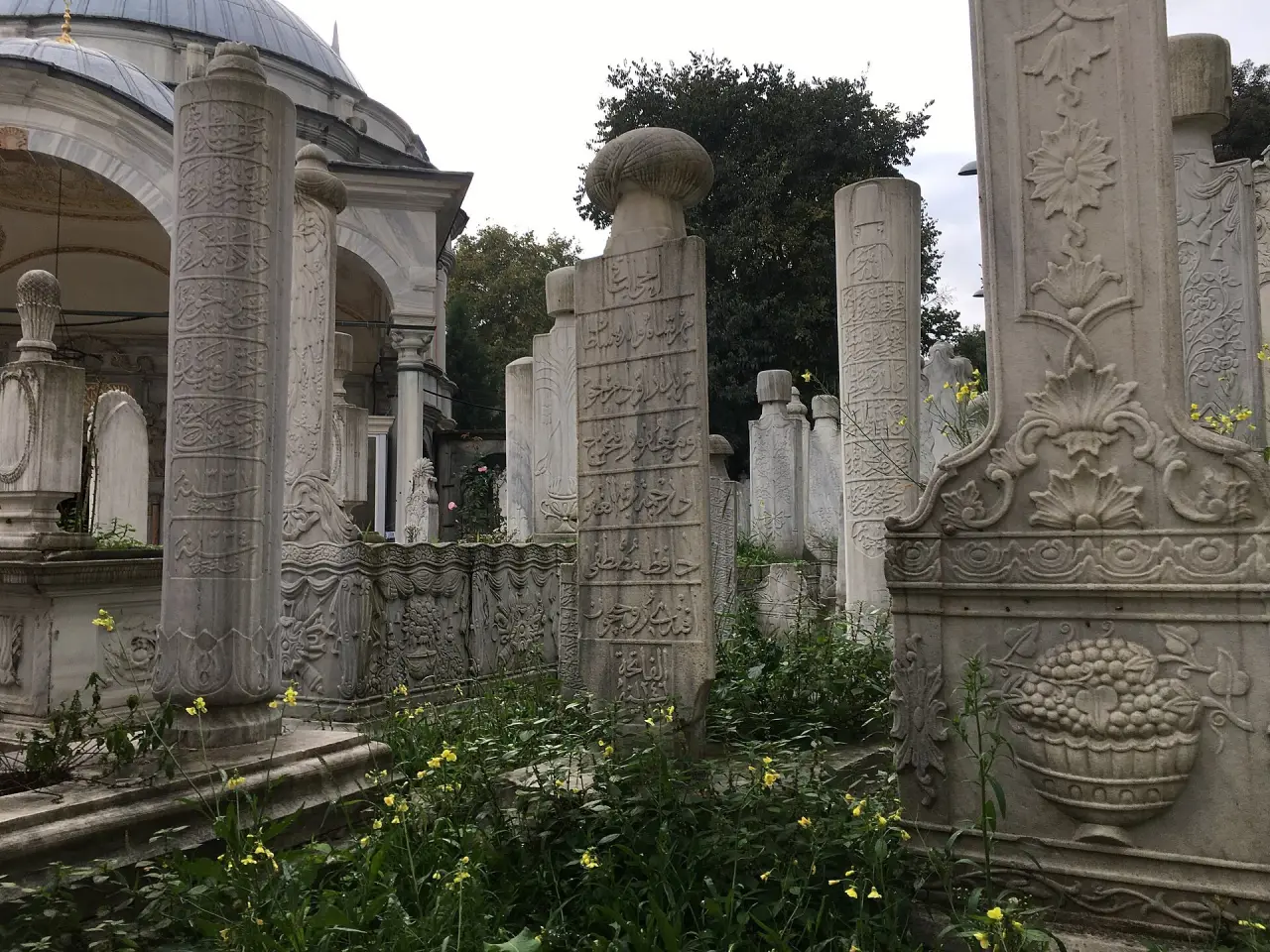
The path is steep and slippery in places; wear comfortable shoes. This is a cemetery: don't talk loudly and don't step on graves.
At the top of the climb, on the slope of the hill · stay 60 min
The café known in the 19th century as the Rabia Kadın Coffee House. It is said that the French writer Pierre Loti, who came to Istanbul in 1876, came here often and finished his first novel, Aziyadé, here. The café has changed hands several times; a small corner inside displays photographs of Loti and his books. Have a tea or a Turkish coffee, with a gözleme or a toastie on the side.
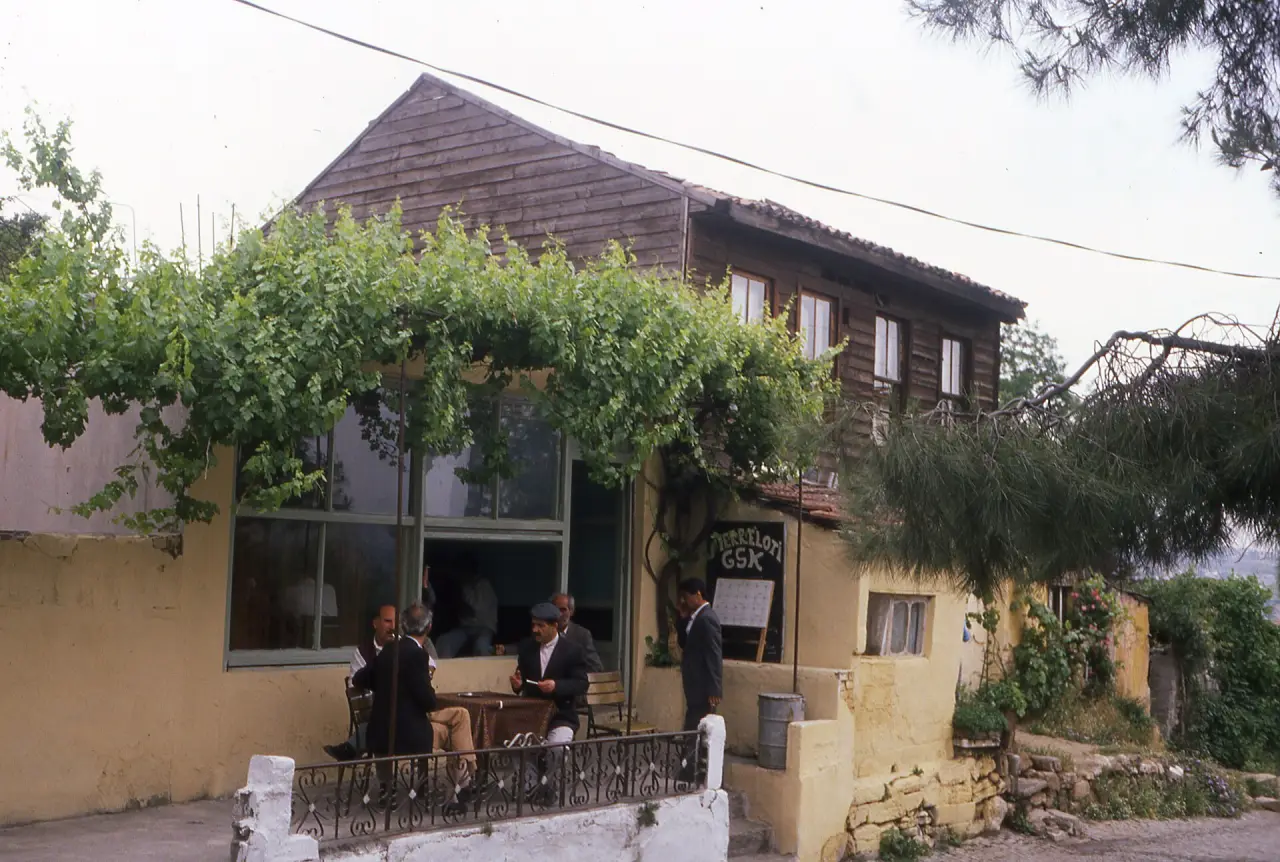
Tables are hard to come by on weekend afternoons; go in the morning or on a weekday. Ask about prices before you sit down.
The viewing terrace in front of the café · stay 20 min
The whole of the Golden Horn is visible from here: below you Eyüp, opposite Sütlüce and Hasköy, and in the distance the Golden Horn bridges and Galata. For centuries this long, narrow inlet was the city's harbour; the sultans' imperial caiques also came to Eyüp along this water.
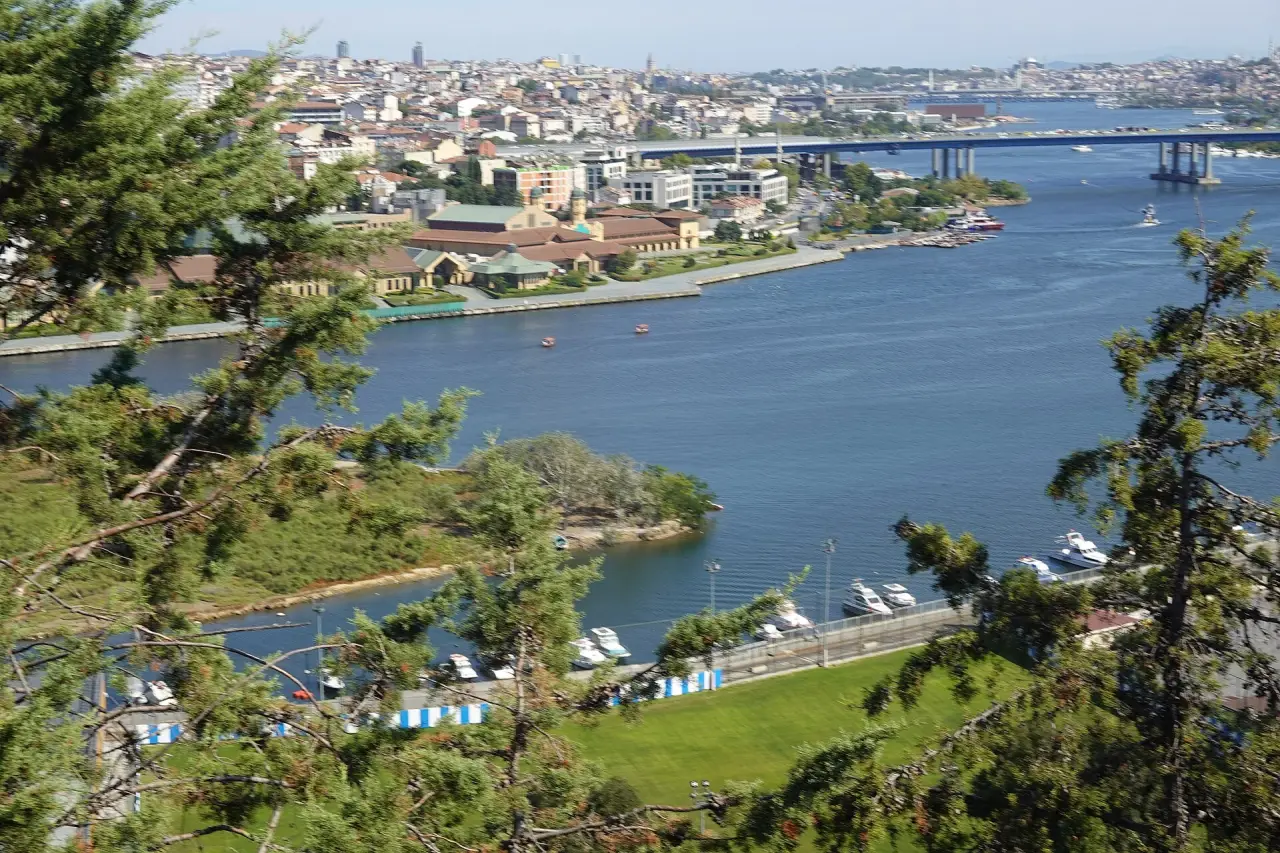
The terrace gets very crowded at sunset.
Down from the hilltop station; the ride takes ≈ 3 min · stay 10 min
Opened in 2005, the short cable car line (TF2), about 384 metres long, links the hill with the Eyüp waterfront; you ride with an İstanbulkart. Once down, if you like, you can see the outside of the Bahariye Mevlevi Lodge, ≈ 10 min to the north along the coast road: founded in Beşiktaş in 1613, the lodge moved here in 1873 and was restored in 2010; today it is used by an association.
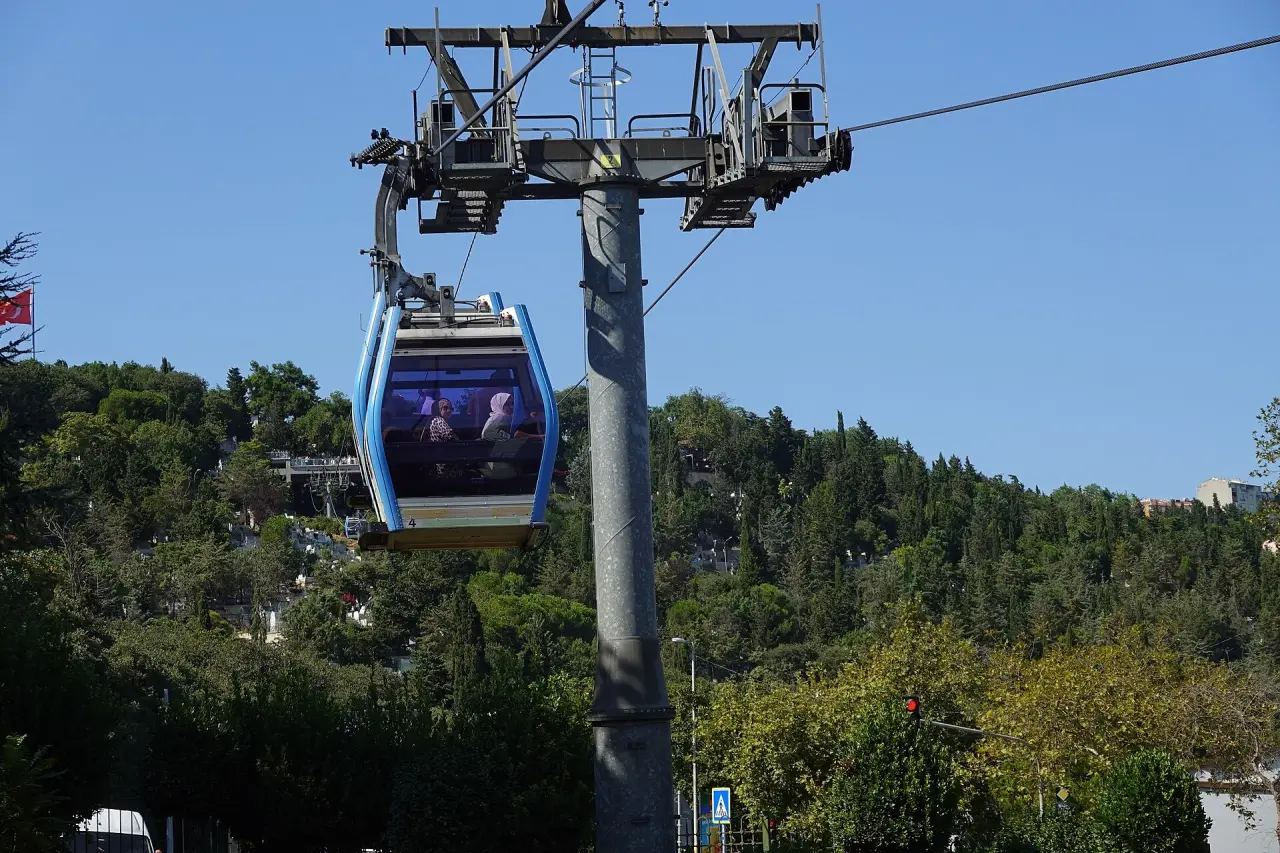
The cable car may be stopped in high winds, for maintenance or because of a fault; check whether it is running and its hours with Metro İstanbul before you go. If it isn't running, walk down by the cemetery path.
≈ 5 min walk (400 m), south along the waterfront · stay 50 min
Şehir Hatları's Golden Horn ferry runs from Eyüp down to Karaköy and Üsküdar, calling at the Sütlüce, Ayvansaray, Hasköy, Balat, Fener and Kasımpaşa piers. It is the easiest way to see the Golden Horn from end to end from the water; if you are heading for Eminönü, get off at Karaköy and walk across Galata Bridge.
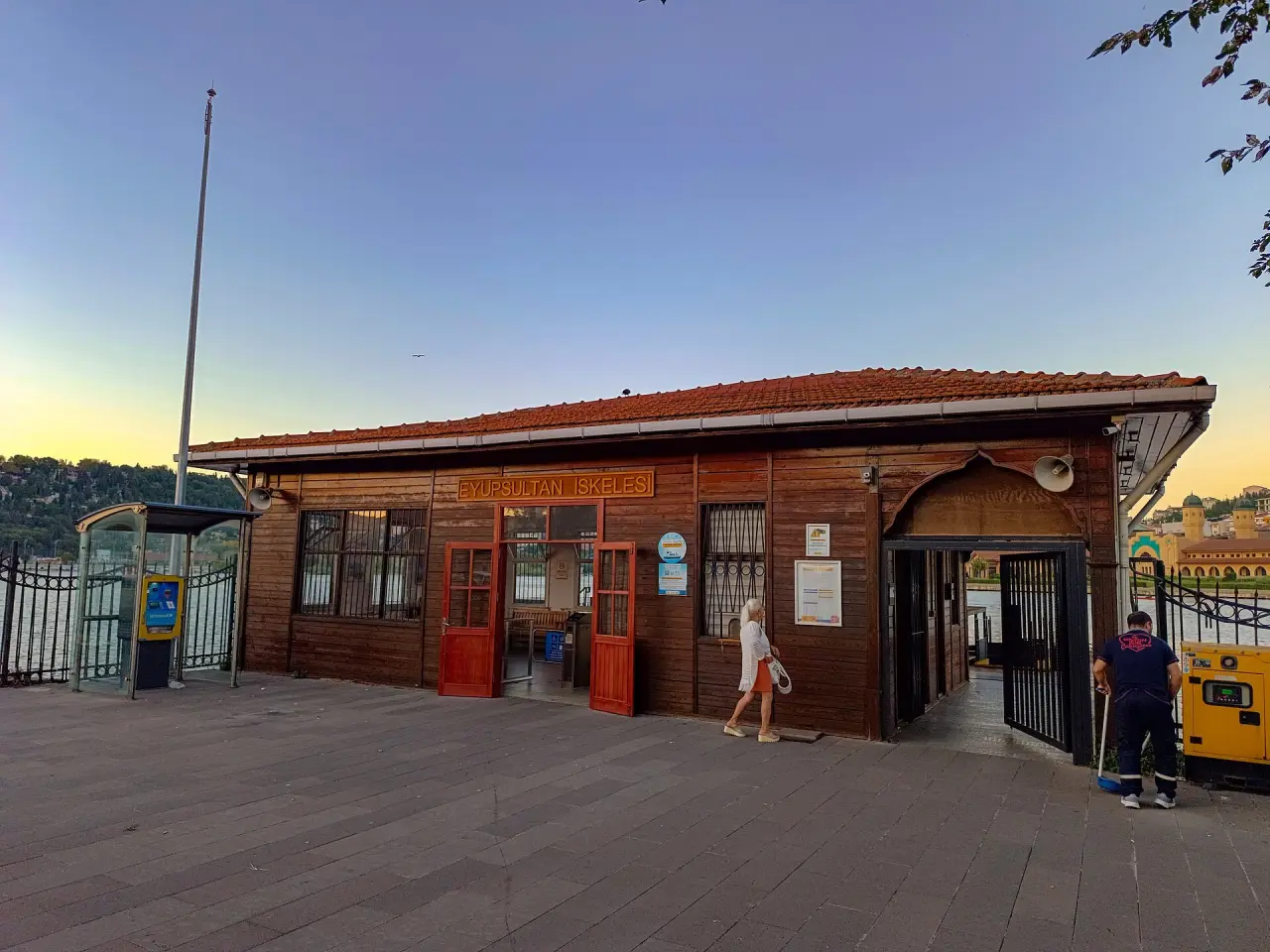
Golden Horn sailings are infrequent and finish early in the evening; times change on Sundays and public holidays. Check the route and departure times with Şehir Hatları before you go.
≈ 2 h 15 min · fast ferry + bus · Day trip
Why here: The first Ottoman capital. The Green Mosque, the Grand Mosque and Koza Han make an easy day trip; we suggest it if you are staying in Istanbul for more than four days. Not part of this route.
Travellers who check in on this route can rate it. No one else can.
Be one of the first travellers to walk this route. If you have a question or a tip, share it with the community.
After walking the route you can rate it using the check-in in the app. Reviews go live after a short check.
Source: Prof. Dr. İlber Ortaylı (1947–2026)
Source: Prof. Dr. İlber Ortaylı (1947–2026)
