




Historian's route
1 tickets€29
Source: Prof. Dr. İlber Ortaylı (1947–2026)
İlber Ortaylı's Istanbul walk, in two days
1 ticketed stopsOpen the route
In the 1923 population exchange, Ayvalık's Greek Orthodox people left for Lesbos and Greece; Muslim migrants from Crete, Lesbos and Macedonia settled in their homes. The town's churches carry this change of hands: one became a museum and two became mosques; the large church on Cunda opened as a museum after standing empty for many years. Half a day, on foot and with a short drive.
In the 19th century Ayvalık was a port town that grew rich on the olive oil and soap trade, with a mostly Greek Orthodox population. Cunda opposite (the island the Greeks called Moschonisia and the Turks Alibey Adası) was part of the same world.
At the end of the Greco-Turkish War, the Turkish army entered the town on 15 September 1922. At the end of the war many of the town's Greek men were taken to the interior, and many never returned; the novelist Ilias Venezis was one of those who survived this march, and he described his experiences in his book "Number 31328". Those who remained left for Lesbos and Greece under the population exchange agreement signed at Lausanne on 30 January 1923.
With the exchange, Muslim migrants came to Ayvalık and Cunda from Crete, Lesbos and Macedonia. They too had left behind their homes, vineyards and graves; the exchange was a loss on both shores.
Some of the emptied churches were turned into mosques: Agios Ioannis is now the Saatli Mosque, Agios Georgios the Çınarlı Mosque. The Taksiyarhis Church was used as a warehouse for many years and opened as a museum in 2013. The Taksiyarhis on Cunda stood empty for years before becoming the Rahmi M. Koç Museum in 2014.
Dark tourism means visiting places where people have confronted suffering, loss and hard labour: prisons, dungeons, abandoned and submerged towns, underground shelters, and the factories and mines that paid the price of industry. Every place in this collection can be visited legally and with permission; there are no routes into abandoned private property or building sites, or routes built around watching neighbourhoods where people live. Battlefields, martyrs' cemeteries and memorial sites are in the “Remembrance and mourning” collection. Please respect the story of the places you visit.
Start: central Ayvalık, İsmetpaşa neighbourhood; ≈ 10 min walk from the pier · stay 45 min
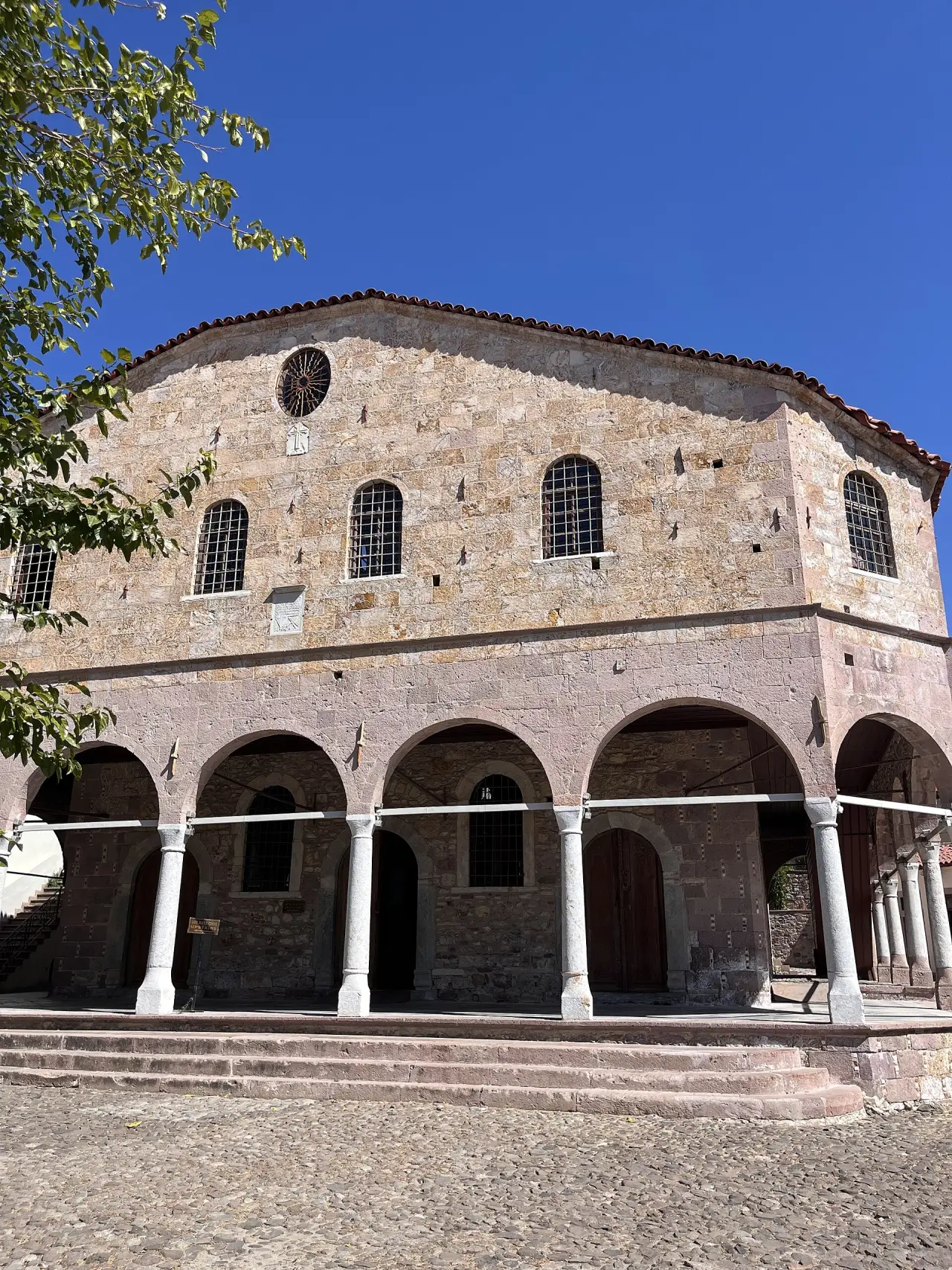
A 19th-century church dedicated to the Archangels (Taksiyarhis). After the exchange it was used as a warehouse for many years; following restoration by the Ministry of Culture and Tourism, it opened in 2013 as the Taksiyarhis Monument Museum. The largest building of the town's vanished community.
Hours vary by season; check before you go.
≈ 2 min walk (100 m) · stay 15 min
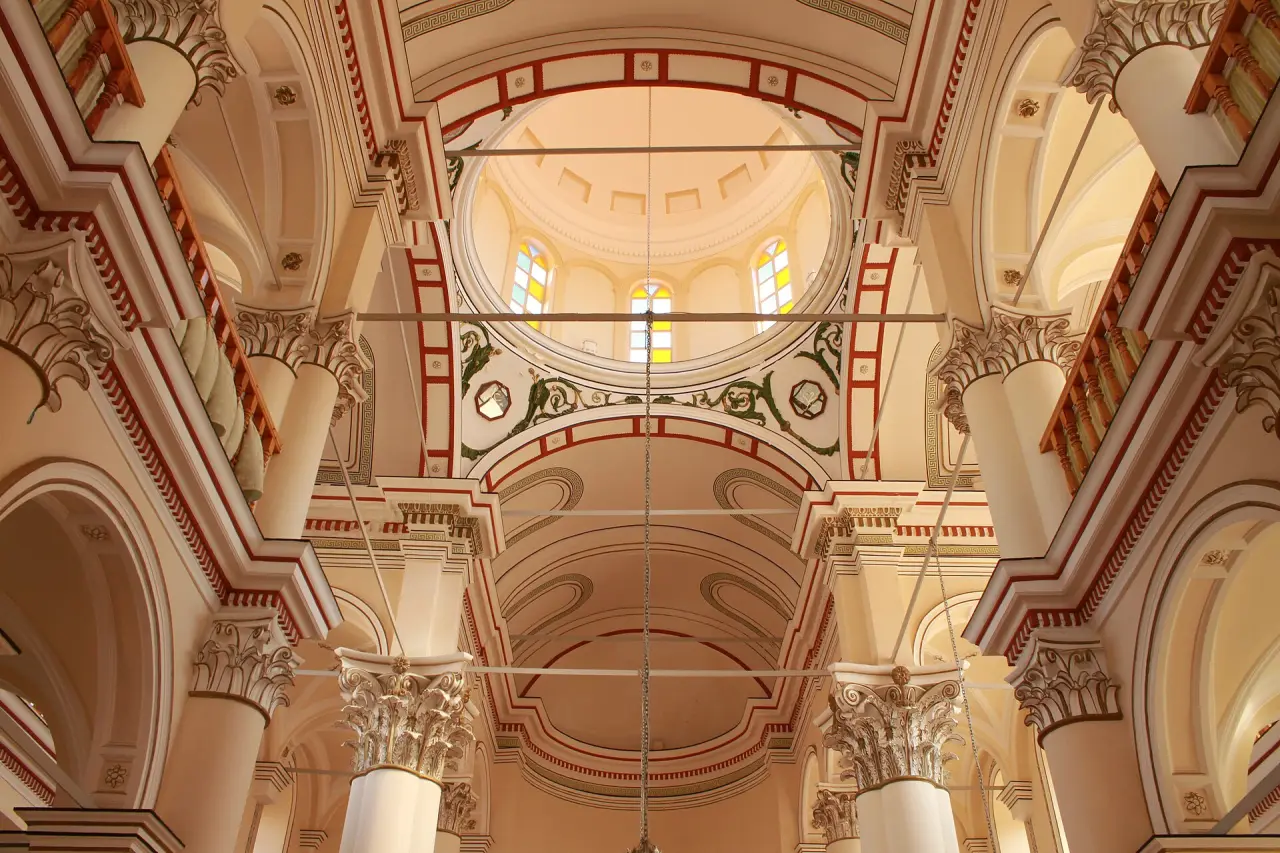
The Church of Agios Ioannis (St John) was converted into a mosque after the exchange; it takes its name from the clock on its bell tower. As the photo shows, the church architecture inside is still clearly readable.
Do not visit during prayer times; be quiet inside.
≈ 3 min walk (200 m) · stay 15 min
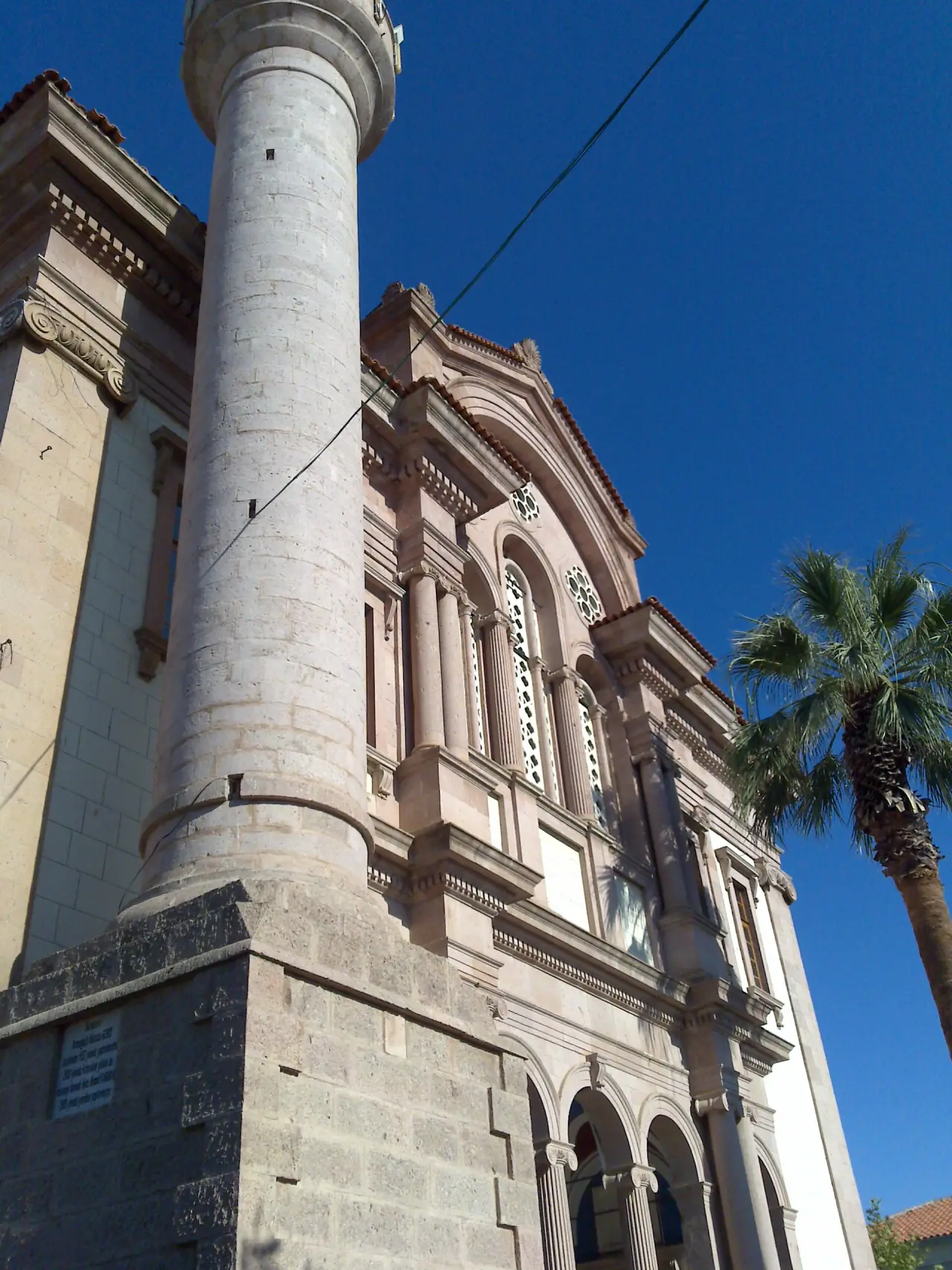
The church dedicated to St George was also converted into a mosque after the exchange. The neoclassical façade and the minaret rising beside it show two eras of the town in a single frame.
Do not visit during prayer times; be quiet inside.
≈ 15 min by car or dolmuş (≈ 7 km), over the causeway to the island · stay 60 min
The great church of the island's Greek Orthodox people was rebuilt in 1873 on the site of an older church. After the exchange it stood empty for many years and fell into disrepair; it was restored on the initiative of Rahmi M. Koç and opened as a museum in 2014. Inside the church a collection ranging from toys to steam engines is on display.

Check the museum's opening days and hours before you go.
≈ 2 h 15 min · fast ferry + bus · Day trip
Why here: The first Ottoman capital. The Green Mosque, the Grand Mosque and Koza Han make an easy day trip; we suggest it if you are staying in Istanbul for more than four days. Not part of this route.
Travellers who check in on this route can rate it. No one else can.
Be one of the first travellers to walk this route. If you have a question or a tip, share it with the community.
After walking the route you can rate it using the check-in in the app. Reviews go live after a short check.
Source: Prof. Dr. İlber Ortaylı (1947–2026)
Source: Prof. Dr. İlber Ortaylı (1947–2026)
