





Pamukkale is made up of brilliant white travertine terraces, formed over thousands of years by calcium left behind by hot-spring water, and the ancient city of Hierapolis above them. Both are covered by one ticket; the Antique Pool is charged separately.
Which gate should you use?
There are three entrances. Enter from Pamukkale village (at the bottom) and you climb barefoot up across the travertines; this is the most impressive experience. Enter by the south gate and you drive up, start at Hierapolis and walk down the travertines from the top. The north gate is close to the necropolis.
Travertines
Walking on the white area in shoes is not allowed. The surface is rough in places and slippery in others, so walk slowly. You can cool your feet in the small water-filled pools. Towards sunset the light turns the travertines pink.
Hierapolis
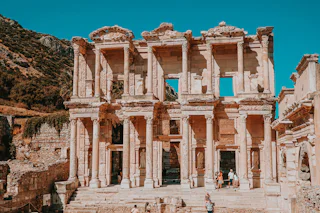
The main sights are the Roman theatre, the city's main street and the necropolis, one of the largest ancient cemeteries in Anatolia. The Hierapolis Archaeology Museum, housed inside the Roman baths, displays finds from the area.
Antique Pool
In the pool popularly known as Cleopatra's Pool, you swim among ancient columns that fell into the water in an earthquake. The water is warm all year round. Bring a towel and swimwear.
What you need to know
- The midday heat is intense in summer; go early in the morning or late in the afternoon.
- The sun reflects off the white travertines; sunglasses and sunscreen are essential.
- Pamukkale can be reached from Denizli by dolmuş; a day trip from Ephesus is possible, but it's a long journey.