




Historian's route
1 tickets€29
Source: Prof. Dr. İlber Ortaylı (1947–2026)
İlber Ortaylı's Istanbul walk, in two days
1 ticketed stopsOpen the route
13th-century Konya lived through one of the most brilliant periods in the history of Sufism. This walk starts at the tomb of Sadreddin Konevi, the disciple of Ibn Arabi, passes the shrine (makam) of Shams of Tabriz, the dervish who changed Mevlana's life, and reaches the Mevlana Mausoleum beneath its green dome and the Mevlana Cultural Centre, where the Şeb-i Arus (Mevlana's "wedding night" commemoration) ceremonies are held every December. The day ends at the Church of St Helena in Sille, built, according to tradition, by Helena, mother of Constantine. Konya is also the end point of the Sufi Trail, which walks about 800 km from Istanbul.
Jalaluddin Rumi is held to have been born in 1207 in Balkh, in present-day Afghanistan. His family migrated west ahead of the Mongol raids and, according to tradition, settled in Konya at the invitation of the Anatolian Seljuk Sultan Alaeddin Keykubad I. When his father, Bahaeddin Veled, died, the young Mevlana succeeded him; he was a respected scholar and preacher.
Meeting the wandering dervish Shams of Tabriz, who came to Konya in 1244, changed Mevlana's life. Sources tell how the two spent months together in conversation and how some in Mevlana's circle grew jealous of this friendship. Shams left the city for a while, returned and disappeared around 1247. His fate is unknown: according to tradition, his shrine in Konya is his grave, and there is also a tomb attributed to him in the Iranian city of Khoy. Most of Mevlana's poetry was written after this separation.
In the same years another great Sufi was teaching in Konya: Sadreddin Konevi (d. 1274), disciple of Ibn Arabi and interpreter of his ideas. According to tradition, Mevlana had asked for him to lead his funeral prayer. Mevlana died on 17 December 1273. This night is called Şeb-i Arus, meaning "wedding night", because Mevlana saw death as reunion with the Beloved.
Mevlana's son Sultan Veled and his successors turned the Mevlevi path into an order; the Mevlevi sema ceremony is now on UNESCO's Intangible Cultural Heritage list. Every year from 7 to 17 December the Şeb-i Arus commemorations are held in Konya, with sema ceremonies at the Mevlana Cultural Centre. The Sufi Trail of about 800 km, laid out in the 2010s, starts at Eyüp Sultan in Istanbul and follows the pilgrimage route of the Ottoman sultans all the way to Mevlana's tomb.
Visiting routes walked in Anatolia for centuries: churches, mosques, synagogues, tombs, caves and holy springs held sacred in Christian, Muslim, Jewish and Sufi traditions, plus long-distance cultural routes that follow old pilgrimage and caravan roads. These routes pass no judgement on matters of faith; where something rests on tradition or belief rather than history, we say so. Most of the stops are still places of worship today: dress modestly, don't walk around inside during services, keep quiet and don't photograph people praying.
Start: Konevi neighbourhood, Meram; ≈ 15 min walk from Alaeddin Hill · stay 30 min
The 13th-century mosque built in the name of Sadreddin Konevi (d. 1274), disciple of Ibn Arabi and interpreter of his ideas, with his tomb beside it. The tomb is an unusual structure that recalls Seljuk tomb towers but has an open body covered by a wooden conical roof. This is the stop that best shows that Sufism in Konya was not only about Mevlana.
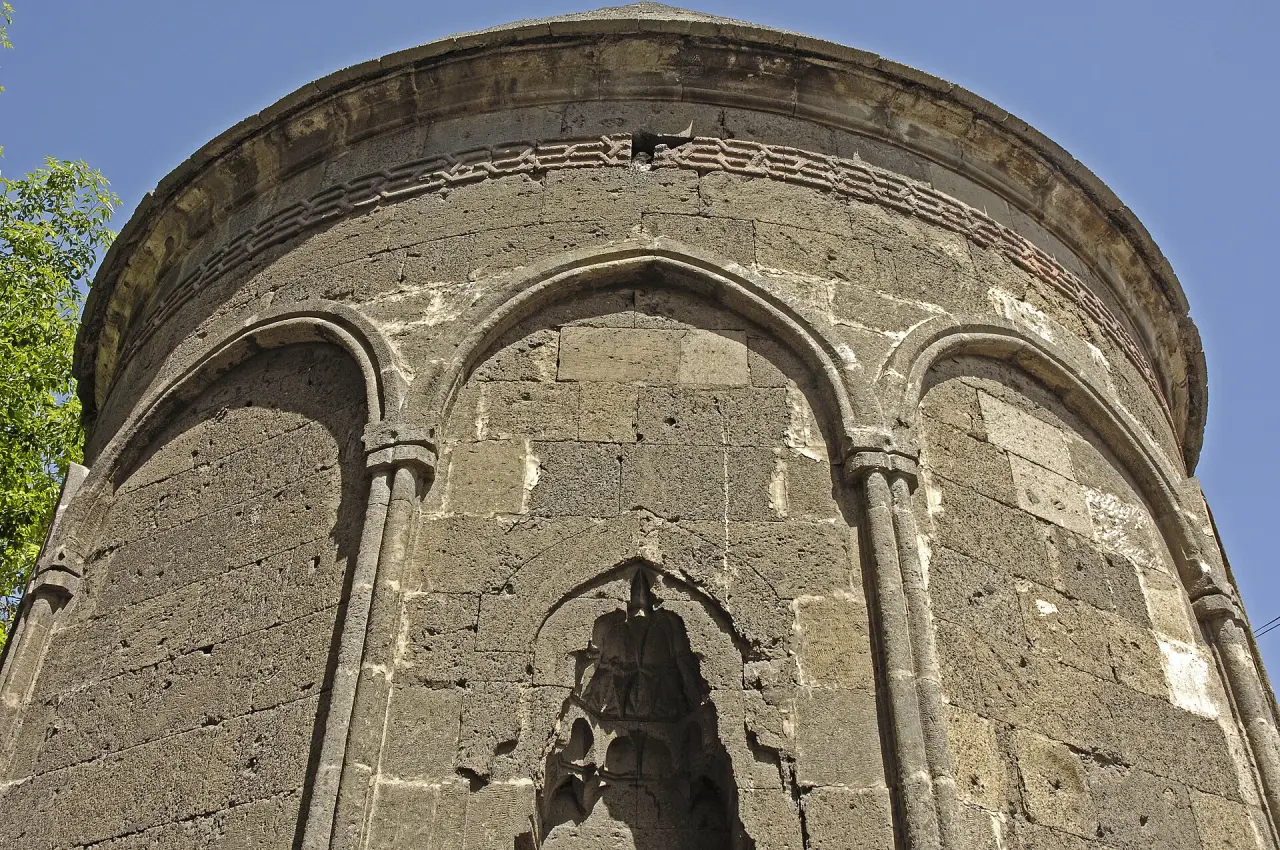
Working mosque: pause your visit during prayer times. Check whether the tomb is open before you go.
≈ 22 min walk (1.7 km), east from the north side of Alaeddin Hill · stay 25 min
The shrine of the wandering dervish who changed Mevlana's life. According to Konya tradition, Shams is buried here; the present mosque and tomb were renovated in later centuries. It is a small, calm place: stay quiet among those praying and reading the Masnavi inside. Read the first two parts of the story here.
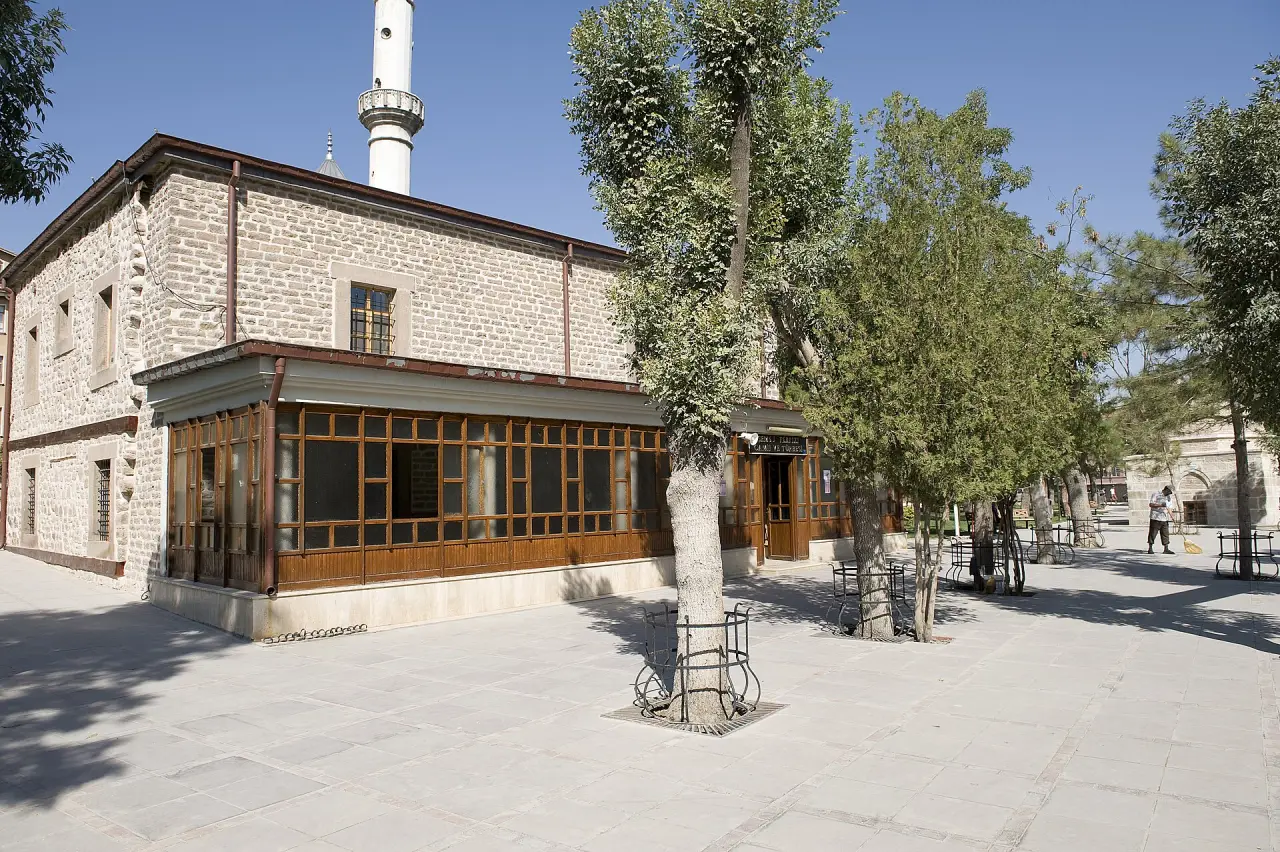
Pause your visit during prayer times; women cover their heads. (Photo: 2008.)
≈ 15 min walk (1.1 km) along Mevlana Caddesi · stay 90 min
The tomb and dervish lodge holding the cenotaphs of Mevlana, his father Bahaeddin Veled and Mevlevi elders; its green dome is the symbol of Konya. The lodge was turned into a museum in 1926. You can see the dervish cells, the semahane (ceremonial hall), manuscripts of the Masnavi and ney flutes; rest by the ablution fountain in the courtyard and read the third part of the story.
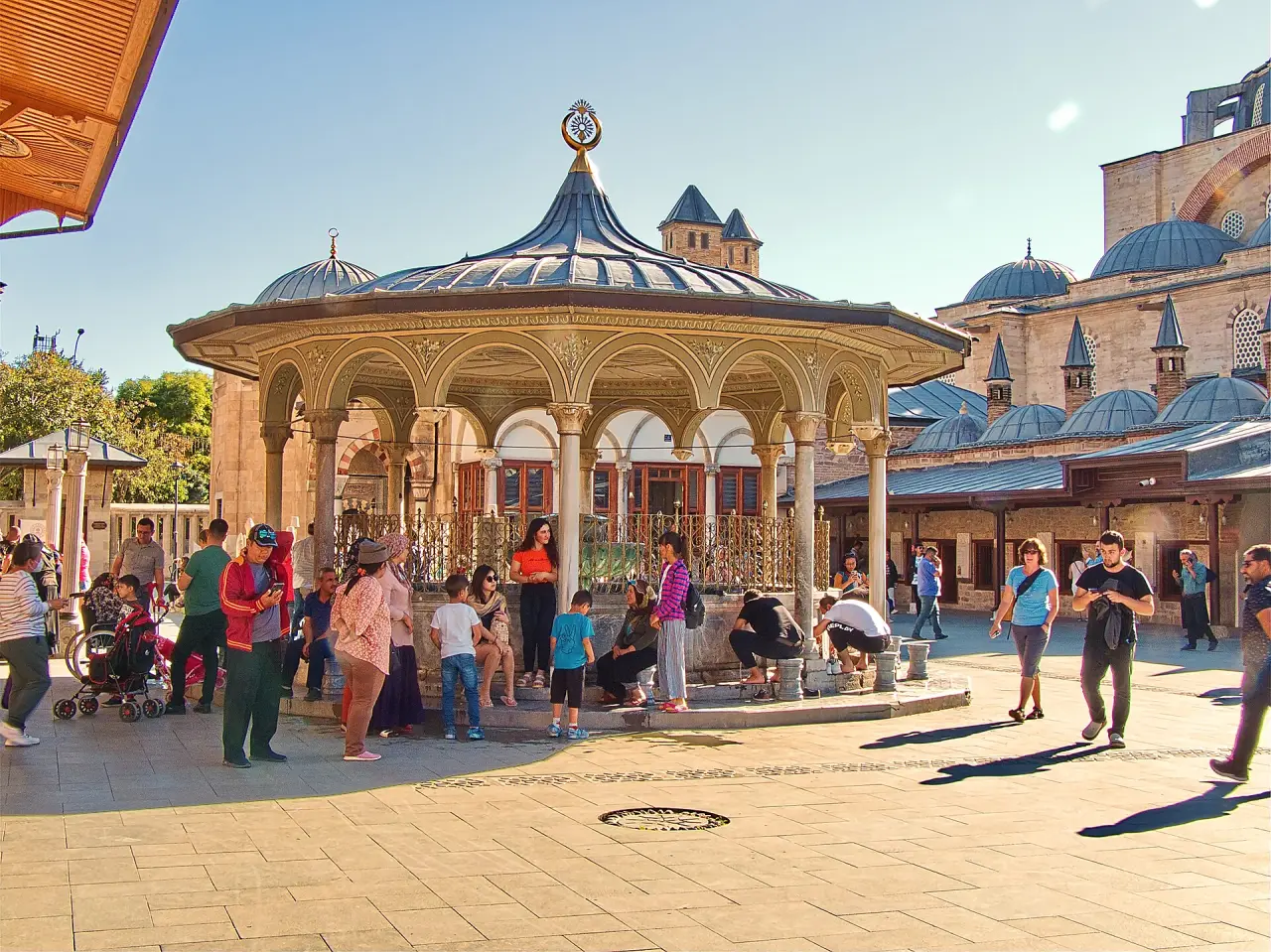
One of Türkiye's most visited museums; very crowded at weekends and in December. Check hours before you go. Mind prayer times at the Selimiye Mosque next door.
≈ 20 min walk (1.5 km) east along Aslanlı Kışla Caddesi; also reachable by tram · stay 30 min
The large hall where the Şeb-i Arus ceremonies and sema performances take place. Every year from 7 to 17 December the anniversary of Mevlana's death is commemorated here; sema ceremonies are also held on certain days throughout the year. If there is no ceremony that day, seeing the building and its garden from outside is enough; read the last part of the story here.
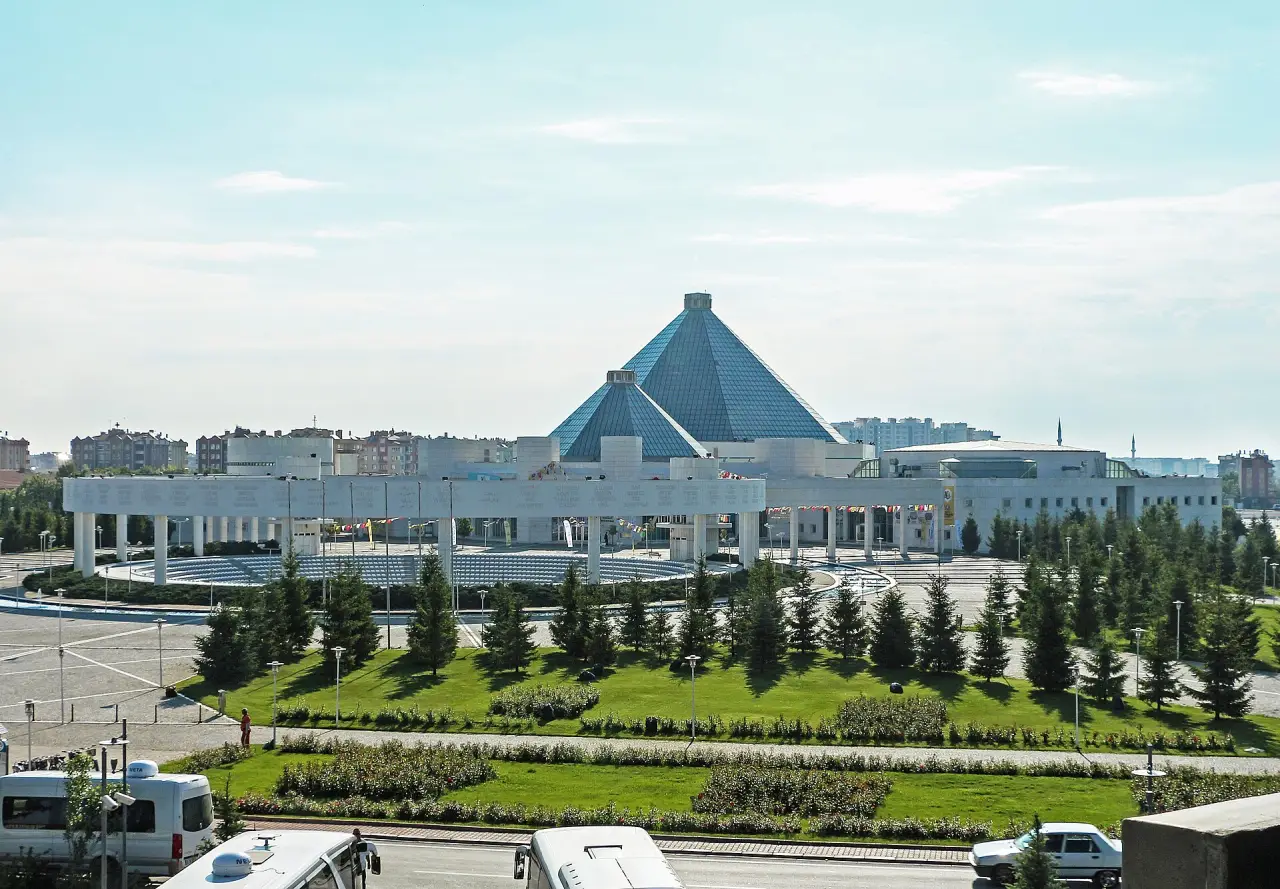
The sema programme and ticket sales change every year; tickets for the December ceremonies sell out early. Check the programme before you go.
≈ 20 min by car (≈ 14 km), heading north-west; there is also a municipal bus from the centre to Sille · stay 60 min
The church built, according to tradition, by Empress Helena, who passed through here on her way to Jerusalem in 327; according to its inscription, it was repaired in 1833 under Mahmud II, and Sille's Greek congregation worshipped here until 1924. It became a museum after a restoration completed by Selçuklu Municipality in 2013. The wooden iconostasis, the wall paintings and the Karamanlidika inscriptions, Turkish written in Greek letters, bear witness to Turkish-speaking Orthodox Christians.
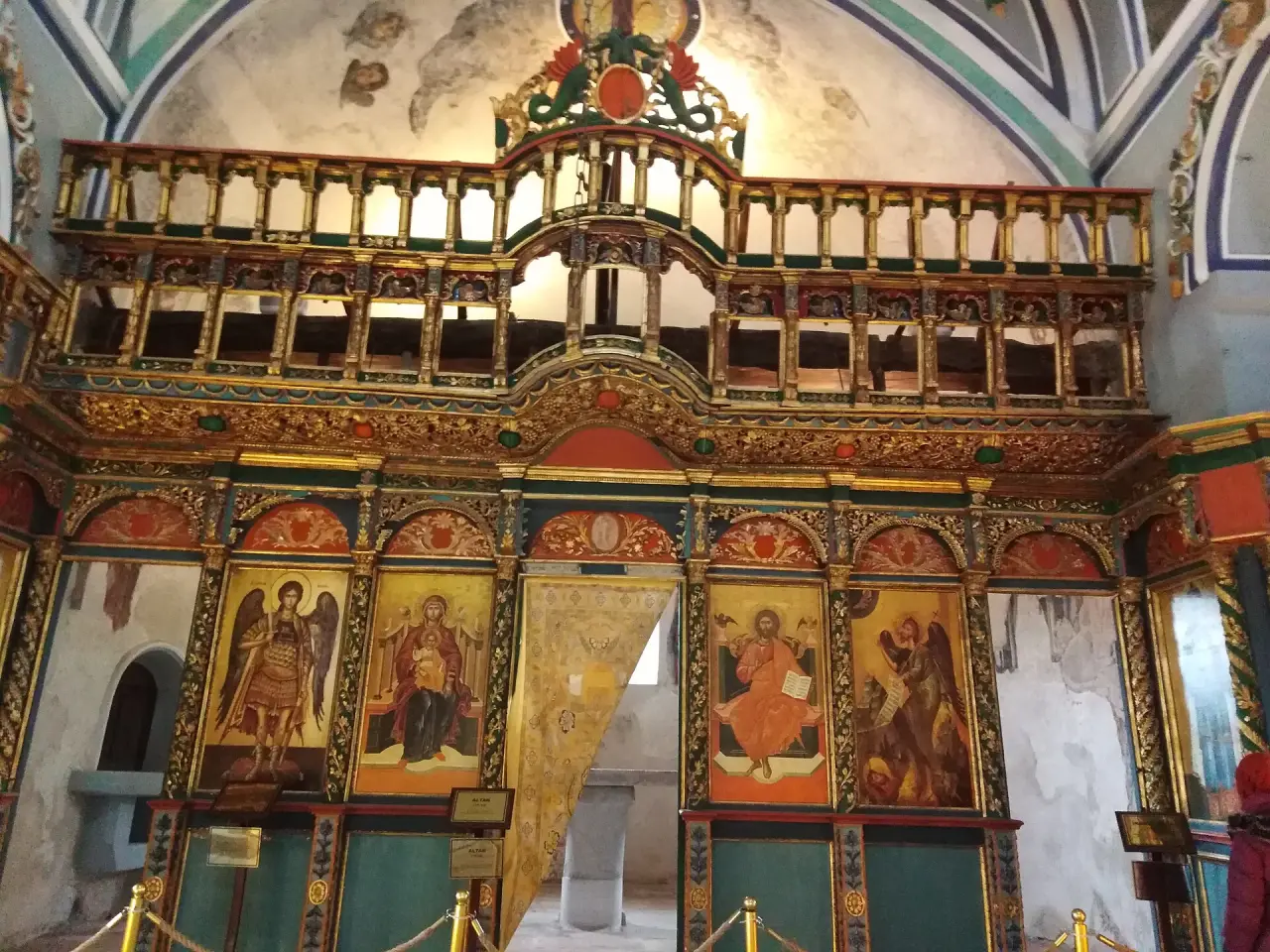
Check museum hours before you go. Take care when entering the rock-cut churches on the slopes of Sille; some are unprotected.
≈ 2 h 15 min · fast ferry + bus · Day trip
Why here: The first Ottoman capital. The Green Mosque, the Grand Mosque and Koza Han make an easy day trip; we suggest it if you are staying in Istanbul for more than four days. Not part of this route.
Travellers who check in on this route can rate it. No one else can.
Be one of the first travellers to walk this route. If you have a question or a tip, share it with the community.
After walking the route you can rate it using the check-in in the app. Reviews go live after a short check.
Source: Prof. Dr. İlber Ortaylı (1947–2026)
Source: Prof. Dr. İlber Ortaylı (1947–2026)
