


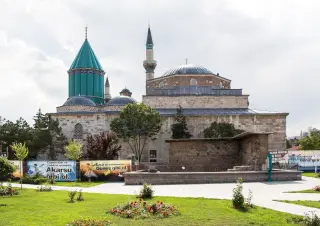


Historian's route
1 tickets€29
Source: Prof. Dr. İlber Ortaylı (1947–2026)
İlber Ortaylı's Istanbul walk, in two days
1 ticketed stopsOpen the route
A journey in two episodes, from the harbour of Ephesus to the rock-cut world of Cappadocia, the stonework of Divriği and Ani on the border, then on to the millennia-old stone figures of Karahantepe and Göbeklitepe, Midas's Gordion and Croesus's Sardis. We compiled it from the places named in the episode summaries of the British historian Bettany Hughes's documentary, broadcast on Channel 4 in 2026; we added the order of the route, the timings and the practical notes.
This route was compiled by AnatoliaPass editors from the published recommendations of the person named; the timings, breaks and practical notes are ours. It does not mean that the person recommends or endorses AnatoliaPass.
Bettany Hughes is a British historian known for her books and documentaries on the ancient world. Istanbul: A Tale of Three Cities (2017), in which she tells the city's three-thousand-year history, is one of her best-known books; she has been filming in Türkiye for many years.
Hughes's two-part documentary, broadcast on Channel 4 in the summer of 2026, looks for where civilisation began in ancient Anatolia, today's Türkiye: the birth of farming, religion, trade, city life, myths and empires. The first episode was broadcast on 8 August and the second on 15 August 2026.
According to the channel's description, the first episode runs from Ephesus to Cappadocia and from Ani to Divriği; in Ephesus Hughes tells the story of the harbour that gave refuge to Cleopatra and Mark Antony, descends into the worlds carved into Cappadocia's rocks, then sets off on a train journey to the north-east of the country, towards the snowy Caucasus mountains, on the trail of the Silk Road merchants. The second episode begins with the Neolithic world of Karahantepe and Göbeklitepe and ends with Midas's Gordion and Croesus's Sardis: places where myth meets history.
The documentary does not give directions; this route is made up of the eight places named in the published episode summaries. We treated each episode as a separate trip and put the places in an order that follows the road; the two trips are hundreds of kilometres apart and are drawn separately on the map. The timings, travel times and warnings are ours.
Start: Selçuk · stay 180 min
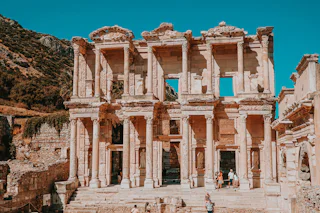
The documentary's first episode opens in Ephesus. Hughes describes the bustling port city that gave refuge to Cleopatra and Mark Antony: the couple spent the winter of 33–32 BC here. Today the sea is kilometres away; you walk from Harbour Street to the theatre, the Library of Celsus and the Terrace Houses. A UNESCO World Heritage Site since 2015.

Summer middays are very hot and crowded; go in at opening time. The Terrace Houses need a separate ticket; check opening hours before you go.
From Ephesus to Cappadocia ≈ 8 hours by road, or fly to Kayseri or Nevşehir · stay 240 min
From Ephesus Hughes heads into the heart of Anatolia, to Cappadocia's landscape that looks as if it came from another world, and to the lost worlds carved into these rocks. The fairy chimneys formed as the volcanic tuff eroded, the rock-cut churches and the underground cities show how people settled inside the earth over thousands of years. Start at the Göreme Open-Air Museum, then walk to Paşabağı and the valleys.

Flash photography is prohibited in the rock-cut churches. Check the opening hours of the museum and the underground cities before you go.
From Cappadocia via Sivas ≈ 5 hours; the Eastern Express also stops at Divriği · stay 75 min
According to the channel's description, Hughes's route in the first episode also passes through Divriği. The portals of the mosque and hospital built in 1228–1229 by the Mengujekid ruler Ahmed Shah and his wife Turan Melek bear unique reliefs in which the stone is worked like lace; a UNESCO World Heritage Site since 1985. Divriği is also one of the stations where the Eastern Express on the Ankara–Kars line stops.
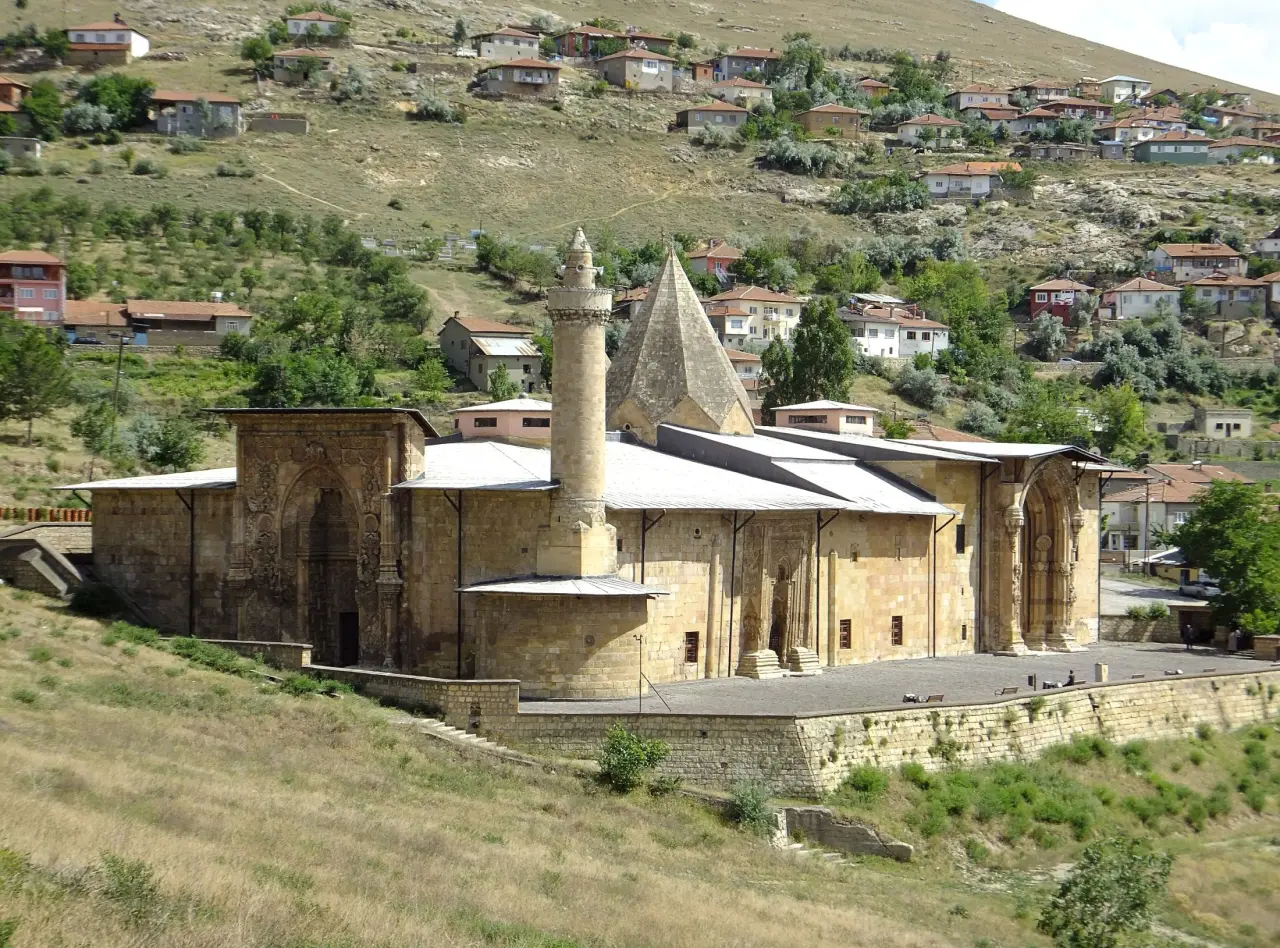
Visiting arrangements may have changed after the long restoration. Check which sections are open before you go.
From Divriği to Kars on the Eastern Express or via Erzurum; from Kars to Ani ≈ 45 min · stay 180 min
Hughes's first episode continues with a train journey north-east, towards the snowy Caucasus mountains, on the trail of the Silk Road merchants. Ani, on the banks of the Arpaçay on today's border between Türkiye and Armenia, was the capital of the medieval Bagratid Armenian kingdom and one of the great cities of the Silk Road. The Cathedral, the Mosque of Manuchihr and the Lion Gate in the walls; a UNESCO World Heritage Site since 2016.

Winter snow and cold are very harsh; follow the warnings in the border zone. Check visiting hours before you go.
East of Şanlıurfa, into the Tek Tek Mountains ≈ 1 hour · stay 90 min
The second episode takes Hughes to the Neolithic, to Karahantepe and Göbeklitepe. At Karahantepe, inside chambers carved into the rock, human heads and life-size stone figures that had lain underground for thousands of years have come to light; it is one of the most striking of the Taş Tepeler (Stone Hills) sites excavated in recent years.
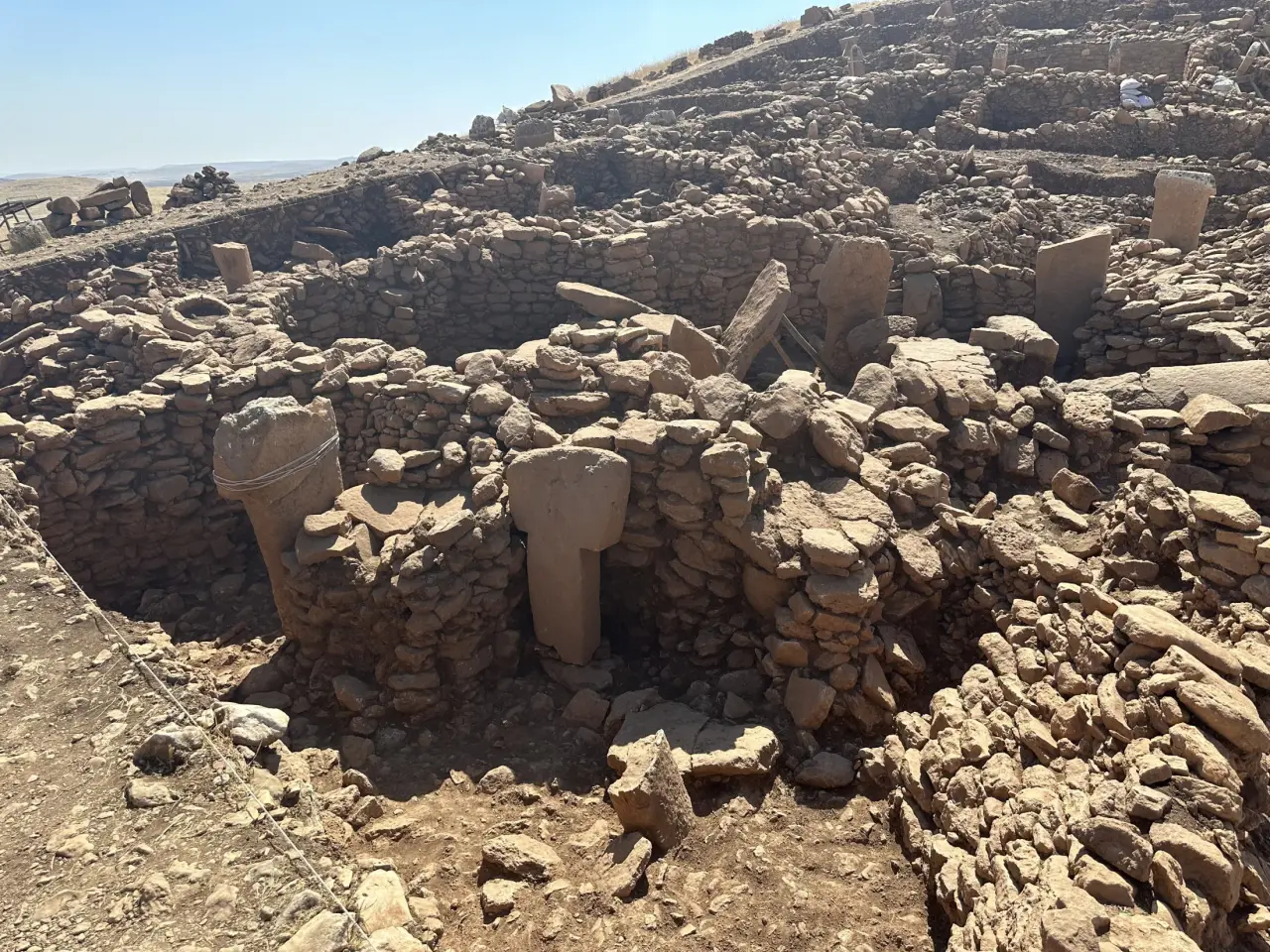
This is an excavation site; do not leave the walkways. Check whether it is open to visitors before you go.
≈ 1 hours from Karahantepe · stay 120 min
T-shaped pillars raised by hunter-gatherers about 11,500 years ago, before farming and settled villages. Hughes describes Göbeklitepe and Karahantepe as a window onto a world emerging from the last Ice Age; the reliefs of foxes, wild boar, vultures and scorpions on the pillars can be seen from the walkway beneath the protective roof. A UNESCO World Heritage Site since 2018.
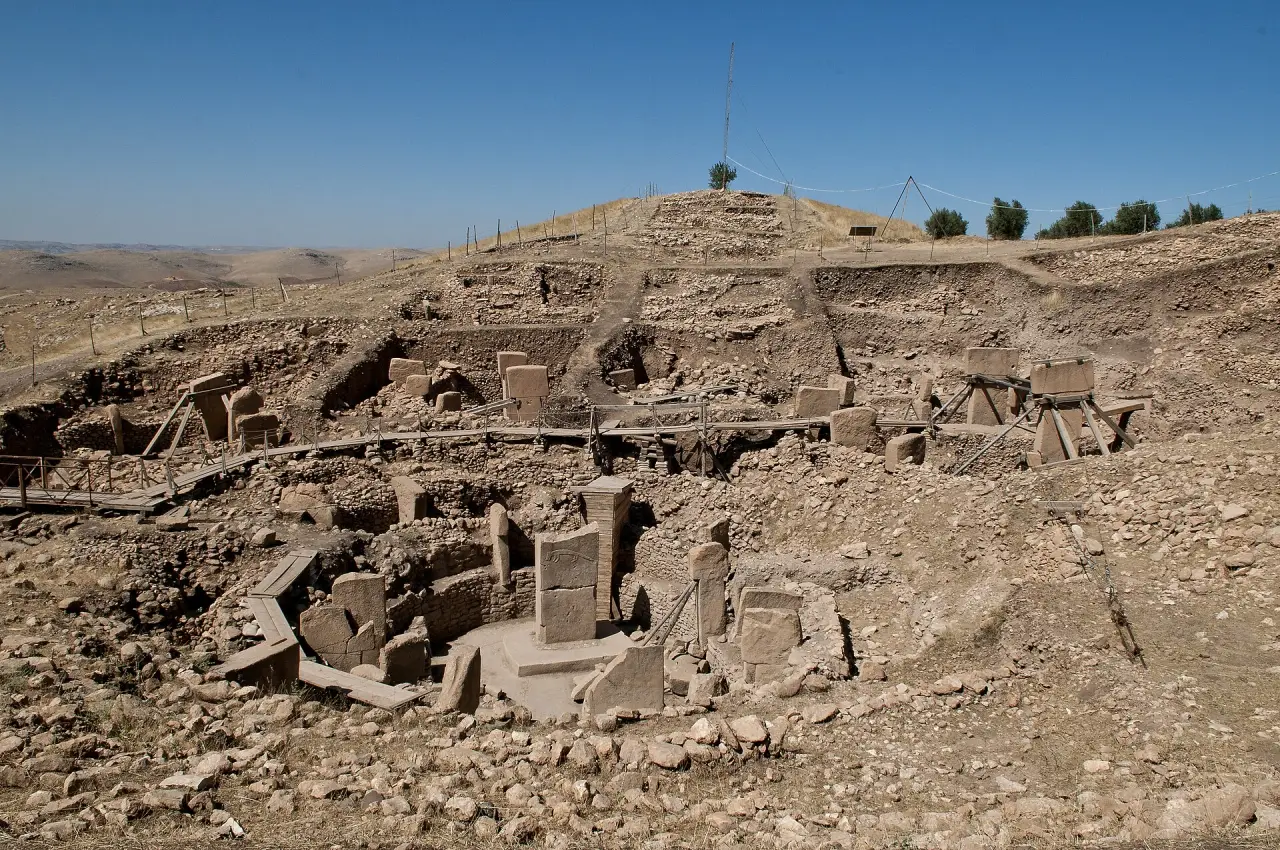
The midday heat in summer is extreme; go in the morning. Check visiting hours before you go.
Fly from Şanlıurfa to Ankara; from Ankara to Polatlı ≈ 1 hour · stay 120 min
In the second episode Hughes travels to Gordion, home of King Midas, who in legend turned everything he touched into gold. The mound of the Phrygian capital, the citadel gate and, opposite, the great Midas Tumulus: the wooden tomb chamber inside is considered one of the oldest surviving wooden structures in the world. Finds from the mound are displayed in the museum in the village of Yassıhöyük; a UNESCO World Heritage Site since 2023.

Access to the inside of the tumulus is closed from time to time. Check the opening hours of the museum and the tumulus before you go.
From Gordion to Salihli via Afyonkarahisar and Uşak ≈ 5 hours · stay 150 min
The journey ends in the capital of the Lydian kingdom, which struck the first coins: the Sardis of Croesus, whose wealth became proverbial. Here Hughes tells of a place where myth meets history and where civilisations rose and fell. The Roman-era gymnasium and bath complex, the great synagogue beside it and, a little to the south, the giant columns of the Temple of Artemis.
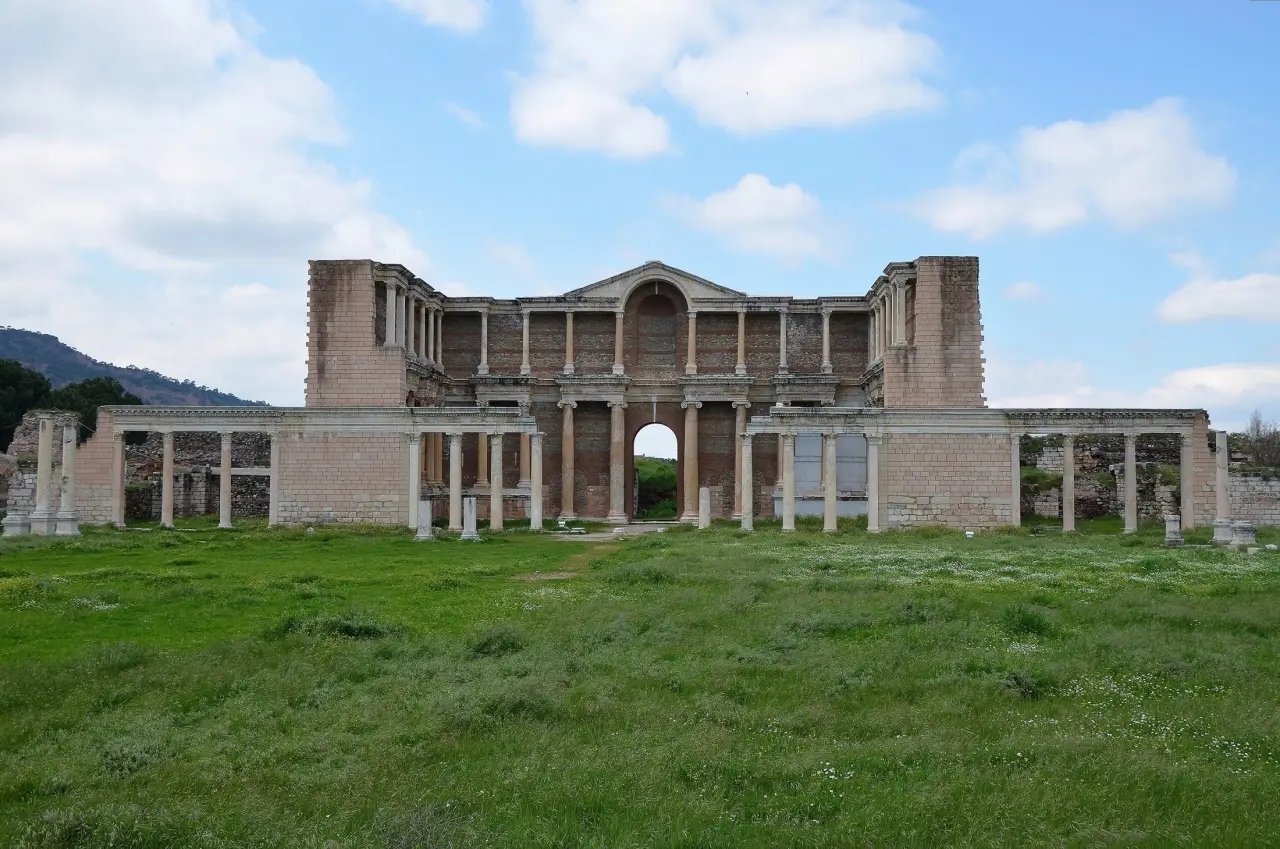
The archaeological site lies on both sides of the main road; watch out for traffic as you cross. Check opening hours before you go.
≈ 2 h 15 min · fast ferry + bus · Day trip
Why here: The first Ottoman capital. The Green Mosque, the Grand Mosque and Koza Han make an easy day trip; we suggest it if you are staying in Istanbul for more than four days. Not part of this route.
Travellers who check in on this route can rate it. No one else can.
Be one of the first travellers to walk this route. If you have a question or a tip, share it with the community.
After walking the route you can rate it using the check-in in the app. Reviews go live after a short check.
Source: Prof. Dr. İlber Ortaylı (1947–2026)
Source: Prof. Dr. İlber Ortaylı (1947–2026)
Your basket stays saved on this device, so you can pick up where you left off once sales open. Until then, routes, the map and audio guides are free.