




Historian's route
1 tickets€29
Source: Prof. Dr. İlber Ortaylı (1947–2026)
İlber Ortaylı's Istanbul walk, in two days
1 ticketed stopsOpen the route
In Urfa, known as the City of Prophets, a morning that runs from the cave where, according to tradition, the Prophet Abraham (Hz. İbrahim) was born to Balıklıgöl (Pool of Sacred Fish), said to have turned to water where he was thrown into the fire; first the shrine of the Prophet Job's patience, and in the afternoon Harran, where according to the Bible Abraham lived for a time with his family. The Turkish section of the Abraham Path, a walking route that traces Abraham, regarded as the common ancestor of Judaism, Christianity and Islam, also links these two towns.
According to the tradition told in Urfa, the Prophet Abraham was thrown into a fire from the top of the citadel by Nimrod, the city's ruler, for opposing the idols. The fire turned to water and the firewood to fish; this is why the fish of Balıklıgöl are considered sacred and no one catches them. The two columns on top of the citadel are popularly known as Nimrod's catapult.
According to the same tradition, Abraham was born in a cave at a time when Nimrod had newborn boys put to death, and his mother raised him here in hiding. Visited today beside the Mevlid-i Halil Mosque, this cave is one of the city's holiest places for Muslims. There are other traditions about Abraham's birthplace: the Bible links him with Ur of the Chaldees; many scholars identify this with Ur in present-day Iraq, while the identification with Urfa is an old local tradition.
According to the Book of Genesis in the Bible, Abraham migrated to Harran with his father Terah and his family and lived here for a time before going on to Canaan. Harran's history does not end there: it was a religious centre known for the temple of the moon god Sin, one of Anatolia's oldest mosques was built here in the 8th century, and in the Middle Ages the city was known as a centre of learning.
Judaism, Christianity and Islam all see Abraham as their common ancestor. Building on this shared heritage, the Abraham Path Initiative mapped and waymarked a walking route of about 170 km around Şanlıurfa and Harran between 2007 and 2012; homestays were set up in Kurdish and Arab villages and local guides were trained. Work stopped during the war in Syria; after the 2023 earthquake, the section between Yuvacalı and Kısas was waymarked again. If you want to walk it, don't set off without first checking the current situation and accommodation with the association or local guides.
Visiting routes walked in Anatolia for centuries: churches, mosques, synagogues, tombs, caves and holy springs held sacred in Christian, Muslim, Jewish and Sufi traditions, plus long-distance cultural routes that follow old pilgrimage and caravan roads. These routes pass no judgement on matters of faith; where something rests on tradition or belief rather than history, we say so. Most of the stops are still places of worship today: dress modestly, don't walk around inside during services, keep quiet and don't photograph people praying.
Start: Eyyübiye, ≈ 2 km south of the city centre; ≈ 5 min by taxi · stay 30 min
According to tradition, the Prophet Job waited patiently in this cave throughout his grave illness and was healed by the water of the well beside it. Job's patience is described in both the Quran and the Bible. The cave, the well and the mosque beside them form a small complex; visitors drink the water from the well.

Place of worship: women cover their heads. The cave is narrow; enter in turn and don't stay long inside.
≈ 30 min walk (2.4 km) or ≈ 5 min by taxi, heading north, to the Dergâh · stay 40 min
The cave where, according to tradition, the Prophet Abraham was born and raised in hiding from Nimrod. The mosque beside it was built in the 16th century and enlarged in later centuries; with its courtyard, madrasa and arcades set against the rock, it is part of the large complex known as the Dergâh. The water of the spring inside the cave is believed to have healing powers. Read the second part of the story in the courtyard.

Women and men enter the cave through separate entrances. It gets very crowded at Friday midday prayers and during religious holidays.
≈ 3 min walk (200 m), heading west · stay 30 min
The pool where, according to tradition, the fire lit by Nimrod turned to water and the firewood to fish. It is surrounded by arcaded mosques, madrasas and gardens; the two columns on top of the citadel can be seen from here. The small Ayn-ı Zeliha pool nearby is likewise believed to have formed where Zeliha, Nimrod's daughter, who is said to have leapt into the fire after Abraham, fell. Read the first part of the story by the water.

Don't catch or disturb the fish; throw only the feed sold at the stalls.
At the west end of the pool, ≈ 2 min · stay 20 min
The mosque, whose arcaded courtyard looks onto the water, is held to have been built in the early 13th century under the Ayyubids; its square minaret is one of the oldest structures on the shore. The arches of the courtyard reflected in the water are Balıklıgöl's best-known view.
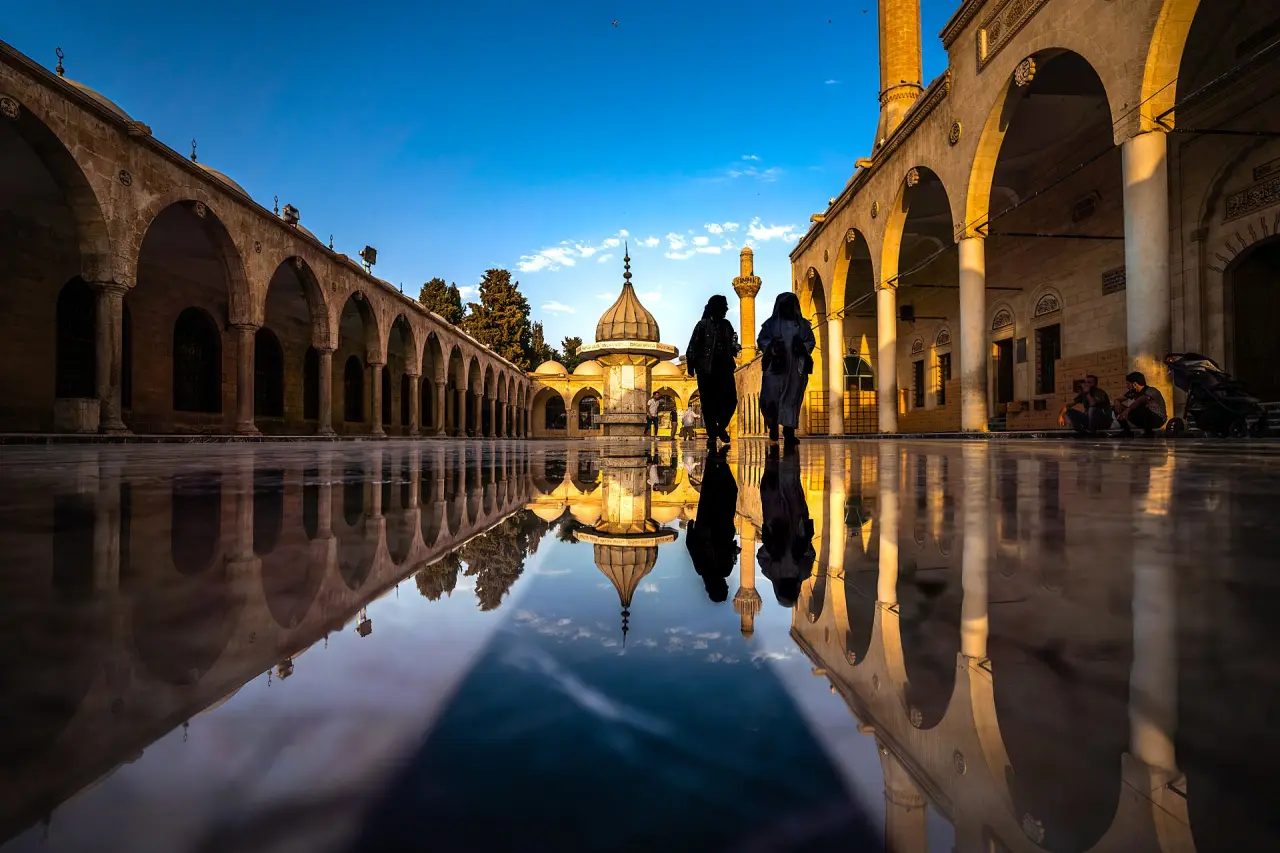
Working mosque: don't go inside during prayer times, and keep quiet in the courtyard.
≈ 2 min along the north shore of the pool · stay 20 min
The mosque and madrasa built in the 18th century by Rızvan Ahmed Pasha, governor of Raqqa; its long arcades line the north shore of the pool. It is also popularly known as Zulümiye ("of oppression") because of the harsh treatment of the workers during its construction. Sit for a while in the shade of the arcades, then head on to the bazaar.

Working mosque: mind prayer times.
≈ 40 min by car (≈ 47 km), heading south · stay 120 min
The town where, according to the Bible, Abraham lived for a time with his family. At the foot of the mound stands the square minaret of the Great Mosque, built in the 8th century under the Umayyad caliph Marwan II; it is one of Anatolia's oldest known mosques. The town's look today is defined by mud-brick houses with conical domes; some can be visited. Read the last two parts of the story here: the Abraham Path walking route also reaches Harran.
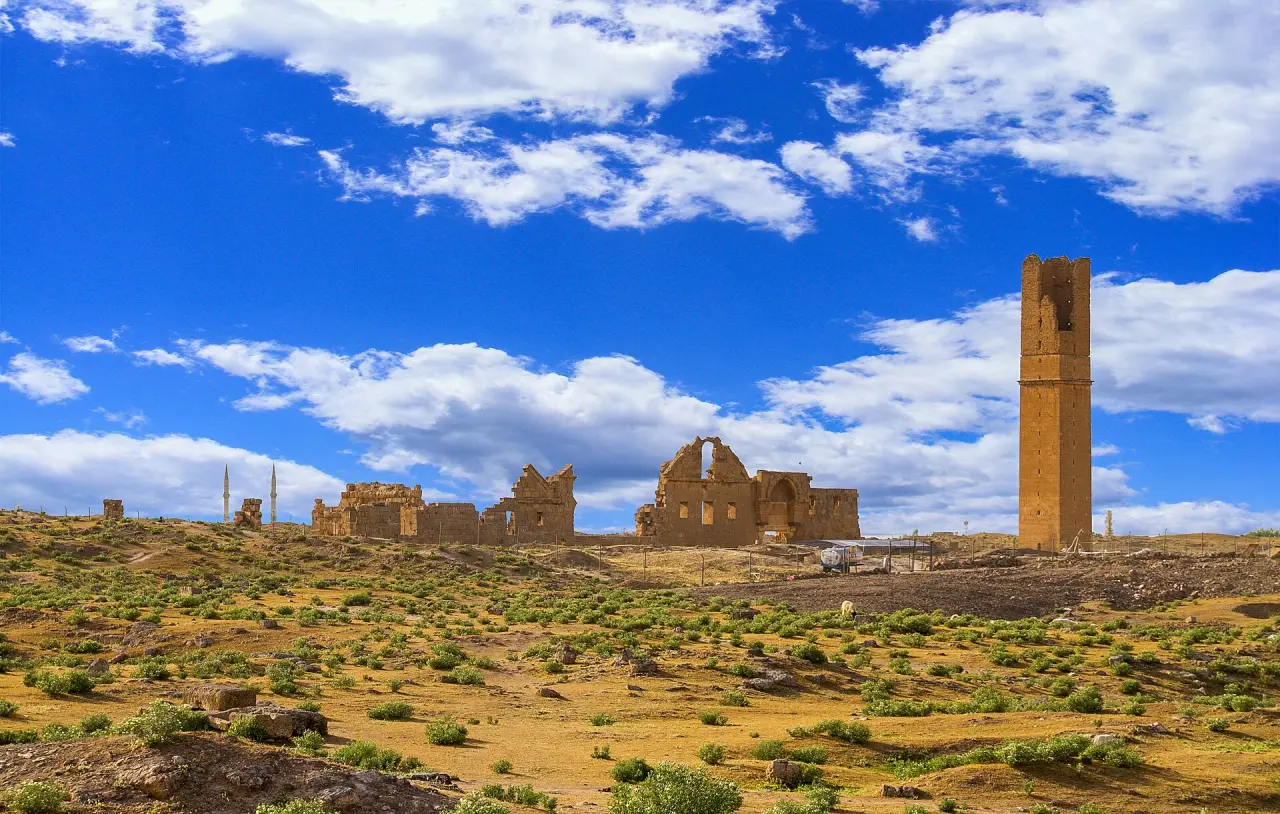
Harran is about 15–20 km from the Syrian border. The site is open to visitors and regularly toured by groups; even so, check the current situation and your own country's travel advice before you go. The midday heat in summer is fierce. (Photo: the minaret and ruins of the Great Mosque.)
≈ 2 h 15 min · fast ferry + bus · Day trip
Why here: The first Ottoman capital. The Green Mosque, the Grand Mosque and Koza Han make an easy day trip; we suggest it if you are staying in Istanbul for more than four days. Not part of this route.
Travellers who check in on this route can rate it. No one else can.
Be one of the first travellers to walk this route. If you have a question or a tip, share it with the community.
After walking the route you can rate it using the check-in in the app. Reviews go live after a short check.
Source: Prof. Dr. İlber Ortaylı (1947–2026)
Source: Prof. Dr. İlber Ortaylı (1947–2026)
