




Historian's route
1 tickets€29
Source: Prof. Dr. İlber Ortaylı (1947–2026)
İlber Ortaylı's Istanbul walk, in two days
1 ticketed stopsOpen the route
A day in Edirne, besieged for 155 days in 1912–13, struggling with famine and epidemics, fallen on 26 March 1913 and retaken four months later: the memorial tomb of Şükrü Paşa, who led the defence; the Balkan Martyrs' Memorial at Sarayiçi, where the soldiers taken prisoner are remembered; the Hıdırlık Redoubt, used as headquarters; and Karaağaç, where the story closes with Lausanne. You travel between the stops by taxi or car.
In the First Balkan War, Bulgarian and Serbian armies besieged Edirne on 3 November 1912. The defence, led by the fortress commander Mehmed Şükrü Paşa, lasted 155 days; while the city struggled with famine, cold and epidemics, fighting continued in the redoubts around it.
Edirne surrendered on 26 March 1913 and tens of thousands of soldiers were taken prisoner. Of the prisoners held at Sarayiçi, an estimated 10,000 to 20,000 died of cold, disease and hunger. Every year 26 March is marked as the Balkan Martyrs' Remembrance Day.
In the Second Balkan War, the Ottoman army retook Edirne on 21 July 1913. Şükrü Paşa died in Istanbul in 1916; in 1998 his remains were brought to Edirne and laid in the memorial tomb at Kıyık, one of the redoubts he had defended.
After the First World War, Edirne was again under Greek administration from 1920 to 1922. Under the 1923 Treaty of Lausanne, Karaağaç and its surroundings west of the Meriç (Evros) were also ceded to Türkiye in return for war reparations. The Lausanne Monument and museum in Karaağaç tell this final chapter.
Remembrance and mourning (grief tourism) means visiting places people go to remember loss and share grief: martyrs' cemeteries, war cemeteries, monuments, historic cemeteries and museums that preserve the memory of disasters. Every place here is an officially open memorial site; we don't include very recent tragedies that people are still grieving, or contested sites. At these places, someone may still be remembering a loved one: keep quiet, don't pose for photos, and don't photograph anyone praying.
Start: Kıyık, ≈ 3 km east of central Edirne; ≈ 10 min by taxi · stay 40 min
A memorial tomb opened in 1998 at Kıyık, one of the redoubts on the eastern front of the siege. The remains of Şükrü Paşa, buried in the Merkez Efendi Cemetery in Istanbul, were brought here in July 1998; his statue, his tomb and the earth-covered trenches of the redoubt lie side by side. The remembrance ceremony is held here every year on 26 March.

The memorial was closed for restoration in March 2024; check whether it is open before you go.
≈ 10 min by taxi (≈ 3 km) north-west, on the banks of the Tunca · stay 30 min
Opened on 14 January 1994, the memorial tomb was built for the soldiers who died during the siege and in captivity; twelve blocks bear the names of 100 officers and 400 soldiers. In front stands Tankut Öktem's statue of a Mehmetçik (Turkish soldier); the reliefs are by Metin Yurdanur. Sarayiçi is where the prisoners were held after the city fell and where thousands of them died.

≈ 15 min by taxi (≈ 5 km) west, Yıldırım neighbourhood · stay 75 min
One of Edirne's largest redoubts, Şükrü Paşa's headquarters during the siege. It opened as the Balkan History Museum on 30 December 2021: in the headquarters rooms, Balkan War diaries and the work of the Red Crescent in the war are told through reconstructions, and the sounds of fighting echo through the corridors. The whole city is visible from its terrace.
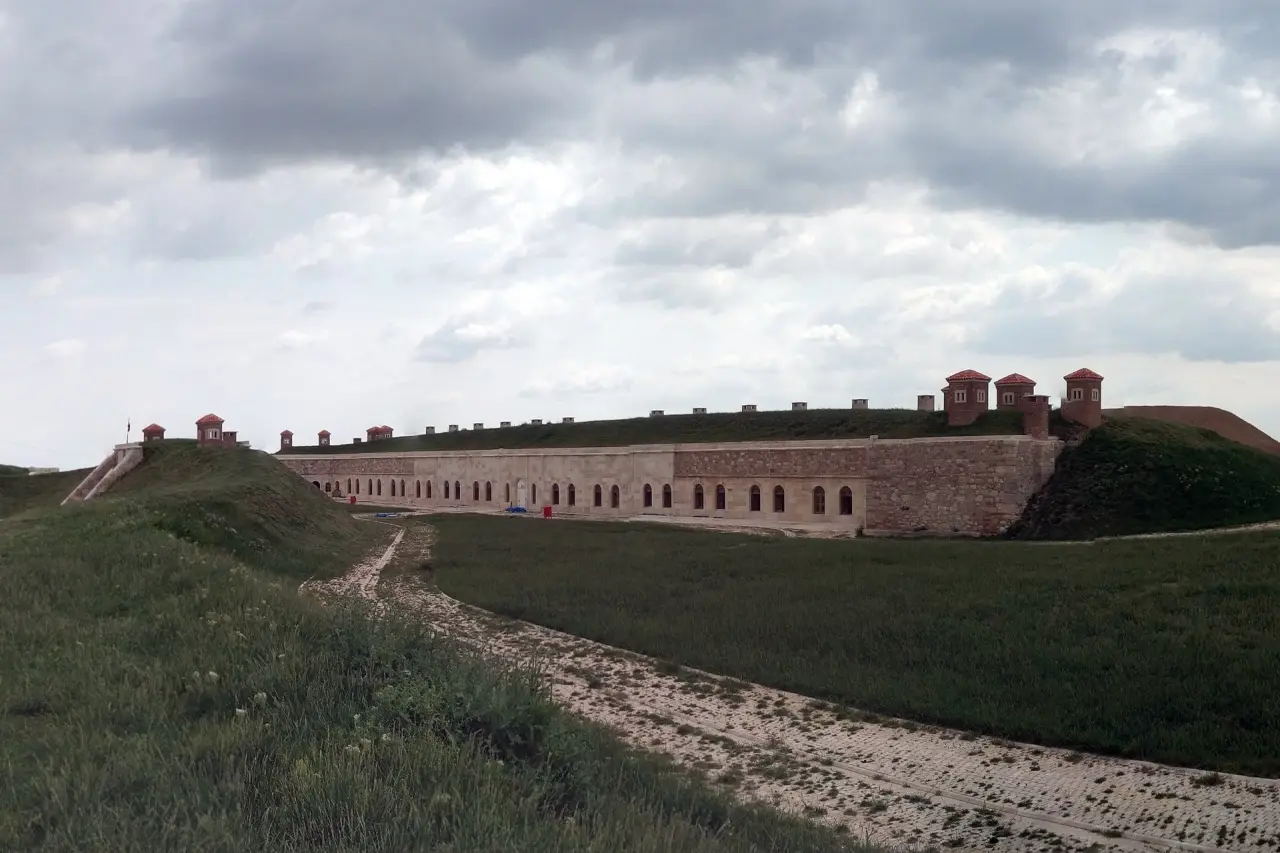
According to the museum's leaflet it is open daily; 08.30–17.30 in winter, 08.30–19.00 in summer. Check current hours before you go. (Photo: 2018, during the restoration before it opened.)
≈ 10 min by taxi (≈ 5 km) south, over the Tunca and Meriç bridges · stay 45 min
Opened in 1890, the station was the last stop for trains from Türkiye to Europe; it fell out of use when a new station opened in 1971 and is now a Trakya University building. The Lausanne Monument in front of it was unveiled on 19 July 1998; its three columns symbolise Anatolia, Thrace and Karaağaç. The National Struggle and Lausanne Museum beside the monument tells the story of the city in 1920–22 and of Lausanne.

Check the museum's hours before you go.
≈ 2 h 15 min · fast ferry + bus · Day trip
Why here: The first Ottoman capital. The Green Mosque, the Grand Mosque and Koza Han make an easy day trip; we suggest it if you are staying in Istanbul for more than four days. Not part of this route.
Travellers who check in on this route can rate it. No one else can.
Be one of the first travellers to walk this route. If you have a question or a tip, share it with the community.
After walking the route you can rate it using the check-in in the app. Reviews go live after a short check.
Source: Prof. Dr. İlber Ortaylı (1947–2026)
Source: Prof. Dr. İlber Ortaylı (1947–2026)
