




Historian's route
1 tickets€29
Source: Prof. Dr. İlber Ortaylı (1947–2026)
İlber Ortaylı's Istanbul walk, in two days
1 ticketed stopsOpen the route
The redoubts that protected Erzurum in the Russo-Turkish War of 1877–78 (the "War of '93") and a night the city has never forgotten: the Aziziye Redoubt, taken in a surprise attack in November 1877, was retaken in a counter-attack by the townspeople, who took up arms alongside the soldiers. Half a day from Erzurum Castle to the Mecidiye and Aziziye redoubts, and on to the martyrs' cemetery where Nene Hatun is also buried.
For centuries Erzurum was one of the most important fortress cities of Eastern Anatolia. In the 19th century, redoubts were built on Top Dağı east of the city against the Russian advance: the Mecidiye Redoubt in 1852–1855 and, according to sources, the Aziziye redoubts between 1867 and 1872.
The Russo-Turkish War of 1877–78 is known as the "War of '93" after the year 1293 in the Rumi calendar. In November 1877 the Russian army reached the outskirts of Erzurum; Gazi Ahmet Muhtar Paşa, who led the defence, used the Mecidiye Redoubt as his command centre.
On a night that sources give variously as 7–8 or 8–9 November, Russian troops took the Aziziye Redoubt in a surprise attack. In the morning, the people of Erzurum, men and women alike, marched on the redoubt together with the soldiers and retook it. Many people on both sides died in the fighting.
Among those who joined the counter-attack was the young Nene Hatun, who had lost her elder brother Hasan the night before. Nene Hatun died on 22 May 1955 and was buried in the martyrs' cemetery beside the redoubt. Part of what is told rests on popular tradition; every November, Erzurum remembers that night by walking to the redoubt.
Remembrance and mourning (grief tourism) means visiting places people go to remember loss and share grief: martyrs' cemeteries, war cemeteries, monuments, historic cemeteries and museums that preserve the memory of disasters. Every place here is an officially open memorial site; we don't include very recent tragedies that people are still grieving, or contested sites. At these places, someone may still be remembering a loved one: keep quiet, don't pose for photos, and don't photograph anyone praying.
Start: central Erzurum, just north of the Çifte Minareli Medrese · stay 40 min
The citadel in the middle of the city; the minaret inside it, later used as a clock tower, can be picked out from afar. Looking east from here to Top Dağı, where the fighting took place in 1877, you can see how the redoubts protected the city like a ring.

Check the castle's opening hours before you go.
≈ 10 min by taxi (≈ 3 km) east, Nene Hatun Historical National Park · stay 30 min
A dressed-stone redoubt built in 1852–1855; the command centre of Gazi Ahmet Muhtar Paşa, who led the defence in 1877. The 378-hectare area containing the Mecidiye and Aziziye redoubts was declared Nene Hatun Historical National Park in 2009.

The redoubt is fenced off and the interior is not open to visitors; it can only be seen from outside. Check its current status before you go. (Photo: 2006.)
≈ 5 min by car or ≈ 20 min on foot (1.3 km) east · stay 45 min
A defensive line of redoubts arranged in a C shape at the foot of Top Dağı to hold the Hamam Deresi valley, through which the Kars road passes. At the top of the entrance stairs there are cannons and a martyrs' monument; the surprise attack and counter-attack of November 1877 took place here. Every November the people of Erzurum walk here to remember that night.
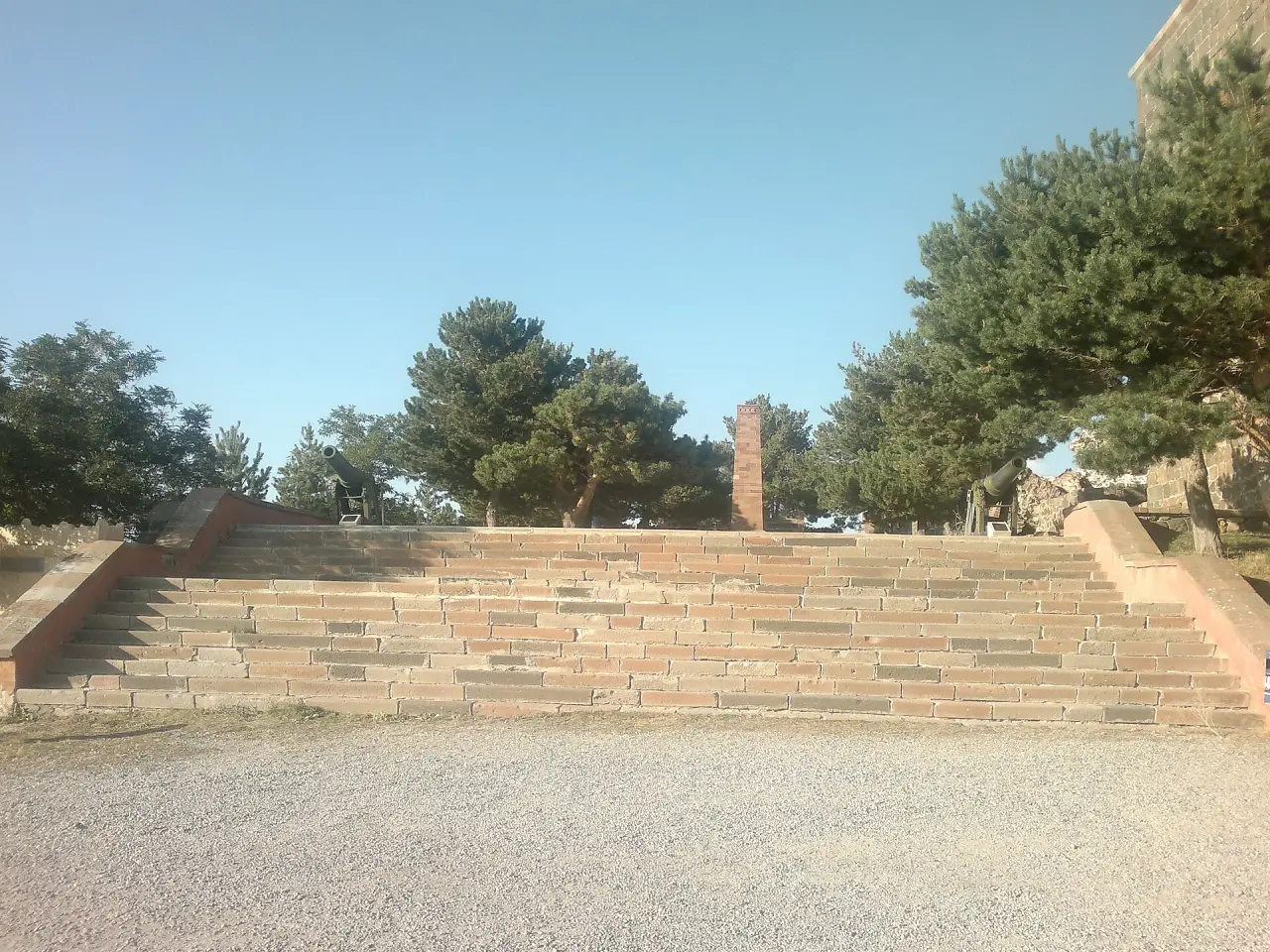
The floors of the redoubt rooms are uneven; keep away from unguarded edges.
≈ 3 min walk (200 m) · stay 30 min
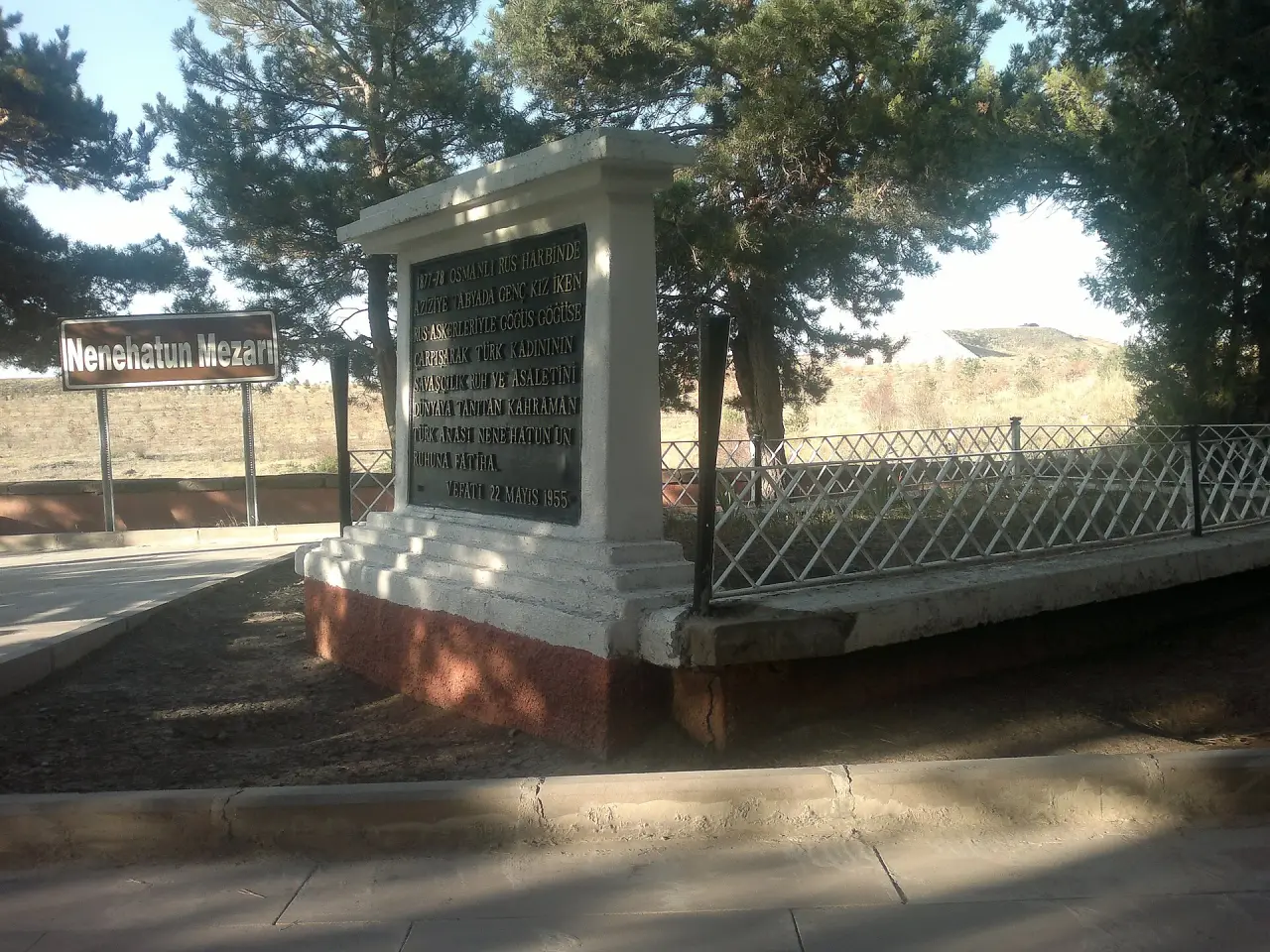
The cemetery of those who died in 1877 and the grave of Nene Hatun, who died in 1955; the grave was restored and reopened to visitors in 2019. On the road between the redoubts there is also a statue of Nene Hatun by Metin Yurdanur.
≈ 2 h 15 min · fast ferry + bus · Day trip
Why here: The first Ottoman capital. The Green Mosque, the Grand Mosque and Koza Han make an easy day trip; we suggest it if you are staying in Istanbul for more than four days. Not part of this route.
Travellers who check in on this route can rate it. No one else can.
Be one of the first travellers to walk this route. If you have a question or a tip, share it with the community.
After walking the route you can rate it using the check-in in the app. Reviews go live after a short check.
Source: Prof. Dr. İlber Ortaylı (1947–2026)
Source: Prof. Dr. İlber Ortaylı (1947–2026)
